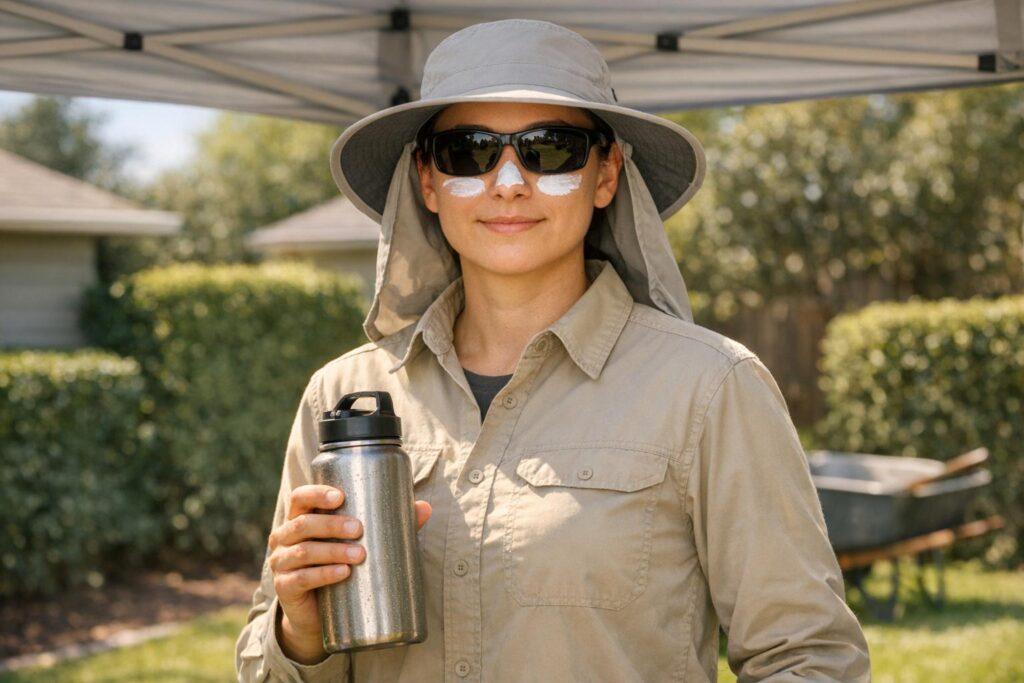
Spending long hours outdoors exposes landscapers to harmful UV rays and extreme heat, increasing risks like skin cancer, heat exhaustion, and dehydration. Here’s how to protect yourself effectively:
- Clothing: Wear UPF 50+ long-sleeve shirts, wide-brim hats, and UV-blocking neck gaiters.
- Sunscreen: Use SPF 30+ mineral sunscreen and reapply every 2 hours.
- Hydration: Drink water regularly – 1 cup every 20 minutes during physical work.
- Shade: Use portable canopies or UV umbrellas, especially near reflective surfaces like concrete.
- Scheduling: Avoid heavy tasks during peak UV hours (10 a.m.–4 p.m.).
- Heat Awareness: Recognize signs of heat stress and respond quickly to prevent serious conditions.
Combining these strategies ensures safety during long outdoor shifts, reducing long-term health risks and improving day-to-day comfort.
Sun and Heat Risks for Landscapers
How UV Radiation Affects Landscapers
UV radiation comes in different wavelengths, each posing unique risks. UVB rays are the main culprits behind sunburn and are strongly linked to basal and squamous cell skin cancers, which often develop after years of exposure. On the other hand, UVA rays can penetrate clouds and glass, causing long-term skin damage without immediate symptoms. For landscapers, constant exposure to UVA rays is a serious but often overlooked concern.
The three most common types of skin cancer among outdoor workers include:
- Basal cell carcinoma: Often shiny in appearance.
- Squamous cell carcinoma: Typically rough or warty.
- Malignant melanoma: A darker lesion or mole that changes over time.
While basal and squamous cell carcinomas are usually treatable when detected early, melanoma can be much more dangerous.
"Malignant melanoma can be dangerous, even fatal. Melanoma cases have been steadily rising. It affects people of all ages." – Ohio State University Extension
Adding to the risk, reflective surfaces like water or pavement amplify UV exposure by bouncing rays back toward the skin.
While UV exposure has long-term effects on skin health, working in extreme heat brings immediate challenges.
Recognizing Heat Stress and Dehydration
High temperatures combined with physical labor under the sun can overwhelm the body’s natural cooling system. Sweating and increased blood flow to the skin help regulate temperature, but when these mechanisms fall behind, heat-related illnesses can escalate quickly. To stay safe, landscapers need to understand the signs and take action early.
Heat illnesses progress in three stages, each requiring different responses:
| Condition | Key Symptoms | Immediate Action |
|---|---|---|
| Heat Stress (Early) | Thirst, irritability, heat rash, muscle cramps | Rest in shade, hydrate, monitor |
| Heat Exhaustion | Heavy sweating, rapid pulse, dizziness, nausea | Move to a cool area, provide water, fan skin |
| Heat Stroke (Severe) | Confusion, slurred speech, unconsciousness, seizures | Call 911, cool worker immediately |
New workers are particularly vulnerable. The body typically needs 7–14 days to adjust to working in hot conditions, but many don’t get that adjustment period.
"Most outdoor fatalities, 50% to 70%, occur in the first few days of working in warm or hot environments because the body needs to build a tolerance to the heat gradually over time." – OSHA
If someone seems confused or has slurred speech, it’s not just heat exhaustion – it’s heat stroke, which is life-threatening. Call for emergency help and begin cooling them immediately. Don’t wait for symptoms to improve on their own.
Core Sun Protection Strategies
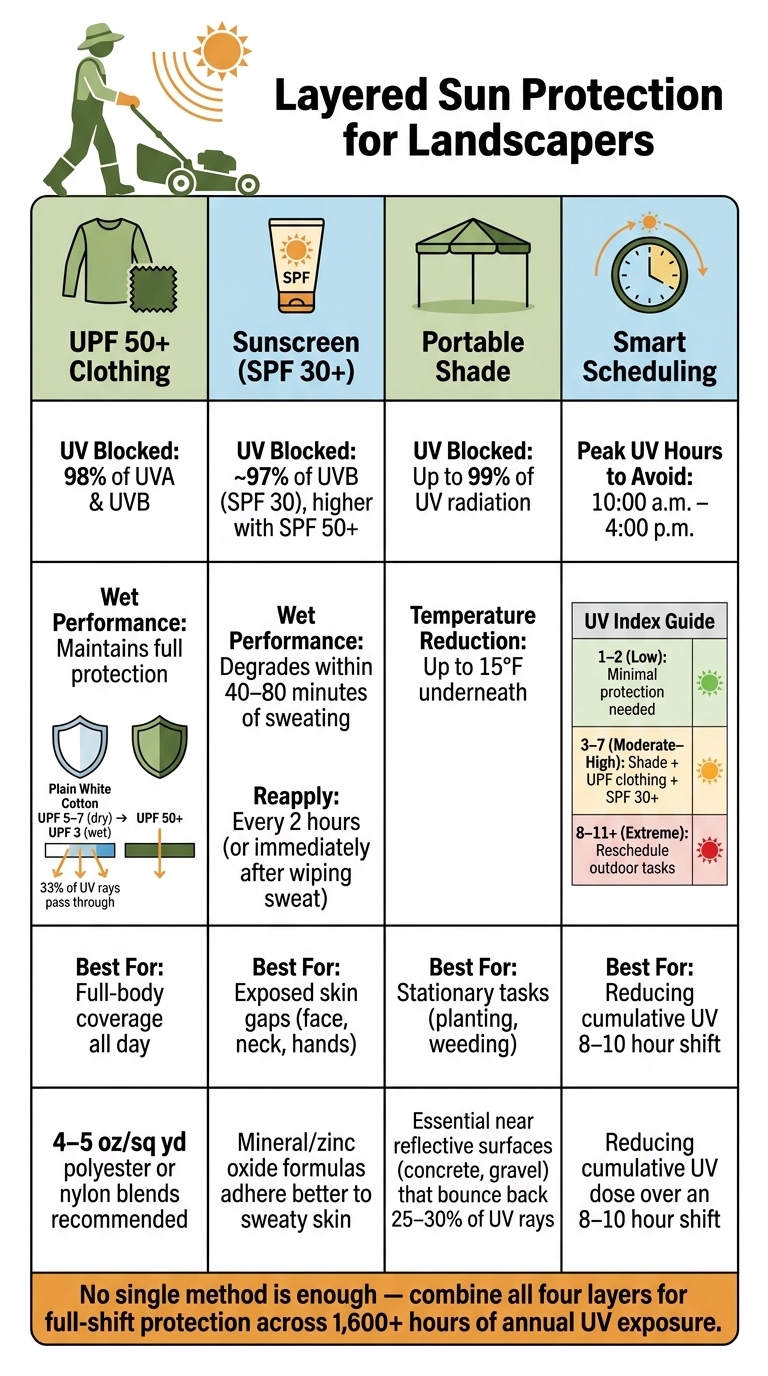
Sun Protection Layers for Landscapers: What Blocks What
Using Multiple Layers of Protection
Relying on just one method for sun protection isn’t enough – especially for outdoor workers. For example, a plain white cotton T-shirt provides only UPF 5–7 when dry, but that drops to UPF 3 when wet, allowing about 33% of UV rays to get through. That’s why the best defense combines several strategies: UPF 50+ clothing, sunscreen for exposed areas, portable shade, and smart scheduling. Each layer offsets the limitations of the others.
UPF 50+ fabrics, for instance, block 98% of UV rays and maintain their effectiveness even when wet, making them far superior to cotton. Portable shade options, like clamp-on UV umbrellas or pop-up canopies, can block up to 99% of UV radiation while reducing the temperature underneath by as much as 15°F – an absolute game-changer during long summer shifts.
"Sunscreen is not a viable primary sun protection strategy for outdoor workers on full-day shifts. The reasons are practical, not theoretical." – WindRider
Sun protection works best as a system, not a single product. Clothing covers the majority of your skin, shade provides relief during stationary tasks, and sunscreen fills in the gaps for areas like your face, neck, and hands. Together, these methods stand up to the demands of an 8–10 hour workday in ways no single solution could.
And don’t forget: planning your work hours can further cut down on UV exposure.
Scheduling Work Around the Sun
UV rays are strongest between 10:00 a.m. and 4:00 p.m., so schedule heavy tasks – like mowing open fields, hauling materials, or operating equipment in the direct sun – for early morning or late afternoon. These times not only reduce UV exposure but also make the heat more tolerable.
The UV Index is a simple but powerful tool for daily planning. Check it before starting the day and adjust your tasks accordingly:
| UV Index | Risk Level | Action |
|---|---|---|
| 1–2 | Low | Minimal protection needed |
| 3–7 | Moderate to High | Use shade from 11 a.m.–3 p.m. and wear UPF clothing with SPF 30+ |
| 8–11+ | Extreme | Reschedule outdoor tasks and prioritize shade |
One often-overlooked factor is reflective surfaces. Materials like concrete, light-colored sidewalks, and white gravel can bounce back 25–30% of UV rays, meaning workers near the ground are exposed from above and below. When natural shade isn’t available, portable shade becomes a must for tasks like planting or weeding.
Protective Clothing and Gear
Sun-Protective Clothing
When it comes to UV protection, the right clothing is your most dependable ally – far more consistent than sunscreen and better suited for long workdays. Look for garments rated UPF 50+, which block 98% of UVA and UVB radiation. Not all UPF clothing is created equal, though. Opt for pieces with built-in protection, where the fabric’s tight weave ensures lasting UV defense. Clothing treated with chemical UV blockers can lose effectiveness after 20–30 washes, but inherent protection lasts as long as the garment holds up.
For the best mix of protection and comfort, go with 4–5 oz/sq yd polyester or nylon blends. These fabrics are lightweight, breathable, and durable. 4-way stretch construction is another must-have, as landscaping involves constant bending, reaching, and squatting. Shirts that don’t stretch or ride up can leave your lower back exposed. Features like thumbholes, built-in hoods, or gaiters give extra coverage to areas like your wrists and neck without needing additional accessories. Fishing shirts – like those from Columbia PFG or WindRider Helios (typically priced $45–$65) – are a great fit for landscaping. They’re designed to handle heat and moisture during long shifts, making them more practical than shirts focused solely on abrasion resistance.
Interestingly, wearing quality sun shirts can actually keep you cooler than exposed skin by reducing radiant heat absorption. Once your torso is protected, it’s time to focus on your head, neck, and eyes.
Hats, Neck Protection, and Sunglasses
A baseball cap might seem like a good option, but it leaves critical areas exposed: the ears, sides of the face, and back of the neck. That last one is especially risky for landscapers who spend long hours looking down at their work.
"The back of the neck is the highest-melanoma-risk zone for outdoor workers because it faces upward when you’re looking down at your work." – WindRider
A wide-brim hat is a much better choice. Look for one with at least a 3-inch brim (4 inches is even better) and a secure chin strap. This style can reduce facial UV exposure by over 70%. The GearTOP Navigator and Discoverer hats are excellent options, earning 4.6/5 ratings from over 2,400 buyers and costing around $30. For a more tailored fit, the Farmers Defense Venture Sun Hat (~$30, rated 4.8/5 from 225 reviews) even includes a ponytail opening.
For added neck protection, pair your hat with a UPF-rated neck gaiter, especially if your sun shirt doesn’t have a hood. When it comes to sunglasses, don’t just go for dark lenses – make sure they block 99–100% of UVA and UVB rays. Always check the label for UV protection.
With your head and neck covered, it’s time to secure your hands and arms.
Gloves and Hand Protection
Landscaping work exposes the backs of your hands to a significant amount of UV radiation, yet gloves are often overlooked as a sun protection tool. UPF 50+ fingerless gloves are a smart choice – they shield the back of your hands while leaving your fingertips free for handling tools and performing detailed tasks. Look for gloves with silicone-textured palms for a secure grip and moisture-wicking polyester/elastane blends to keep your hands dry during long shifts.
Two standout options are the Outdoor Research ActiveIce Chroma Sun Gloves ($35) and Coolibar Perpetua UV Long Fingerless Sun Gloves ($35). If you want broader coverage, consider Farmers Defense Protection Sleeves, priced between $24–$30 and rated 4.8/5 from over 6,100 reviews. These sleeves not only block UV rays but also protect against thorns and poison ivy. For seamless wrist coverage, choose sleeves with thumbhole anchors, ensuring no gaps between your gloves and sleeves, no matter how much you move.
Sunscreen and Skin Care
Choosing the Right Sunscreen
Even with protective clothing and gear, sunscreen is essential for shielding exposed skin from harmful UV rays. A broad-spectrum SPF 30+ sunscreen is a good starting point, as it blocks about 97% of UVB rays when applied correctly. For longer outdoor shifts, SPF 50+ offers added protection.
For landscapers, mineral sunscreens with zinc oxide are especially effective. These formulas are better suited for physical work because they stay in place, even when sweating, and don’t irritate the eyes. As Ron Walker, Founder of UV-Blocker, explains:
"Mineral sunscreens containing zinc oxide are superior to chemical variants as they adhere better to sweaty skin and do not sting the eyes if they run."
If you’ve ever had chemical sunscreen drip into your eyes while working, you know how uncomfortable it can be. Zinc oxide-based options avoid this issue and provide reliable coverage.
How to Apply and Reapply Sunscreen
Apply about one ounce of sunscreen 15–20 minutes before heading outdoors. Make sure to cover all exposed areas, paying extra attention to spots like your ears, neck, temples, and upper chest.
Reapplication is key. Sunscreen effectiveness drops significantly with sweat, often within 40–80 minutes. Reapply every two hours – or sooner if you’re sweating heavily. Dr. Amanda Valdes of the Cleveland Clinic emphasizes:
"If you’re active outside, plan to reapply sunscreen more frequently to make sure you’re getting the protection you need."
If you’ve wiped off sweat, reapply immediately, as the protective layer is physically removed. Always wash your hands before reapplying sunscreen to your face. Dirt, mulch, or pesticide residue on your hands can lead to irritation or even more serious issues. Also, store your sunscreen in a shaded bag or cooler – leaving it in a hot truck can degrade its formula and reduce its effectiveness.
And don’t forget: protecting your skin doesn’t end when the workday does.
After-Work Skin Care
Once your shift is over, cleanse your skin with a gentle wash to remove any sunscreen, sweat, or chemical residues. Follow up with a moisturizer to help restore your skin’s natural barrier after prolonged sun exposure.
Remember to use SPF-rated lip balm throughout the day to protect your lips, which are often overlooked. Additionally, make a habit of conducting a monthly self-exam of your skin. Check for any unusual spots – those that are asymmetrical, have irregular borders, vary in color, or are larger than a pencil eraser. Outdoor workers face a 60% higher risk of non-melanoma skin cancer compared to indoor workers, and UV damage adds up over the years.
Scheduling an annual dermatologist visit for a professional skin check is a smart move, especially for those with decades of outdoor exposure. It’s a small step that could make a big difference in the long run.
sbb-itb-5aa6250
Hydration and Cooling During the Workday
Hydration Guidelines
Staying hydrated is just as important as protecting your skin from the sun during long outdoor shifts. The key is to drink water regularly, not just when you feel thirsty. As Landscape Ontario puts it:
"Do not wait until you’re thirsty because by that point you’re already dehydrated. Workers should drink water on a regular basis, even if they don’t feel thirsty."
A good rule of thumb is to drink about one cup (8 oz.) of water every 20 minutes when working hard in the heat. Make sure cool, clean drinking water is always nearby. For heavy sweating over long periods, a sports drink with electrolytes can help, but keep total fluid intake under 6 cups per hour. A quick way to check your hydration is by looking at your urine: pale yellow indicates you’re doing fine, while dark yellow means you need more fluids.
Hydration alone isn’t enough, though – it’s equally important to find ways to cool your body during the day.
Cooling Methods and Rest Breaks
Regular cooling breaks are a must, especially when temperatures rise. If you can’t access an air-conditioned space, set up a shaded area or canopy to escape direct sunlight.
Another helpful approach is task rotation. Switch between physically demanding tasks and lighter duties to give your body a chance to release built-up heat. As the weather gets hotter and more humid, make sure to take longer and more frequent breaks.
New employees and seasonal workers need extra attention during their first week. It typically takes 7 to 14 days for the body to adjust to working in high heat. Train your team to recognize early signs of heat stress, like dark urine, headaches, nausea, dizziness, muscle cramps, or sudden fatigue. If someone shows confusion, slurred speech, or loses consciousness, it could be heat stroke. In that case, call 911 immediately and use any available method to cool them down while waiting for help.
Team Practices and Emergency Preparedness
Taking individual sun and heat safety measures a step further, implementing team-wide protocols ensures everyone stays safe during long, grueling workdays.
Setting Crew Standards for Sun Safety
Sun safety becomes much more effective when it’s part of the team’s routine rather than left to individual discretion. A great starting point? Standardizing protective gear. Provide every crew member with UPF 50+ long-sleeve shirts, wide-brimmed hats, and wraparound sunglasses that block 99% of UV rays. This ensures consistent protection from the sun throughout the day.
Daily or weekly brief safety meetings can help reinforce these measures. Use these meetings to review the day’s UV index, set hydration goals, and discuss early signs of heat stress. Clearly communicate UV and heat index levels to everyone and follow OSHA guidelines for acclimatizing new hires. It’s worth noting that between 50% and 70% of outdoor heat fatalities occur within the first few days on the job due to the body’s inability to adjust quickly to extreme conditions.
"Training and education for sun safety should be incorporated into existing OHS training activities… such as new worker orientation [and] refresher training through safety talks." – Sun Safety at Work Canada
Once these standards are in place, the next step is ensuring the team is prepared to handle emergencies effectively.
Responding to Severe Heat or Sun Emergencies
While prevention is key, being ready to act during heat-related emergencies is just as important. Every crew should have a trained first-aid responder and a well-stocked kit designed to handle dehydration and heat-related injuries. Make sure all workers know how to contact emergency services from any job site, and have a backup communication plan for areas with poor cell coverage.
Here’s a quick guide to recognizing and addressing common heat-related emergencies:
| Heat Illness | Key Symptoms | Immediate Action |
|---|---|---|
| Heat Rash | Red clusters of pimples or small blisters | Move to a cooler area; keep the skin dry |
| Muscle Spasms | Painful cramping in the stomach, arms, or legs | Stop activity, rest, and drink water or electrolytes |
| Heat Exhaustion | Faintness, nausea, heavy sweating, low blood pressure | Move to shade, hydrate, and apply cool compresses |
| Heat Stroke | Confusion, slurred speech, unconsciousness, hot/red skin | Call 911 immediately and begin cooling the worker |
When it comes to heat stroke, every minute matters. Quick action can save lives. After any serious incident, document everything – conditions, symptoms, response actions, and outcomes. This not only ensures compliance but also helps identify patterns to refine safety protocols in the future.
Conclusion
This guide highlights how using multiple layers of sun protection can help landscapers stay safe during long hours outdoors.
Landscapers often spend 8–10 hours a day under the sun, adding up to 1,600 hours of peak UV exposure annually over a 200-day season. That’s a lot of time in the sun, but staying protected doesn’t have to be complicated.
Start with UPF 50+ clothing – it’s one of the most reliable defenses available. Pair it with essentials like a wide-brimmed hat, a neck gaiter, and sun gloves to cover areas that are often overlooked. Add to this a routine that includes staying hydrated, avoiding peak UV hours when possible, and fostering a safety-first mindset, and you’ve got a solid plan to protect yourself.
"Sun protection for landscaping work isn’t a nice-to-have. For anyone logging that kind of outdoor time, it’s occupational health equipment." – WindRider
Your choices today directly affect your future health. Outdoor workers face a much higher risk of melanoma, but that risk decreases with consistent, layered protection. Take the first step this week – try a UPF shirt or set a hydration reminder. Small changes can lead to long-term safety.
FAQs
What’s the easiest sun-protection setup to start with?
A straightforward way for landscapers to shield themselves from the sun starts with a long-sleeve UPF 50+ shirt as the base layer, paired with a wide-brim hat for shade. This duo offers solid protection for your torso, arms, neck, and head.
If you need even more coverage, you can add sun gloves and a neck gaiter or hood to the mix. This setup is practical and mirrors what professionals rely on during extended hours under the sun.
How do I know my UPF clothing is still protective after lots of washes?
UPF clothing made from tightly woven synthetic fibers can retain its protective qualities for over 100 washes. However, garments treated with chemical UV finishes might lose their effectiveness after just 20-30 washes. Want to test your clothing’s UV protection? Hold the fabric up to a light source – if less light passes through, it offers better UV shielding. To keep your UPF clothing effective, avoid using fabric softeners and always follow the care instructions provided.
When should I switch from water to electrolytes while working in heat?
When you’re working in temperatures above 75°F, especially during long or demanding tasks like landscaping, it’s crucial to switch to electrolyte drinks. Aim for options containing at least 1,000mg of sodium, and adjust your intake based on the heat:
- In moderate heat, drink electrolytes every 60–90 minutes.
- In temperatures over 85°F, shorten the interval to every 45–60 minutes.
Don’t wait until you’re thirsty – staying ahead of dehydration helps protect against serious heat-related conditions like heat exhaustion or heat stroke.