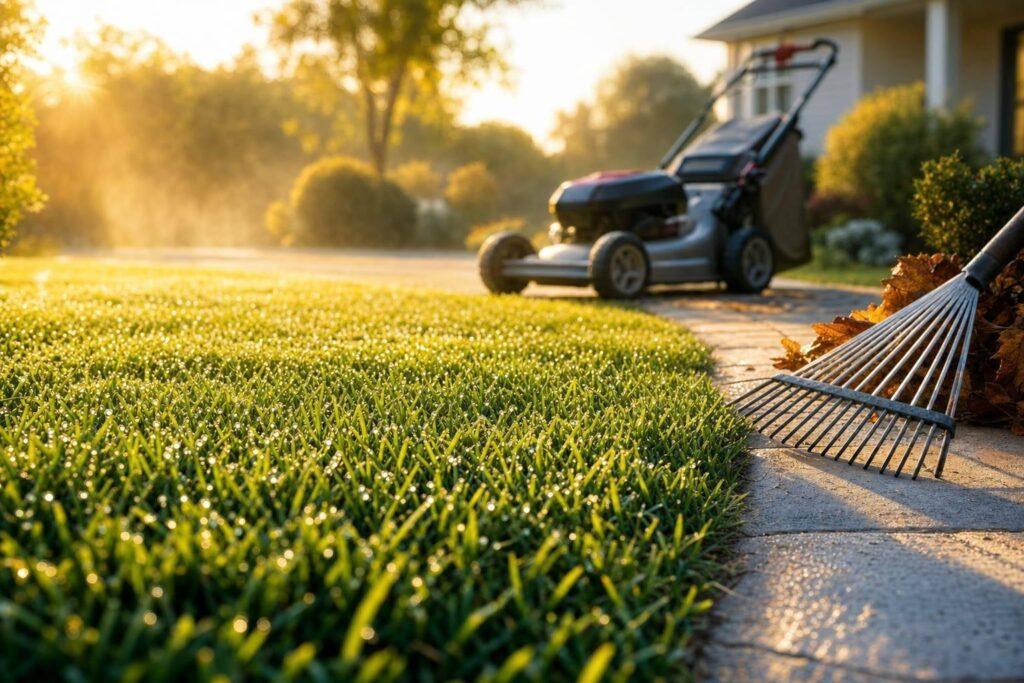
Most lawn disease starts before you see it. If grass stays wet for 10 to 14 hours, fungi can infect the lawn long before patches show up.
If I want to cut lawn disease risk in spring and fall, I focus on a few basic jobs:
- Water early, between 4:00 a.m. and 9:00 a.m.
- Keep cool-season grass taller in spring and most of the year, around 3 to 4 inches
- Lower the last fall cuts to about 2 to 2.5 inches
- Avoid too much nitrogen, but don’t let the lawn stay underfed
- Remove leaves and debris fast, especially in fall
- Fix compaction, thatch, and drainage so the lawn dries out sooner
- Use fungicide only for repeat problems and with the right timing
The main risks change with the season. In spring, I watch for snow mold, red thread, and leaf spot. In fall and warm transitions, I keep an eye on red thread, dollar spot, brown patch, and winter disease setup. A leaf layer over 2 inches, thick thatch over 0.5 inch, poor airflow, and wet nights all make problems more likely.
Here’s the short version: keep the lawn dry when you can, cut stress, mow at the right height, water deep instead of daily, and clean up leaves before they trap moisture. If the same disease keeps coming back or spreads across one-third or more of the lawn, I’d stop guessing and get expert help.
Step-by-Step Spring Routine to Prevent Lawn Disease
Early spring cleanup helps the turf dry out fast and keeps dormant disease from spreading. After the snow melts, gently rake matted snow mold patches. That lets air and sunlight reach the grass and helps it dry sooner.
Test the soil in early spring, then test again every 2 to 3 years before you fertilize. Use those results to fix pH and nutrient problems that can leave turf weak.
How to Water, Mow, and Fertilize Without Raising Disease Risk
Once the lawn is cleaned up, the goal is steady growth without creating wet, soft turf.
Water early in the morning, ideally between 4 a.m. and 9 a.m., so the grass can dry fast. Watering in the evening can leave the lawn wet all night, and that gives many fungal diseases the long stretch of leaf wetness they need to infect turf.
Aim for 1.0 to 1.5 inches of water per week, including rainfall. Deep, infrequent watering works better than light daily sprinkling. It helps roots grow deeper and gives turf a better shot when disease pressure goes up.
For cool-season lawns, mow at 3 to 4 inches. Stick to the one-third rule, which means never cutting off more than one-third of the blade height in a single mowing. Sharpen mower blades at least once or twice each season so they cut cleanly instead of tearing the grass.
Fertilizer should follow your soil test results. Skip heavy doses of quick-release nitrogen in early spring, since that can push soft growth that gets sick more easily. If the soil test shows low fertility, fixing that can also help lower disease pressure.
How to Reduce Compaction, Thatch, and Standing Water
Next, deal with the surface issues that hold moisture.
Compaction and thatch can trap moisture and feed disease. Core aeration helps ease compaction. For cool-season lawns, fall is usually the best time to aerate. But if the soil is badly compacted in spring, aerating then can still help drainage and move more oxygen to the roots.
Keep thatch under 0.5 inch. If it gets thicker, use core aeration or dethatching to thin that damp, spongy layer where fungal spores can hang on. Also check for spots where water pools after rain. If water stands for hours, fixing drainage in those areas should be a spring priority.
When to Use a Preventive Fungicide in Spring
Use chemicals only when lawn care on its own isn’t enough.
Preventive fungicide makes sense only for lawns with repeat disease problems. For necrotic ring spot, apply in April or May. For summer patch, timing matters even more. Infection can start when soil temperatures hit 65°F, even if symptoms don’t show up until summer. Rotate fungicide classes each year and use a product labeled for the disease you’re targeting.
sbb-itb-5aa6250
Step-by-Step Fall Cleanup to Lower Winter Disease Risk
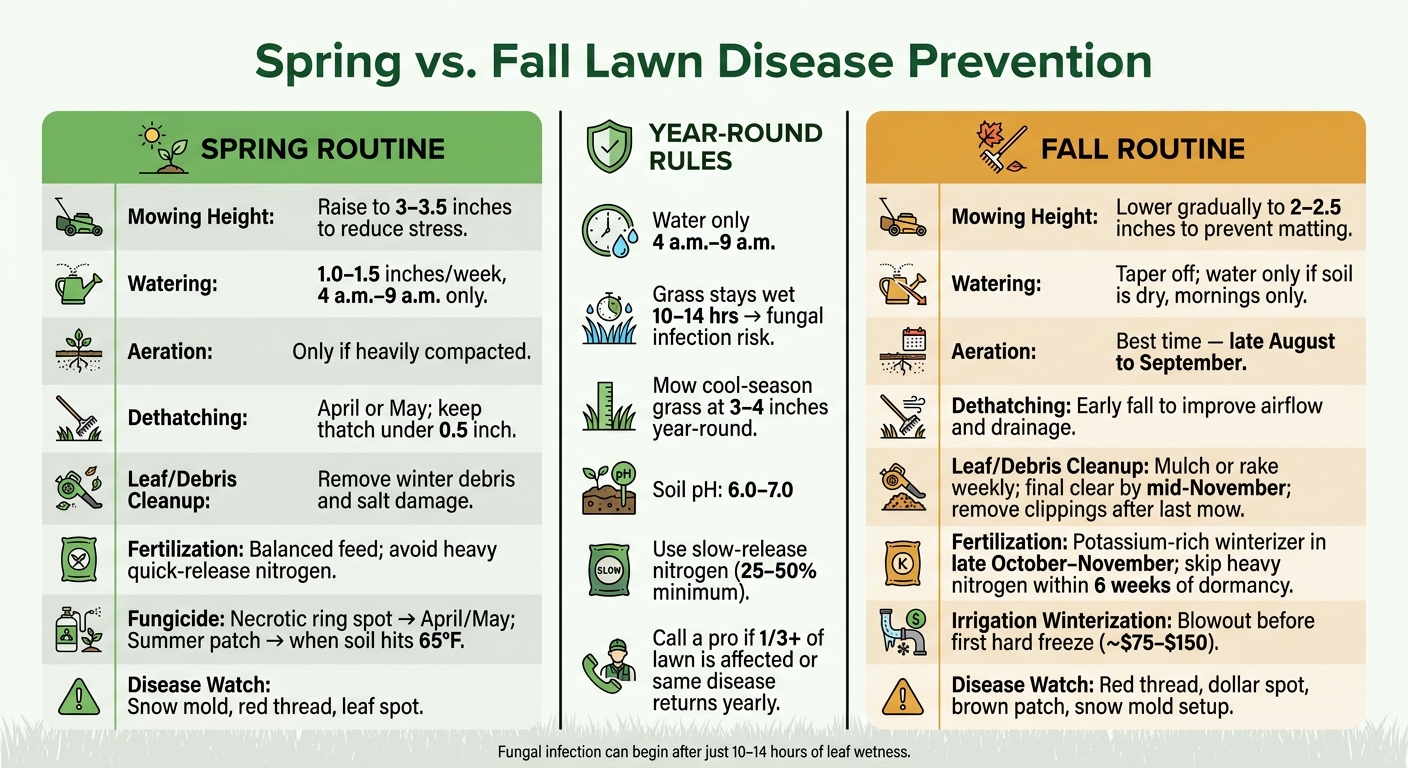
Spring vs Fall Lawn Disease Prevention: Side-by-Side Task Guide
Fall cleanup does the opposite of spring cleanup. Instead of waking the lawn up, you’re setting it up for dormancy and taking away the damp, stuffy conditions that fungi like. Leaves, overgrown grass, and bad drainage heading into winter can turn the turf surface into a wet blanket.
Remove Leaves and Debris Before They Trap Moisture
Fallen leaves don’t seem like a big deal at first. But once they build up, they can drive disease. A layer thicker than 2 inches can smother grass, block sunlight, and hold moisture right against the turf. And when leaves get wet and stick together, they can keep the lawn damp long enough for infection to start.
The fix is pretty simple: rake or mulch leaves weekly through fall instead of waiting for one giant cleanup. If the layer is light, mulch-mowing is a good option. It puts roughly ¼ lb of nitrogen per 1,000 sq ft back into the soil. But once leaf buildup goes past that 2-inch mark, take it off the lawn completely.
Try to wrap up your final leaf clearing by mid-November, or when the trees have mostly finished dropping leaves. And after your last mow of the season, collect and remove the grass clippings instead of leaving them behind.
Once the surface is clean, move on to winter prep.
Adjust Final Mowing, Watering, and Soil Care Before Winter
Your last few mows in fall matter more than many people think. For cool-season grasses, bring the mowing height down little by little over the last two or three cuts. Aim for a final height of 2 to 2.5 inches. That gradual drop helps stop the matting that can lead to pink and gray snow mold.
Watering should shift too. As temperatures drop and growth slows, ease off irrigation. Water only when the soil feels noticeably dry, and do it in the morning so the blades can dry before night. That one timing choice can make a big difference.
If you use an irrigation system and live in a cold area, it’s smart to get a blowout done with compressed air before the first hard freeze. For a residential system, that usually runs about $75 to $150.
Fall is also the main time for core aeration. Aerating in late August or September, while the soil is still warm, helps ease summer compaction and lets water move through the soil better before the ground hardens. If thatch is thick, dethatching in early fall can help air move through the lawn and help the surface dry out faster after rain or morning dew.
Fertilizer matters here too. Pair aeration with a potassium-heavy winterizer in late October or early November, after top growth stops but before the ground freezes. Potassium helps with cold hardiness and disease resistance. Skip heavy nitrogen within six weeks of dormancy. That can push soft growth right when you don’t want it.
Spring and Fall Lawn Care Tasks Side by Side
Use this quick comparison to match each season’s job with the disease risk it helps reduce.
| Task | Spring Practice | Fall Practice |
|---|---|---|
| Mowing Height | Raise to 3–3.5 inches to reduce stress | Lower to 2–2.5 inches to prevent matting |
| Watering | Deep and infrequent | Taper off; water only if soil is dry |
| Aeration | Only if heavily compacted | Best time: late August to September |
| Dethatching | April or May | Early fall to improve airflow and drainage |
| Leaf Cleanup | Remove winter debris and salt | Mulch or rake weekly; final clear by mid-November |
| Fertilization | Balanced feeding for growth | Potassium-rich winterizer in late October–November |
Year-Round Habits That Keep Disease Pressure Low
These habits carry the spring and fall routines through the rest of the year. Most fungal issues don’t come out of nowhere. They usually build when lawn conditions have been off for a while, which is why steady care all year matters just as much as seasonal cleanup.
Build Disease Resistance With Consistent Lawn Care
Steady mowing, watering, and fertilizing can prevent most lawn disease issues in home landscapes. The two habits that tend to matter most are mowing height and morning watering.
Keep cool-season grass at 3 to 4 inches. That extra height helps roots grow deeper and gives the lawn more strength when disease pressure shows up. Water between 4 a.m. and 9 a.m. so the grass can dry fast after sunrise. That cuts down the hours the blades stay wet, which is exactly what many fungal diseases need.
Fertilizer matters too, and this is where a lot of people overdo it. Use a product with at least 25% to 50% slow-release nitrogen. That gives the lawn a steadier feeding pattern instead of pushing soft, lush growth that pathogens like. Too much nitrogen can backfire. Tall fescue lawns that get more than 4 pounds per 1,000 square feet per year tend to show worse brown patch.
Soil chemistry plays a part as well. Try to keep soil pH between 6.0 and 7.0. When pH drifts outside that range, diseases like anthracnose and summer patch can be tougher to control.
If thin spots keep showing up, or you see red thread again and again, overseeding with disease-resistant cultivars or a mixed seed blend is one of the best long-term fixes. A blend works like built-in insurance: if one grass type is weak against a certain pathogen, another may hold up better. And if the same disease keeps coming back even after you tighten up care, it’s time for a professional diagnosis.
When to Call a Professional and a Final Prevention Checklist
Professional Help for Recurring Disease, Large Properties, and Specialized Work
Most lawn diseases improve with seasonal care. But when the same problem keeps coming back, moves fast, or covers a big part of the yard, it’s time to bring in a pro.
Call a professional if:
- The same disease shows up year after year
- A third or more of the lawn is affected at the same time
- Symptoms stick around after two DIY fungicide applications
- The disease may be misdiagnosed or not responding to treatment
Speed matters here. Some lawn diseases can wipe out large turf areas within 24 to 48 hours, so waiting can make a bad situation much worse.
A pro also makes sense for jobs that are hard to do well on your own, like large-scale aeration, power dethatching, irrigation repairs, and disease diagnosis. And if fungicide treatment is needed, professionals can often apply it more evenly than most homeowner sprayers.
Key Spring and Fall Disease-Prevention Steps to Remember
Prevention only goes so far. Once discolored patches show up, the infection may already have been active for weeks. That’s why timing and routine care matter so much.
Water only in the early morning, between 4 a.m. and 9 a.m.. That gives the grass time to dry and helps keep the blades as dry as practical.
For cool-season lawns, stick with a mowing height of 3 to 4 inches. During warm, humid stretches, avoid excess nitrogen. Before winter sets in, clear away leaves and debris so moisture doesn’t sit on the turf.
Aeration and thatch control help with drainage and cut down on the damp, compacted conditions where pathogens do well. Fungicides can help too, but they work best for known recurring problems, not as a routine replacement for steady seasonal care.
FAQs
How can I tell which lawn disease I have?
Start by looking at how the damage appears and when you notice it. Fungal lawn diseases often show up as circular or uneven patches of tan, brown, or straw-colored grass. In the early morning, dew can make fungal growth easier to spot. You may see white, gray, or pink threads, or even a smoky-looking edge around a patch.
You can also try the blade pull test. Gently tug the grass at the edge of the damaged area. If it comes out with little effort and the base looks dark and rotted, a fungal disease is a likely cause.
What type of grass is most likely to get these diseases?
Nearly all common turfgrass species can develop lawn diseases, but some get hit harder than others.
Cool-season grasses like Kentucky bluegrass, tall fescue, perennial ryegrass, and fine fescue are often affected.
Warm-season grasses such as Bermudagrass, Zoysia, and St. Augustinegrass can also run into disease problems.
A simple rule of thumb: grass under stress is easier to infect. Heat, drought, and improper nitrogen levels can all make a lawn more vulnerable.
When should I treat lawn disease myself vs. call a pro?
Treat it yourself only if you can pin down the problem and stick to basic lawn-care fixes like adjusting irrigation, mowing height, and fertilization.
Call a professional if the damage shows up fast, spreads across a large area, or looks severe. The same goes if you’re not sure whether you’re dealing with disease, pests, or stress from heat, drought, or other site conditions. A bad diagnosis – or using the wrong fungicide – can waste time, cost money, and hurt your turf.