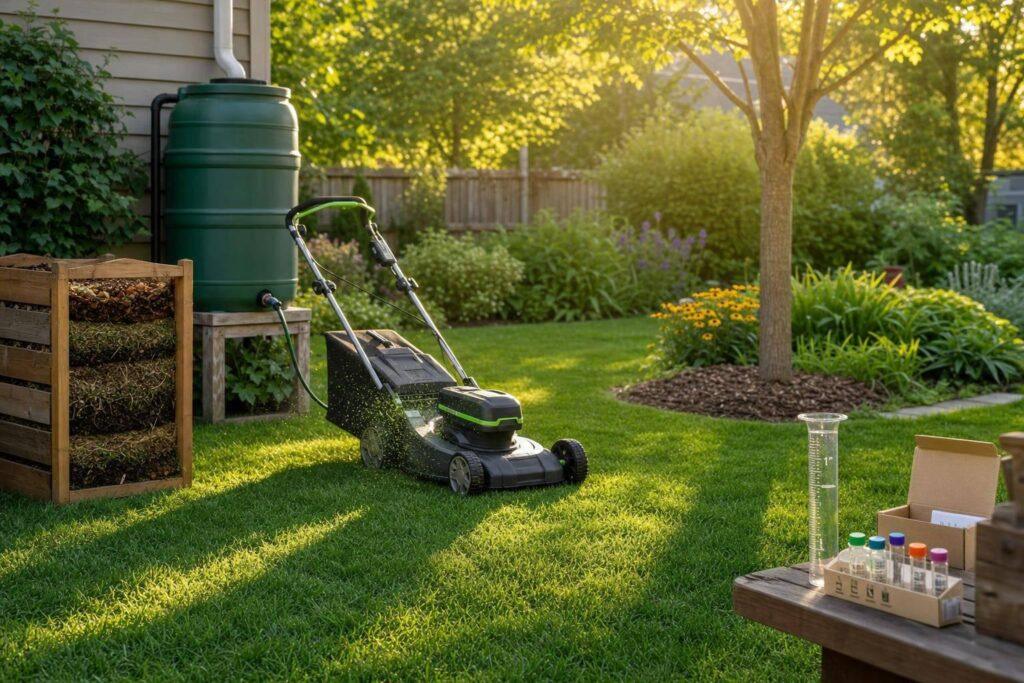
You can cut lawn waste fast by doing four things: test your soil, mow high and leave clippings, water deeply about 1 inch per week, and reuse leaves and compost on-site. That keeps more nutrients, water, and yard debris in your yard instead of the trash or storm drain.
Here’s the short version:
- Start with the yard layout: reduce turf in shady spots, wet areas, slopes, and thin strips that waste water and time
- Fix the soil first: aim for 3%–5% organic matter and check compaction, pH, and drainage
- Mow for reuse: keep grass at 3–4 inches, follow the one-third rule, and grasscycle clippings
- Water less often, but deeper: about 1 inch per week, best between 5:00 AM and 9:00 AM
- Feed the soil, not runoff: use compost and slow-release organic inputs based on a soil test
- Handle weeds and pests with observation first: thicken turf, pull weeds when soil is moist, and spot-treat only if needed
- Keep fall debris on-site: mulch leaves, compost extra material, and reuse finished compost as topdressing or mulch
A few numbers stand out. Outdoor irrigation accounts for nearly one-third of U.S. home water use. Grass clippings can return up to 25% of a lawn’s yearly fertilizer needs. And replacing hard-to-maintain turf with native ground covers can cut water use in those spots by up to 80%.
What this comes down to is simple: plan less turf, waste less water, and throw away less yard material. If I wanted a low-waste lawn without making it complicated, that’s the order I’d follow.
Plan a Lawn That Produces Less Waste From the Start
Zero-waste lawn care starts with a layout that needs fewer fixes later. Before you change mowing, watering, or feeding, look at how the yard actually works. Pay attention to sun, shade, drainage, slope, and foot traffic. Then start trimming back turf in places where grass was never likely to do well.
Check Site Conditions and Test the Soil
Start with a soil test before changing mowing, watering, or feeding. A basic test checks pH, key nutrients, and organic matter content. Without it, fertilizer rates and soil fixes are just guesses. Healthy lawn soil should ideally contain 3% to 5% organic matter.
Check for compacted zones too. High-traffic areas – paths, play areas, and spots where pets run – often get packed down so tightly that water, air, and nutrients can’t move well through the soil. Those areas often benefit from core aeration, especially in clay-heavy soil.
It also helps to look for drainage problems. Dig a 12-inch hole, fill it with water, and time how long it takes to drain. If it takes more than 4 hours, that spot has poor drainage and will keep struggling until grading or drainage is fixed.
Weeds, weak color, and uneven watering often trace back to soil problems. Shade matters too. Deep shade thins grass and opens the door to weeds. In many yards, those spots work better as moss or shade-tolerant native ground covers. Adding more water or fertilizer usually just means more waste.
If poor soil, shade, or drainage make grass a bad fit, reduce turf instead of forcing it.
Reduce Turf Where Grass Is Hard to Maintain
Once you’ve mapped the problem areas, scale back turf there instead of fighting an uphill battle. This cuts maintenance and keeps more material on-site.
Steep slopes are one of the best places to start. They’re tough to mow and prone to erosion, which can send soil and nutrients downhill after rain. Converting those areas to native plantings or no-mow ground covers helps hold soil in place and reduce that loss. Switching from traditional turf to native ground covers can reduce water demand by up to 80% in those areas.
The same idea works for thin strips along fences, shaded corners under large trees, and unused edge strips. These spots often don’t serve much purpose, but they still need mowing, watering, and fertilizer. Replacing them with mulched tree rings, native plant beds, or low-growing ground covers like creeping thyme can cut mowing, reduce green waste, and support pollinators.
To make these changes look neat instead of random, mow a clean edge.
Keep turf only where it serves a clear purpose.
When Professional Help Supports Zero-Waste Goals
Some site problems need professional help. Complex drainage issues, large grading jobs, or a full-yard redesign often call for outside input – not to add more stuff to the system, but to cut long-term inputs.
Dependable Lawn Care offers lawn rehabilitation, sod installation, yard design, and sprinkler system services. If your current layout is working against zero-waste goals – poor drainage, oversized turf areas, or inefficient irrigation – their team can help reshape the setup so it needs less from day one.
sbb-itb-5aa6250
Zero-Waste Practices for Mowing, Watering, and Soil Care
Synthetic vs. Organic Lawn Care: Zero-Waste Comparison
Once the site is set up, day-to-day lawn care should keep clippings, water, and plant food where they belong: on your property, not in the trash or storm drain.
Mow High, Grasscycle Clippings, and Compost the Excess
Set your mower deck to 3 to 4 inches. Taller grass shades the soil, cuts evaporation, grows deeper roots, and helps crowd out weeds. Put simply, a higher cut gives your lawn a better shot at staying thick and healthy.
Stick to the one-third rule: never remove more than one-third of the grass blade in a single mowing session. During fast growth, that usually means mowing every 4 to 7 days.
When you can, leave short clippings on the lawn. That practice is called grasscycling. With a mulching mower, the clippings are chopped into small pieces that drop between the blades and break down fast. As they do, they return nitrogen, phosphorus, and potassium to the soil and can supply up to 25% of a lawn’s annual fertilizer needs.
Bag clippings only when growth is unusually tall, when clumps are heavy, or when disease is present. If you do collect them, compost the extra instead of tossing it out. Also, sharpen mower blades at least once a month. Dull blades tear grass, while sharp ones make a clean cut.
Once mowing is dialed in, watering should support that root growth – not work against it.
Water Deeply and Build Soil That Holds Moisture
Water less often, but give the lawn a deeper soak each time. A good target is about 1 inch of water per week, including rainfall. It’s better to apply that in one or two deep waterings than in short daily bursts.
A simple way to measure it is with a few empty tuna cans placed around the yard while the sprinkler runs. When the cans reach 1 inch, you’re done. On slopes or compacted clay soil, the cycle-and-soak method works well: run the sprinkler for 15 to 20 minutes, wait an hour, then water again. That gives moisture time to sink in instead of running off.
The best window for watering is between 5:00 AM and 9:00 AM. That can cut evaporation losses by up to 30% compared to watering at midday. It also gives the grass time to dry before night, which lowers the chance of fungal disease.
Annual core aeration also helps. It eases compaction so water, oxygen, and nutrients can get down to the root zone.
After water use is under control, the next step is feeding the soil instead of feeding runoff.
Feed the Soil With Compost and Slow-Release Organic Inputs
Most lawns need less fertilizer once grasscycling and compost become part of the routine. Apply 1/4 to 1/2 inch of compost as a topdressing once a year. It helps soil structure, feeds microbes, and improves moisture balance.
Slow-release organic inputs like alfalfa meal, feather meal, and corn gluten meal break down bit by bit through microbial activity. That keeps nutrients in the root zone longer instead of washing away after a heavy watering or rain.
It also pays to base feeding on a current soil test. Testing every 2 to 3 years shows what the soil actually needs, so you don’t spend money or spread material your lawn doesn’t need.
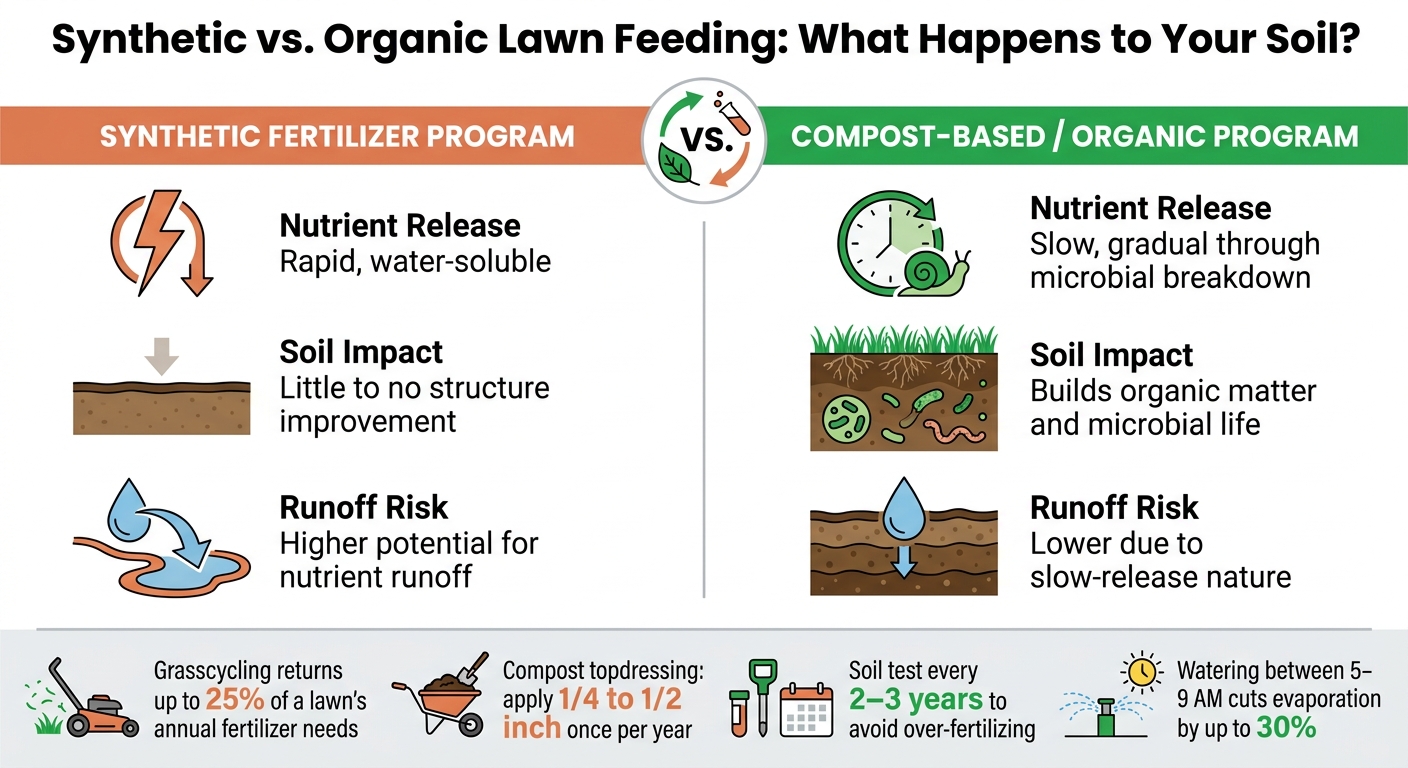
| Feature | Synthetic Fertilizer Program | Compost-Based / Organic Program |
|---|---|---|
| Nutrient Release | Rapid, water-soluble | Slow, gradual through microbial breakdown |
| Soil Impact | Little to no structure improvement | Builds organic matter and microbial life |
| Runoff Risk | Higher potential for nutrient runoff | Lower due to slow-release nature |
Control Weeds, Pests, and Seasonal Debris Without Sending Material to the Landfill
Dense turf does more than look good. It shades the soil, makes it harder for weed seeds to sprout, and leaves less space for pests to settle in.
Prevent Weeds and Pests With Integrated Lawn Care
That same soil-first mindset also shapes weed and pest control. Integrated Pest Management (IPM) is what makes a zero-waste approach work day to day. The idea is pretty simple: watch first, step in only when you need to, and start with the least disruptive option.
Check your lawn on a regular basis for early signs of trouble, like discolored patches, chewed grass, or visible insects. Before you use any product, make sure the issue isn’t tied to lawn care habits or soil conditions. Moss is a good example. It usually points to soil that’s too acidic or too wet, not a pest issue. Fix the drainage or adjust the soil pH, and you can solve the problem without chemical input.
When weeds show up, pull them by hand after rain while the soil is still moist. That makes it much easier to remove the whole root cleanly. If parts of the lawn are thin or bare, overseed in the fall so those gaps fill in before weed seeds take hold. And if treatment is needed, spot-treat the problem area only. Blanket applications use more product than needed and can throw off soil biology.
Reuse Leaves, Thatch, and Seasonal Yard Debris On-Site
A mulching mower makes leaf cleanup much simpler. It shreds dry leaves right where they fall, so they break down on the lawn and return organic matter to the soil. No raking. No bagging.
If you’re dealing with a heavier layer of leaves, mow over them first and move the shredded material into a compost bin with grass clippings. Once the compost is ready, use it as mulch or as a thin topdressing. If you remove thatch in the fall, that material can go straight into the compost pile instead of the trash.
That keeps fall cleanup in step with the rest of your lawn care system.
Service Options That Support Lower-Waste Maintenance
Sometimes it helps to bring in outside support. Dependable Lawn Care offers core aeration, power thatch removal, and seasonal cleanups that can work with on-site reuse to help maintain a zero-waste system. Aeration helps soil health, and seasonal cleanups can support on-site reuse while cutting down on haul-away waste. Used this way, seasonal lawn care helps keep your yard healthy by reusing more and throwing away less.
Conclusion: Build a Lawn That Stays Healthy by Reusing More and Wasting Less
Zero-waste lawn care is a system, not a product. The idea is simple: keep clippings, leaves, water, and nutrients on-site so your lawn needs less from you and less from the curb.
That order matters too. Plan, mow, water, reuse. Stick to that sequence, and the whole setup stays low-waste without turning into a chore. After that, the routine is pretty simple.
Key Takeaways for a Practical Zero-Waste Lawn Plan
A practical plan comes down to four habits.
Start with a soil test every 2 to 3 years. Mow high, leave clippings, and mulch dry leaves in place. Water deeply, about 1 inch per week, to help roots grow deeper. Overseed thin areas in fall so weeds have less room to spread.
You don’t need to change everything at once. Start with one shift this season, then add the next. Send less material out, and the lawn gets healthier and easier to manage.
FAQs
How do I start zero-waste lawn care?
Start with healthy, self-sustaining soil instead of leaning on synthetic quick fixes. A professional soil test can show what your soil needs, including nutrient levels, pH, and organic matter. Then you can use those results to choose natural amendments with a clear plan, not guesswork.
Good lawn care matters too. Mow at 3 to 4 inches, leave grass clippings on the lawn, and water deeply but not too often. If you want to go a step further, shrink the lawn a bit and swap some areas for native plants.
What if my lawn has poor drainage or heavy shade?
Poor drainage and heavy shade usually point to a design problem or a soil structure problem, not just a mowing or watering issue.
With poor drainage, start by improving the soil. Add compost and aerate so water, oxygen, and nutrients can move deeper into the ground instead of sitting near the surface.
In areas that stay shady, it often makes more sense to work with the site instead of fighting it. Try a no-mow zone or plant shade-tolerant native groundcovers rather than forcing turfgrass to grow where it doesn’t want to.
Can I do zero-waste lawn care without a compost bin?
Yes. You can practice zero-waste lawn care without a compost bin by focusing on grasscycling and leaf mulching.
Leave grass clippings on the lawn so they can return organic matter and nutrients to the soil. Mulch leaves too, and they’ll break down into a natural fertilizer instead of ending up in bags at the curb.
If you want compost for top-dressing, you don’t have to make it on-site. You can simply buy it when you need it. Dependable Lawn Care can also help manage these practices for your property.