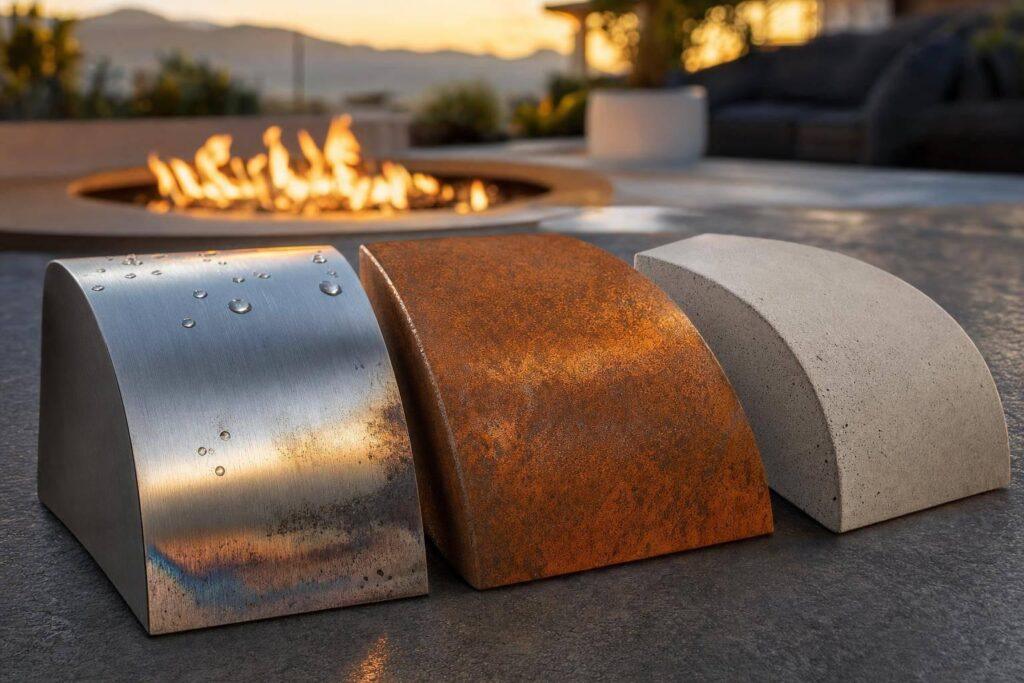
If I want a fire pit that lasts, I need to match the material to three things: heat, weather, and upkeep. A fire pit can hit well over 1,000°F in wood-burning use, and water plus freeze-thaw cycles can do as much damage as flame. That’s why the best pick is usually not the one that only looks good on day one, but the one that fits the fuel type, the site, and the amount of care I’ll do each year.
Here’s the short version:
- For portable fire pits: metal is common, but each type wears differently
- For built-in fire pits: masonry outside + a fire-rated liner or firebrick firebox inside is the safer setup
- For wet or humid climates: stainless steel usually needs the least care
- For wood-burning pits: direct flame calls for materials made for high heat
- For cold climates: drainage matters because water expands by about 9% when it freezes
- For long service life: I need to think about the whole build – base, shell, liner, joints, and drainage
A few fast rules help narrow it down:
- Pick the fire pit type and location first
- Use a noncombustible, level base
- Avoid materials that trap water
- Check local code, HOA rules, and setback limits before building
Quick Comparison
| Material | Best Use | Heat Handling | Moisture/Rust Risk | Upkeep |
|---|---|---|---|---|
| Stainless steel | Portable gas or wood units | High | Low | Low |
| Carbon steel | Lower-cost portable units | High | High without coating | Medium to high |
| Corten steel | Outdoor pits where water won’t sit | High | Medium | Medium |
| Cast iron | Heavy freestanding bowls | High | High in damp areas | Medium to high |
| Concrete | Built-in outer shell | Medium to high* | Medium | Medium |
| Natural stone | Built-in outer shell | Medium to high* | Varies by stone | Medium |
| Firebrick | Firebox liner | Very high | Low when used right | Low |
*Needs the right design and should not be assumed safe for direct flame unless rated for that use.
If I keep one idea in mind, it’s this: the outer finish is only part of the story. A long-lasting fire pit depends just as much on the liner, the base, and drainage as it does on the visible material.
sbb-itb-5aa6250
Choose the fire pit type and location before picking materials
Start with the fire pit type and location. Those two choices shape which materials will hold up over time. A portable wood bowl, a built-in gas unit, and a masonry pit don’t use the same materials. Mobility, fuel, and weather exposure all matter, and they narrow your options fast.
Match the material to portability, fuel type, and size
Portable units usually work best with lighter metals. A freestanding steel bowl is a solid choice for a patio.
Permanent, built-in fire pits need a different setup. Most use a masonry outer shell – concrete block, natural stone, or brick – plus a firebrick-lined firebox that can take direct flame contact.
Fuel type matters too. Wood-burning fire pits produce intense, uneven heat. Gas fire features burn cleaner and at steadier temperatures. Even so, the burner assembly and firebox still need materials that won’t warp or crack under steady heat. Once you know how the fire pit will be used, it gets much easier to compare the material types.
Start with a safe, noncombustible base
A long-lasting fire pit also needs a noncombustible base and solid drainage. A patio or paver hardscape gives you a stable foundation. Good drainage helps limit moisture damage and freeze-thaw cracking. It’s smart to assess the site before buying materials, especially the grade, soil conditions, and drainage patterns.
Check local codes and property rules before building
Before you lock in a design, check local fire codes, permit rules, HOA requirements, and utility clearances. These rules can limit spacing, enclosure style, and fuel choices. Check them early so you don’t end up making costly changes later. With the site and rules nailed down, picking materials becomes a lot more straightforward.
Compare the main fire pit materials
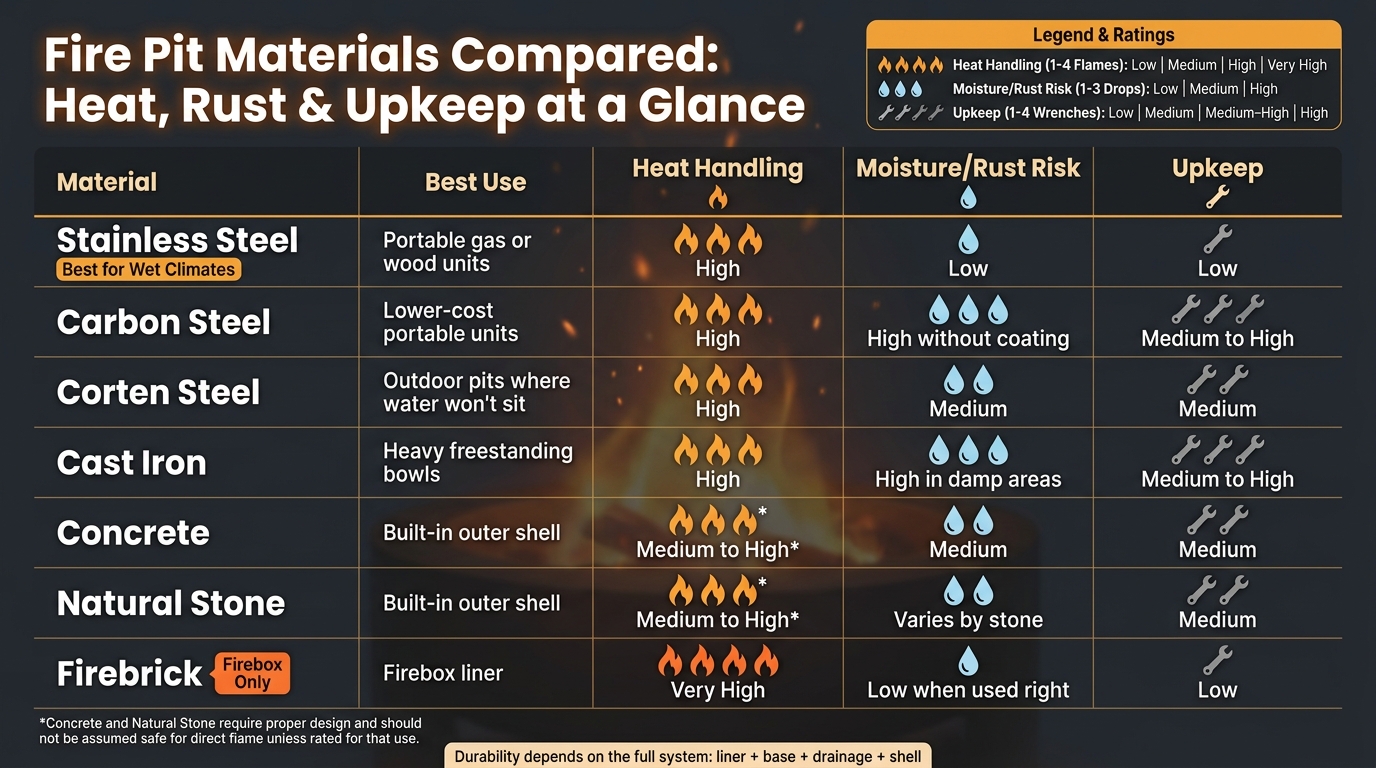
Fire Pit Materials Compared: Heat, Rust & Upkeep at a Glance
Once you’ve picked the site and base as part of your landscaping plan, the next step is material choice. This is where things get practical fast. You’re not just picking a look. You’re weighing heat, moisture, and how much work you want to do later.
Metal options: stainless steel, carbon steel, Corten steel, and cast iron
Metal fire pits can last a long time, but the gap between one material and another usually comes down to rust resistance and care. If you live in a wet climate, that matters a lot. In that case, it makes sense to put rust resistance near the top of your list and choose a finish that matches the amount of upkeep you’re willing to handle.
- Stainless steel: Offers the best rust resistance and the least upkeep of the metal choices.
- Carbon steel: Strong and lower in cost, but it needs a protective coating and regular touch-ups to keep rust from taking hold.
- Corten steel: Forms a protective patina over time, but it can run into trouble in spots where water pools or stays against the surface.
- Cast iron: Holds heat well and spreads it evenly, but it rusts fast when left out in damp conditions.
Those differences stand out even more when you compare each one against weather exposure and upkeep.
Masonry options: concrete, natural stone, and firebrick
Masonry works well for permanent installations. For businesses, commercial landscaping services in Oakville can help integrate these heavy features into a professional property layout. If you’re building a fixed fire pit, look at the shell, liner, and base as one system instead of judging each part on its own.
- Concrete: Needs reinforcement and sealing to help resist cracking and moisture penetration over time.
- Natural stone: Its lifespan depends on the type of stone and the quality of the mortar. Denser stones tend to hold up better during freeze-thaw cycles.
- Firebrick: Best used in the firebox because it can handle direct flame contact that standard masonry can’t.
These tradeoffs matter most when you size up heat rating, moisture risk, and upkeep. The next step is to weigh each option against heat rating, moisture risk, and service life.
Evaluate weather exposure, maintenance, and service life
Once you’ve compared material types, the next step is to test each option against the weather at your site. That helps you narrow down the materials already on your shortlist.
Check heat rating, moisture risk, and freeze-thaw damage
Not every stone, block, or concrete product is rated for direct flame. Pick materials made for fire pit use instead of assuming any landscaping product will hold up the same way.
Heat is only part of the story. Water can do just as much damage, especially in places with cold winters. Freeze-thaw cycles widen small cracks as water expands when it freezes.
Choose a material you can realistically maintain
Even a heat-resistant material can fail if it traps water or needs upkeep you know you won’t keep up with. That’s the part people often miss.
Go with a material you can maintain in real life, not just in theory. If water starts pooling, fix it fast before it turns into a bigger problem.
Look at the full assembly, not just the outer finish
Durability depends on the whole system, not just the part you see. A nice outer shell can break down fast if the parts underneath are weak.
Review the liner, joints, burner parts, and base together. Choose the shell, liner, joints, and base as one system, not as separate pieces.
Finalize the material plan and install safely
Once you’ve matched the materials to the heat, local weather, and the amount of upkeep you’re willing to handle, it’s time to lock in the install details. This is the part that helps the system last.
Pre-installation checklist for durable, code-compliant results
Use this final check to catch the issues that tend to cut service life short.
- Match the fuel system to a fire-rated liner or firebox designed for that use.
- Avoid materials that trap water near the firebox.
- Set the pit on a level, noncombustible base.
- Plan drainage so water does not pool at the base.
Check local fire codes and any HOA rules before you finalize the location or fuel type. Setback rules change from one municipality to the next, so make sure you confirm the exact requirements for your area.
Conclusion: The best material fits the heat, weather, and upkeep demands
When the system is set up the right way, long life usually follows. Choose the format first – permanent or portable, wood or gas. Then look at your site’s weather risks, pick an exterior material that can handle those conditions, and pair it with a fire-rated interior liner or firebox. Get the system right, and the finish has a much better shot at lasting.
FAQs
Do I need a liner for a built-in fire pit?
Yes, a fire-rated liner is a smart add-on for a built-in fire pit. Materials like heavy-gauge steel or fire brick help shield the surrounding masonry or stone from direct heat.
Without a liner, high heat can make those materials crack, crumble, or wear down much sooner than they should. A proper liner helps protect the fire pit’s structure and can help it last longer.
Which fire pit material lasts longest in rainy climates?
In rainy climates, stone, brick, and concrete tend to last the longest for fire pits. They stand up well to wet weather and usually need very little upkeep.
That’s a big difference from natural materials like bamboo, which can start to break down in damp, humid conditions. Stone, brick, and concrete handle moisture much better, without warping or rotting.
What causes fire pits to crack in winter?
Fire pits often crack in winter because freeze-thaw cycles put the material under stress. When moisture gets trapped and then freezes, it expands. That pressure can lead to cracks and other structural damage.
Standard poured concrete is often the most at risk, while concrete pavers tend to handle these temperature swings better. Good drainage also matters a lot. Pair that with durable, weather-resistant materials, and you lower the chance of winter damage.