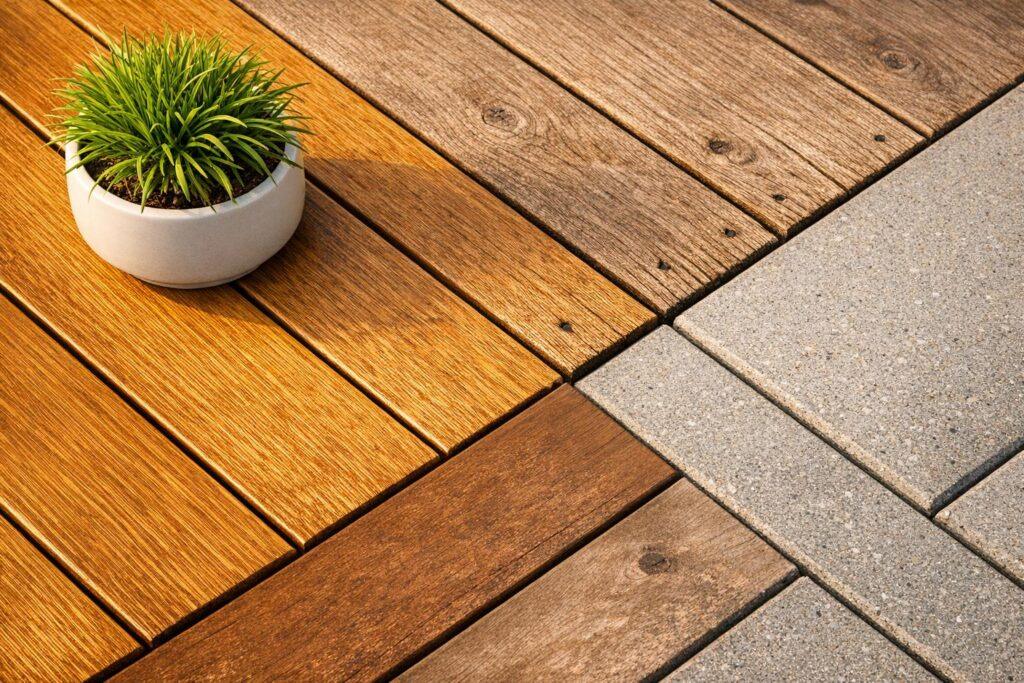
Bamboo is gaining attention as a durable, eco-conscious material for sustainable outdoor spaces like decks, patios, and driveways. It matures quickly (3–5 years), lasts up to 40 years with proper care, and offers a sleek, natural look. However, it comes with challenges like higher upfront costs and maintenance needs.
Key Takeaways:
- Durability: Engineered bamboo lasts 25–40 years but must be elevated and maintained annually.
- Cost: Installation ranges from $10–$18 per sq. ft., comparable to exotic hardwoods.
- Maintenance: Annual oiling costs $50–$100 for 300 sq. ft. to retain its color.
- Sustainability: Bamboo stores carbon and has a lower environmental impact compared to concrete or treated lumber.
- Aesthetics: Warm amber tones that fade to silver-gray if untreated.
Quick Comparison:
| Factor | Bamboo | Pressure‑Treated Lumber | Concrete Pavers |
|---|---|---|---|
| Lifespan | 25–40 years | 10–20 years | 50+ years |
| Maintenance | Annual oiling | Regular staining/sealing | Minimal upkeep |
| Cost (Installed) | $10–$18/sq. ft. | $15–$35/sq. ft. | $12–$45/sq. ft. |
| Sustainability | High | Moderate | Low |
| Appearance | Sleek, modern | Natural, rustic | Structured, polished |
Bamboo works well for modern designs but may not suit areas with heavy traffic or extreme weather. Proper installation and regular care are essential for its longevity.

Bamboo vs. Pressure-Treated Lumber vs. Concrete Pavers: Hardscaping Comparison
1. Bamboo Hardscaping
Bamboo has come a long way from being just a material for garden fencing. With advanced manufacturing techniques like Thermo-Density and Outdoor-Density, bamboo strands are compressed and heat-treated to create engineered products that compete with top-tier hardwoods in terms of strength and reliability.
Durability
Engineered bamboo is built to last. The compression process improves its dimensional stability by about 50%, making it resistant to the swelling and shrinking that traditional wood often suffers during seasonal changes. High-quality options, such as MOSO® Bamboo X-treme, boast a 25-year warranty and achieve the highest ratings under European standards (Durability Class 1 and Use Class 4 per EN 350 and EN 335). Many bamboo decking products also earn a Class A fire rating, an important feature for areas prone to wildfires.
"Structural bamboo rewards careful design and punishes assumptions." – Tristan Ishtar, VP of Sales, amaZulu, Inc.
However, bamboo has its limits. It should never be placed directly in contact with the ground, as constant exposure to moisture can lead to rapid deterioration. To maximize its lifespan, always elevate bamboo structures and ensure proper drainage underneath. These precautions, combined with its natural durability, make maintenance more manageable.
Maintenance
While bamboo does require some upkeep, it’s relatively low effort. To keep its rich brown color and prevent splitting, apply a water-based oil once a year. This costs about $50–$100 for a 300 sq. ft. deck. If you prefer a weathered silver-gray look, you can skip the oiling altogether – some homeowners even favor this natural aging process. Regardless of the finish, pre-drilling is essential before fastening to avoid cracking.
Cost
Cost is always a consideration, and bamboo falls into the premium category. Standard bamboo decking typically costs $10–$18 per square foot installed, while Engineered Bamboo Lumber (EBL) for structural use is significantly pricier. Its pricing aligns more closely with exotic hardwoods like Ipe or Cumaru rather than basic pressure-treated wood or concrete. Additionally, installation labor can be more expensive since bamboo requires precision and proper techniques.
Sustainability
Bamboo has an impressive environmental profile. Moso bamboo, for instance, absorbs about 12 tonnes of CO2 per hectare annually during its peak growth phase. This carbon remains locked in the material throughout its life. Engineered bamboo can even be carbon-negative, with a footprint ranging from -1.7 to 0.5 kg CO2e/kg, in stark contrast to reinforced concrete’s 0.15–0.20 kg CO2e/kg. A 400 sq. ft. bamboo deck can store approximately 2,600 lbs. of CO2, making it a greener choice.
Aesthetics
Bamboo offers a natural, elegant appearance that suits both modern and organic design styles. Its warm amber tones gradually fade to a soft silver-gray if left untreated, providing two distinct looks from the same material. Newer designs also include slightly curved board profiles, which help shed water more effectively and reduce the buildup of dirt, keeping the surface cleaner with minimal effort. This combination of visual appeal and practicality makes bamboo a standout choice for hardscaping.
sbb-itb-5aa6250
2. Pressure-Treated Lumber and Concrete Pavers
Before diving into bamboo’s pros and cons, it’s worth taking a closer look at what it’s up against. In the U.S., pressure-treated lumber and concrete pavers are two of the most common hardscaping materials. Each has its own strengths, and comparing them to bamboo helps paint a clearer picture of how bamboo stacks up as an option.
Durability
Concrete pavers are built to last. They’re 2 to 3 times stronger than standard poured concrete, often rated at over 8,000 psi. Plus, their semi-flexible design allows them to adjust to freeze–thaw cycles, which means less cracking compared to poured concrete.
"There’s two types of concrete – concrete that is cracked and concrete that will crack." – Robert Bowers, VP of Engineering – Hardscapes at the Concrete Masonry & Hardscapes Association (CMHA)
Pressure-treated lumber, while durable, typically lasts 10 to 20 years before succumbing to rot, insect damage, or warping. In contrast, concrete pavers can hold up for 30 to 50+ years with minimal structural issues. This durability difference also impacts how much care each material demands over its lifetime.
Maintenance
Concrete pavers are relatively low-maintenance. They mainly need occasional cleaning and some sand in the joints every few years – costing around $200–$400 every four years. Pressure-treated lumber, however, requires more attention. Staining or sealing every two years is the norm, adding up to $4,000–$7,000 over 10 years. As the wood ages, splinters can also become a problem, especially for surfaces exposed to heavy use.
Cost
The upfront cost of pressure-treated lumber ranges from $15–$35 per sq. ft. installed, while concrete pavers fall between $12–$45 per sq. ft. Although lumber might seem like the cheaper option initially, its shorter lifespan and higher maintenance costs make it more expensive in the long run. These financial factors also tie into the environmental impact of each material.
Sustainability
Concrete pavers come out ahead in terms of long-term sustainability. Many permeable paver systems allow water to seep through instead of running off, which is a big plus in urban environments. Pressure-treated lumber, on the other hand, relies on chemical treatments to resist decay and pests. Once it reaches the end of its life, it usually ends up in a landfill. Pavers, however, can often be reused or replaced individually, which helps cut down on waste.
Aesthetics
When it comes to looks, concrete pavers offer a polished, structured style with plenty of options for colors, shapes, and patterns. They also hold their appearance well over time. Pressure-treated lumber provides a more natural, traditional vibe, but it tends to weather and gray without regular upkeep. Even with maintenance, it can start to look worn after just a few years.
Pros and Cons of Bamboo Hardscaping
After exploring bamboo’s characteristics and its alternatives, let’s break down the main advantages and challenges of using bamboo for hardscaping.
Bamboo stands out for its impressive strength – boasting tensile limits of up to 28,000 PSI – and its rapid growth cycle, maturing in just 3–5 years. These qualities make it an environmentally friendly and cost-effective choice for hardscaping, with installation costs ranging from $10–$18 per square foot. Add to that its sleek, tropical aesthetic, and bamboo becomes an appealing option for many projects.
"Bamboo offers the advantages of a hard material without the environmental burden of tropical wood." – Bamdura
However, bamboo isn’t without its drawbacks. Without professional treatment, it faces a high failure rate – up to 90% – within 10–15 years due to pests and decay. To ensure its longevity, regular upkeep is crucial, including annual oiling or sealing, which can cost around $50–$100 for 300 square feet. Its smooth surface may also require additional texturing in wet areas, like near pools, to improve safety. Additionally, its natural color palette is somewhat limited, offering shades of light tan or darker carbonized tones.
Here’s a quick comparison of bamboo versus other hardscaping materials like pressure-treated lumber and concrete pavers:
| Factor | Bamboo | Pressure‑Treated Lumber | Concrete Pavers |
|---|---|---|---|
| Relative Durability | 25–40 years (with proper treatment) | 10–20 years | 50+ years |
| Relative Maintenance | Annual oiling/sealing (≈$50–$100/yr for 300 sq. ft.) | Regular staining and sealing | Periodic polymeric sand refills |
| Relative Cost (Installed) | $10–$18 per sq. ft. | Lower upfront cost | Moderate; varies by stone type |
| Relative Sustainability | Highly sustainable (3–5‑year harvest cycle, effective carbon storage) | Moderately sustainable (chemical treatments) | Lower, due to high embodied energy |
| Aesthetics | Modern, tropical, linear grain | Warm and traditional | Structured and versatile |
This breakdown highlights bamboo’s strengths and limitations while setting the stage for a closer look at its installation and long-term performance.
Conclusion
When it comes to sustainable landscaping, the performance of materials and their environmental impact are critical factors. Bamboo stands out as a strong option for hardscaping, though its suitability depends on the specifics of your project. It works particularly well in modern, eco-conscious designs, especially in areas exposed to moisture, like pool surrounds or waterfront spaces. Its durability and fire-resistance also give it an edge over pressure-treated lumber in terms of longevity and environmental benefits. However, for surfaces that need to handle heavy traffic or endure severe freeze-thaw cycles, concrete pavers are often the more practical and low-maintenance choice.
No matter how good the material is, expert installation is what ensures it performs well over time. Proper base preparation, drainage grading, and soil assessment are essential for creating hardscapes that last not just years, but decades. This is why professional guidance is so important. As Dependable Lawn Care explains:
"Not sure whether to choose natural stone or concrete? Cobblestone or interlock? That’s what our hardscape design services are for. We help you choose materials based on aesthetics, use, and cost, so you don’t have to guess what to use to achieve the desired look." – Dependable Lawn Care
For expert advice on yard and patio design, consult professionals like Dependable Lawn Care before making any material investments.
FAQs
Is bamboo decking slippery when wet?
Yes, bamboo decking can become slippery when wet, but this largely depends on the texture and type of product. Some engineered bamboo boards may offer less traction in wet conditions. However, options with brushed or grooved finishes can provide better grip. Always review the manufacturer’s slip-resistance certifications to ensure the decking meets your safety needs for outdoor spaces.
What climate is bamboo hardscaping best for?
Bamboo hardscaping thrives in dry desert climates, where natural bamboo can endure for over 15 years. Similarly, Mediterranean areas with dry summers and mild, wet winters are well-suited, offering a lifespan of 12–15 years. However, in humid and rainy regions, natural bamboo tends to decay unless maintained regularly or replaced with synthetic alternatives. For areas with significant temperature and humidity fluctuations, thermally modified bamboo is a better choice as it resists warping and offers greater durability.
What installation mistakes make bamboo fail early?
Bamboo often struggles to stand the test of time in hardscaping because of moisture damage and improper installation methods. Some frequent missteps include burying bamboo directly into the soil, failing to seal it, or cutting it in ways that trap water. Additionally, fastening through the hollow sections (internodes) without pre-drilling or skipping essential steps like ventilation and expansion gaps can lead to cracking and warping over time. To make bamboo last longer, always seal it, ensure proper airflow, and follow correct installation practices.