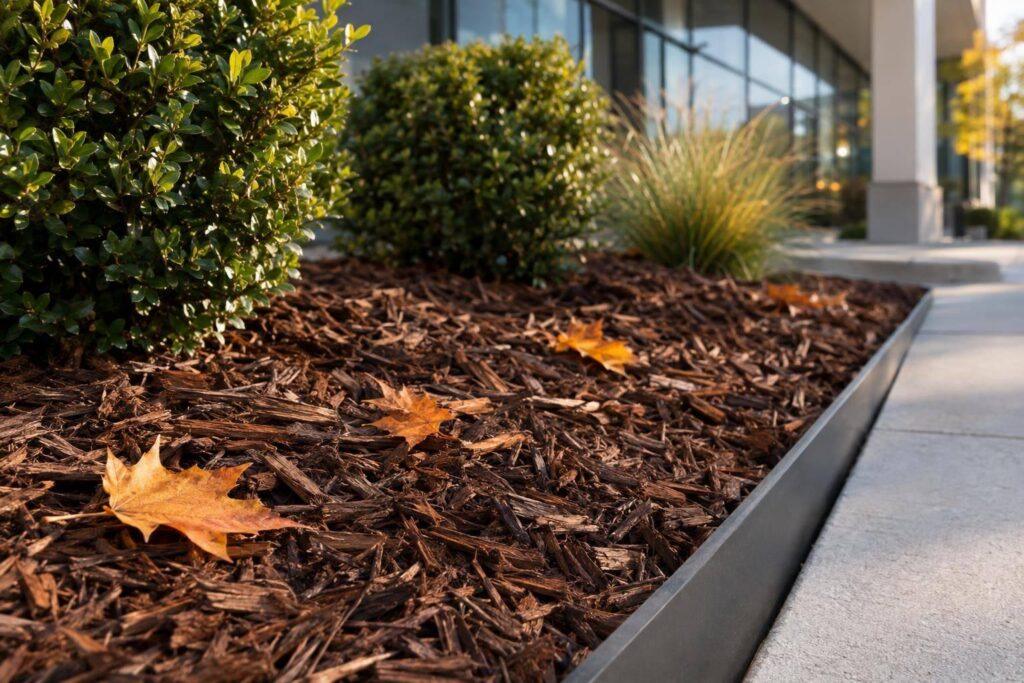
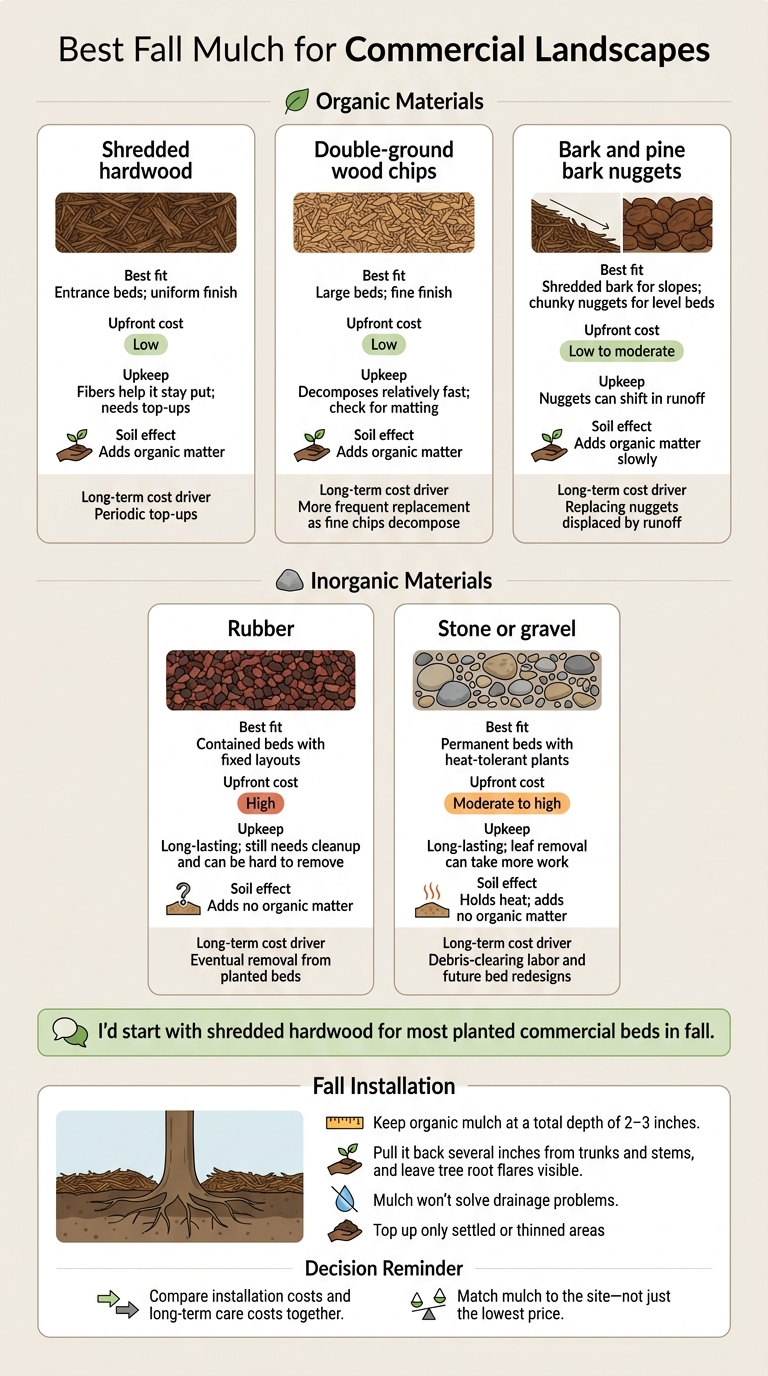
I’d start with shredded hardwood for most planted commercial beds in fall. It helps hold soil moisture, limit weeds with professional lawn care, and keep beds tidy while adding organic matter. Keep organic mulch 2–3 inches deep in total, including what’s already there, and leave space around trunks and stems.
The best choice for your property depends on upfront cost, cleanup needs, appearance, and plant health. I’d also check wind exposure, runoff, and crew access before choosing.
Quick Comparison
| Mulch | Best fit and appearance | Durability and upkeep | Upfront cost | Soil effect |
|---|---|---|---|---|
| Shredded hardwood | Entrance beds; uniform finish | Fibers help it stay put; needs top-ups | Low | Adds organic matter |
| Double-ground wood chips | Large beds; fine finish | Decomposes relatively fast; check for matting | Low | Adds organic matter |
| Bark and pine bark nuggets | Shredded bark for slopes; chunky nuggets for level beds | Nuggets can shift in runoff | Low to moderate | Adds organic matter slowly |
| Rubber | Contained beds with fixed layouts | Long-lasting; still needs cleanup and can be hard to remove | High | Adds no organic matter |
| Stone or gravel | Permanent beds with heat-tolerant plants | Long-lasting; leaf removal can take more work | Moderate to high | Holds heat; adds no organic matter |
My rule: <u>fix drainage and erosion before adding mulch</u>. Clear fall debris, compare installation and future care costs together, and check beds after storms. Top up thin areas – not the whole bed by default.
Best Fall Mulch for Commercial Landscapes
1. Shredded Hardwood Mulch
Durability and Maintenance
Shredded hardwood fibers lock together, helping the mulch stay put during fall rain and snowmelt. Remove leaves, twigs, and other debris regularly to prevent trapped moisture. It’s a solid starting point when comparing finer, lighter organic options.
Installation and Replacement Costs
As shredded hardwood gradually breaks down, plan for annual top-dressing in thinning areas rather than replacing the entire layer.
Appearance and Site Fit
Its fine texture gives high-visibility commercial sites a clean, uniform finish. Install it after fall cleanup to avoid trapping debris underneath.
Plant Health and Soil Benefits
Shredded hardwood improves soil as it breaks down. Top up thinning areas to keep protective coverage through fall and winter without adding unnecessary buildup.
For sites that want a similar look with a finer surface and easier grading, double-ground wood chips are the next option to compare.
sbb-itb-5aa6250
2. Double-Ground Wood Chips
Durability and Maintenance
Check for matted chips after rain or snowmelt. If water runs off the surface, rake the chips apart so moisture can reach the soil. Clear displaced chips and storm debris during cleanup.
Installation and Replacement Costs
Compare installed cost, not just the price per cubic yard. Bed access, prep work, and hauling all affect the total. hauling chips by hand into enclosed beds adds labor costs for commercial landscaping services in Oakville. Where equipment can reach the beds, include machine spreading in your cost comparison.
Appearance and Site Fit
Double-ground chips give beds a natural finish with varied texture. On windier sites, denser chips can slow wind-driven drying around new plantings.
Plant Health and Soil Benefits
Keep the total depth at 2–3 inches, counting any material already in place. This layer helps prevent a crust from forming after rain, especially in clay soils.
For a coarser organic finish that lasts longer, compare bark mulch and pine bark nuggets next.
3. Bark Mulch and Pine Bark Nuggets
Durability and Maintenance
Shredded bark stays in place better on slopes. Pine bark nuggets shift more easily during heavy rain and runoff. After storms, check beds beside sidewalks and driveways. Displaced mulch can spread onto concrete and make edging harder to maintain.
Installation and Replacement Costs
Pine bark nuggets may need more frequent raking and replenishment in exposed areas because they move more easily.
Appearance and Site Fit
Pine bark nuggets add a decorative, chunky texture to level beds with little runoff. Choose shredded bark where keeping mulch in place matters more than texture. Keep either material inside the bed, rather than piled along its edges.
Plant Health and Soil Benefits
Bark that turns into dark fines is breaking down and needs topping up. Keep mulch away from crowns, stems, and trunks to avoid trapped moisture and rot. Remove sour-smelling or slimy patches instead of covering them with new bark.
For sites that need longer-lasting coverage with less organic upkeep, compare rubber mulch and stone next.
4. Rubber Mulch
Durability and Maintenance
Rubber works for low-maintenance beds, but it doesn’t improve the soil. It lasts a long time and still needs routine cleanup.
Installation and Replacement Costs
Rubber costs more upfront than organic mulch. Ask for an installed quote that covers bed preparation and containment, along with a separate estimate for removal down the road.
Appearance and Site Fit
Choose rubber only if its look suits the property and the bed has solid edging to keep it in place. Before installing it in the fall, fix drainage problems. Ask the installer to check for heat buildup near buildings and plantings, too. The material needs to fit the site.
Plant Health and Soil Benefits
Choose rubber for durability, not soil improvement. Before using it in planted beds, check the manufacturer’s guidance on leaching.
If the property calls for a different balance of permanence, cleanup, and appearance, compare rubber with stone and gravel next.
5. Stone and Gravel Mulch
Durability and Maintenance
Stone and gravel resist wind and don’t break down. Use a blower or rake to clear fallen leaves and other debris throughout the fall. Debris left in the bed can trap moisture, block sunlight, and give weeds, pests, and fungi a place to thrive.
Installation and Replacement Costs
Stone and gravel cost more to install than wood mulch, but they need less replacement. In areas with heavy clay soil, a stable base and proper compaction help reduce shifting caused by freeze-thaw cycles.
Appearance and Site Fit
Stone and gravel work well in permanent beds at retail centers, campuses, and industrial parks. Use them where planting layouts stay fixed and access for snow removal needs to stay clear.
Plant Health and Soil Benefits
Stone and gravel hold heat and add no organic matter to the soil. Choose them where low water use and little upkeep are the priorities. Wood mulch is a better fit when cooler roots and soil enrichment matter more.
Compare Mulch Performance and Costs
Use the material profiles above to weigh the trade-offs for commercial landscaping in Etobicoke during the fall season. Compare installed cost, maintenance, and site fit – not just the material name.
Durability and Maintenance
Durability isn’t just about how long mulch lasts. Factor in leaf removal, weeds, storm debris, and edge repairs, too.
| Material | Commercial maintenance takeaway |
|---|---|
| Shredded hardwood | Stays stable but needs periodic top-ups |
| Double-ground wood chips | Usually moves less on slopes than loose bark nuggets, but still needs replenishing |
| Bark and pine bark nuggets | Nuggets are more likely to shift during runoff and snowmelt |
| Rubber | Lasts a long time but still needs fall debris cleanup |
| Stone and gravel | Breaks down the least, but leaf removal and shifting from freeze-thaw cycles still need attention |
With maintenance needs in mind, compare the full installed cost – not just the price of the material.
Installation and Replacement Costs
Compare relative cost tiers rather than one price per square foot. Mulch depth, site access, and removal work all affect the total.
| Material | Relative upfront cost | Biggest long-term cost driver |
|---|---|---|
| Shredded hardwood | Low | Periodic top-ups |
| Double-ground wood chips | Low | More frequent replacement as fine chips decompose |
| Bark and pine bark nuggets | Low to moderate | Replacing nuggets displaced by runoff |
| Rubber | High | Eventual removal from planted beds |
| Stone and gravel | Moderate to high | Debris-clearing labor and future bed redesigns |
Appearance and Site Fit
Check samples on site. Look at color, texture, and how well the material stays contained, along with its fit around entrances, slopes, and walkways.
| Material | Commercial-site decision |
|---|---|
| Shredded hardwood | Entrance beds where a uniform finish is worth regular touch-ups |
| Double-ground wood chips | Large planting areas crews can easily access for replenishing |
| Bark and pine bark nuggets | Shredded bark for slopes; nuggets for flat beds |
| Rubber | Contained, permanent layouts rather than beds likely to be redesigned |
| Stone and gravel | Fixed layouts where debris-clearing equipment can reach the beds |
Beyond cost and appearance, check whether the mulch helps the soil or simply covers the planting bed.
Plant Health and Soil Benefits
Drainage depends on soil and site design – not mulch alone.
| Material | Soil-health decision |
|---|---|
| Shredded hardwood | Adds organic matter and builds soil as it decomposes |
| Double-ground wood chips | Decomposes faster, adding organic matter sooner but needing more frequent replacement |
| Bark and pine bark nuggets | Coarse pieces add organic matter more slowly |
| Rubber | Don’t rely on rubber to improve soil health |
| Stone and gravel | Adds no organic matter and doesn’t improve drainage in the soil beneath it |
Mulch Trade-Offs and Fall Installation
Once you’ve chosen a material, proper fall installation helps keep it clean, stable, and effective.
| Material | Fall-installation caution | Maintenance action |
|---|---|---|
| Shredded hardwood | Can mat down and trap debris. | Remove fallen leaves and litter before application; keep mulch away from trunks and stems. |
| Double-ground wood chips | Can settle over time and reduce coverage. | Check the settled depth; top up only settled or thinned areas. |
| Bark and pine bark nuggets | Nuggets shift more easily in runoff and need closer edge control. | Spread evenly and keep bark off crowns and trunks. |
| Stone and gravel | Does not improve soil fertility. | Provide a stable base to prevent sinking into clay soil. |
Start with a clean, dry bed. Fall debris left under mulch traps moisture and makes the finished bed look less tidy.
Prepare Beds After Fall Cleanup
Remove accumulated leaves, litter, branches, and weeds. Check drainage paths and irrigation heads, and fix any ponding before applying mulch. Mulch won’t solve drainage problems.
Water only if the bed is dry. When watering is needed, irrigate in the morning and keep overspray off pavement.
Set Mulch Depth and Clearances
Keep organic mulch at a total depth of 2–3 inches. Pull it back several inches from trunks and stems, and leave tree root flares visible.
Inspect Beds After Fall and Winter Weather
Check commercial beds after storms to keep them looking tidy and prevent edges from breaking down.
After wind, heavy rain, snowmelt, and freeze-thaw events, look for displaced mulch, exposed soil, blocked drains, ponding, erosion, and soil heaving.
Remove debris and redistribute displaced mulch to restore clean edges before adding more. Top up only settled or thinned areas, then recheck the depth and clearance around trunks.
Conclusion: Match Mulch to Property Conditions
Compare durability, cost, and appearance, then choose mulch that suits the site’s exposure and maintenance plan.
Match mulch to the site – not just the lowest price.
Use this final check to narrow your choice by property type.
| Material | Decision point |
|---|---|
| Shredded hardwood | Visible entrance beds |
| Double-ground wood chips | Large, budget-sensitive beds |
| Bark or pine bark nuggets | Formal beds where mulch is unlikely to shift during heavy runoff |
| Rubber | Contained beds that need little replacement |
| Stone or gravel mulch | Permanent layouts with access for clearing debris |
Compare installation costs and long-term care costs together. A material that lasts longer isn’t automatically the best fit for planted beds. Set the maintenance schedule before installation, and plan access for bed care and winter snow removal.
FAQs
How much mulch should I order for my commercial beds?
Apply a 2- to 3-inch layer of organic mulch to help soil hold moisture and reduce evaporation during dry weather [1]. To work out how much to order, calculate your beds’ square footage and multiply it by the mulch depth in feet. Then convert the total from cubic feet to cubic yards.
Dependable Lawn Care offers professional landscaping services and can help with your property’s maintenance needs [2][3].
Should I mulch before the first frost?
Yes. Applying organic mulch before the first frost helps protect your commercial landscape through winter. Mulch keeps soil temperatures steadier around plant roots, holds moisture, and lowers the risk of erosion caused by temperature changes and snowmelt [1]. It also acts as an insulating layer, shielding roots from harsh winter conditions [1].
Dependable Lawn Care offers professional mulching services to help keep your property healthy and protected throughout the season.
Do I need landscape fabric under mulch?
The provided information doesn’t state whether you need landscape fabric under mulch. Dependable Lawn Care recommends a 2- to 3-inch layer of organic mulch around trees and garden beds to help retain soil moisture, reduce evaporation, and protect roots from frost and erosion.
For advice on mulch installation at your commercial property, contact Dependable Lawn Care directly.