

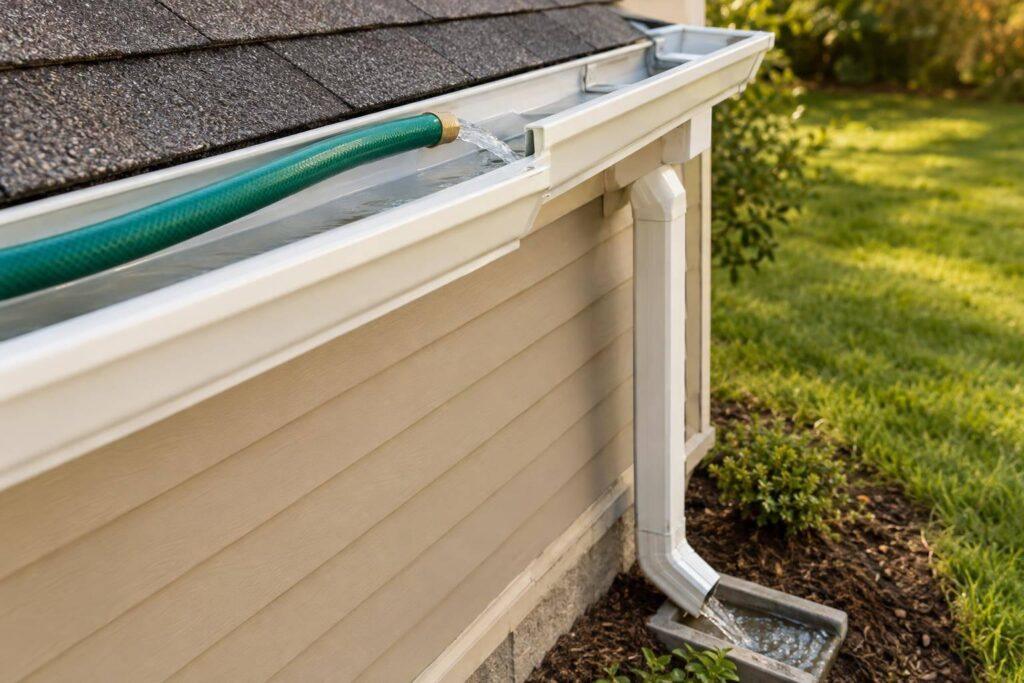
I check for clogs, gutter slope, and downspout problems first – and put water pooling near the foundation at the top of the list. If puddles remain 24–48 hours after rain, the drainage still needs work.
Here’s the order I follow:
- Restore flow: Remove debris, fix sagging gutters, and repair damaged or undersized downspouts.
- Check the discharge: Keep outlets clear and direct runoff away from the house, walkways, and neighboring property.
- Test before repairing the yard: Use a hose, then check after rain before replacing soil, grass, or mulch.
- Prevent repeat damage: Inspect after storms and during leaf fall. I leave high gutters, buried-pipe failures, and major erosion to a pro.
My rule: <u>fix the water’s path first</u>, then repair what it washed away.
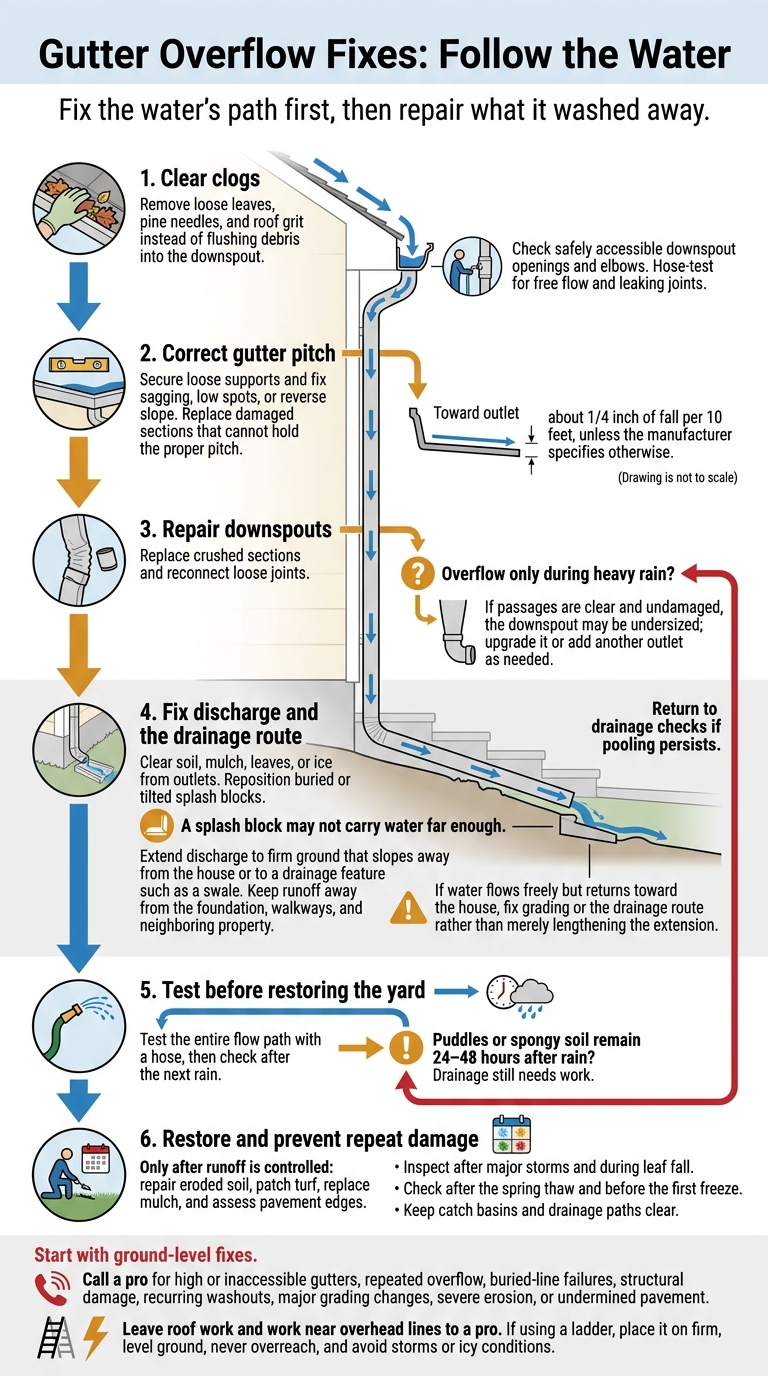
Gutter Overflow Fixes: Follow the Water
Clear Gutter Clogs and Correct the Pitch
Clear Gutters, Downspout Openings, and Elbows
Overflow near a downspout opening usually points to leaves, pine needles, or roof grit clogging the opening or an elbow. That spill can strip mulch, wash away topsoil, and soak turf near walkways or driveways.
Remove loose debris instead of flushing it into the downspout. Clear the opening, then disconnect any safely accessible downspout sections to check elbows for hidden clogs.
Run water through the gutter with a garden hose. Check that water flows freely from the outlet, and inspect joints for leaks or backed-up water.
Once the outlet drains freely, check the gutter run for low spots.
Fix Sagging Gutters and Restore Slope
If water still sits in the gutter after you clear the outlet, the pitch is off. Look for loose hangers, low spots, or damaged sections that let water collect or slope away from the outlet. Repeated overflow at a low point erodes lawn soil, washes out mulch, and can damage nearby hard surfaces.
Secure loose supports, adjust the slope, and replace damaged sections that can’t hold the proper pitch. Aim for about 1/4 inch of fall per 10 feet, unless the manufacturer specifies otherwise.
Cleaning won’t fix a low spot or reverse slope. Test again with a hose: water should flow to the outlet without pooling or overflowing.
sbb-itb-5aa6250
Fix Downspout Flow and Discharge Problems
If the gutter is clear and pitched correctly, check the downspout and where the water drains.
Repair Damaged or Undersized Downspouts
A crushed or undersized downspout slows water flow, causing it to back up at the outlet. Look for crushed sections and disconnected joints. Replace damaged parts and reconnect loose joints to keep runoff from eroding grass, washing out mulch, and weakening pavement edges.
Overflow only during heavy rain? If the passages are clear and undamaged, the downspout may be too small for the roof area it drains. Upgrade it or add another outlet as needed. After repairs, check the joints for leaks and watch how the system handles the next storm.
If the pipe is intact but water still lands too close to the house, extend the discharge.
Extend Downspouts Away From the Foundation
Puddles, washed-out soil, and exposed roots near the foundation can point to poor discharge placement. Extend the downspout to firm ground that slopes away from the house or to a drainage feature, such as a swale.
A splash block may not carry water far enough. Check that runoff doesn’t pool or cut channels through the lawn.
Clear Outlets and Check Drainage Beyond Them
Remove soil, mulch, leaves, or ice blocking the outlet. Lift buried splash blocks and reposition anything tilted toward the foundation. A blocked outlet can push water back into the downspout. If roots or a collapsed pipe block the line, have it inspected before adding more flow.
Check both the outlet and where the runoff lands. Even a clear outlet can cause problems if it empties onto flat, compacted ground or into a blocked drainage route. If water flows freely but returns toward the house, fix the grading or drainage route rather than just lengthening the extension.
Watch the outlet from a safe spot during or just after rain. Standing water that lasts more than 24–48 hours signals a drainage failure. Runoff across pavement also poses an ice risk in freezing weather.
After fixing the discharge, check the lawn, mulch, and pavement for damage.
Repair Yard Damage and Prevent Repeat Problems
Restore Grass, Mulch Beds, and Pavement Edges
Fix runoff first, then repair soil, grass, and mulch. Otherwise, the next storm could wash away your repairs.
Regrade eroded soil so water drains away from the house. Patch damaged turf with sod or seed and straw. Wait until fast-moving runoff is under control before replacing mulch, and keep it away from plant crowns to prevent rot.
Check pavement edges for settling, cracks, and frost heave. Surface repairs won’t hold if the base underneath is still weak.
Watch how the drainage system handles the next storm cycle.
Inspect Drainage After Storms and During Leaf Fall
Inspect repaired areas after major storms and during seasonal yard cleanups. Look for dislodged extensions, shifted splash blocks, and new erosion around outlets. Check for displaced mulch, exposed roots, and water pooling around your repairs.
Keep catch basins and drainage paths clear to help prevent another washout.
Know When to Call a Professional
Some drainage problems need more than a basic yard repair. Use this table to decide what you can handle and when to call a pro.
| DIY task | Call a professional for |
|---|---|
| Clear ground-accessible openings and surface drains | Blocked high or inaccessible gutters |
| Test accessible downspouts with a hose | Repeated overflow, buried-line failure, or structural damage |
| Reposition splash blocks | Recurring washouts or major grading changes |
| Fill minor erosion ruts and patch small turf areas | Severe erosion or undermined pavement |
Start with ground-level fixes. If you need a ladder, set it on firm, level ground and never overreach. Leave roof work and any work near overhead lines to a pro. Don’t use a ladder during storms or in icy conditions.
Conclusion: Fix Drainage Before Restoring the Yard
Clear clogs, correct gutter pitch, and repair or resize downspouts. Keep outlets open so runoff flows away from the house and walkways.
Test the entire flow path with a hose, then check it again after the next rain before restoring the yard. If puddles or spongy soil remain 24–48 hours later, drainage still needs work. Hold off on replacing grass, mulch, or hardscape edges until it’s fixed.
Check drainage after the spring thaw and before the first freeze to limit erosion, puddling, and winter ice.
FAQs
How can I tell if overflow comes from clogs or bad gutter pitch?
Watch your gutters during a rainstorm. If water backs up or spills over despite a clear channel, the pitch is likely off – the gutter isn’t sloped correctly toward the downspouts.
If water pools or overflows where leaves, twigs, or other debris block the channel or outlet, you’re dealing with a clog. During heavy rain, check the downspouts to see whether water flows freely through the system.
How far should my downspout extend to prevent lawn washouts?
Downspouts should extend far enough to keep runoff from pooling near your foundation or washing away grass and mulch beds. The right distance depends on your property’s slope and layout.
Professionals often recommend directing downspouts to an aboveground outlet or a dedicated catch basin. If you see erosion or standing water near your home, your downspout extensions may be too short and need to reach farther.
Could gutter overflow be washing soil out from under my walkway?
Yes. Clogged gutters or downspouts that are too short can direct runoff toward your walkway. That water can wash away soil underneath, causing pavers to shift or sink over time.
Displaced mulch or soil after a storm may point to erosion from runoff. Improving drainage or adjusting the slope of the ground can help prevent further damage.