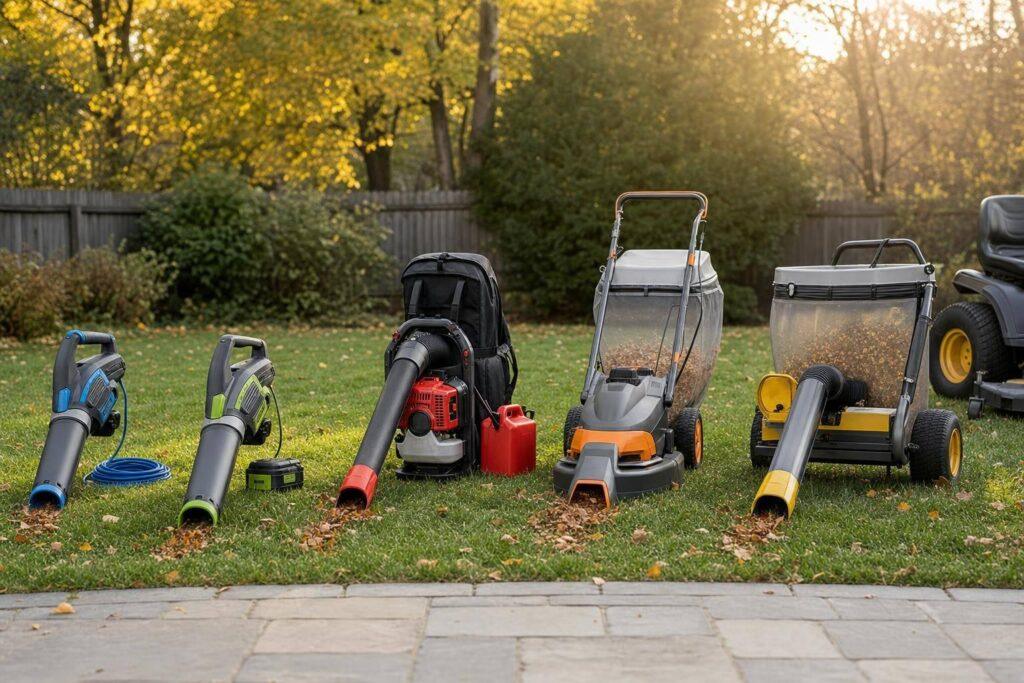
If you want to pick up leaves, shrink them, and bag them in one step, a leaf vacuum mulcher is the right tool. I’d choose by yard size, debris type, noise, runtime, and upkeep before looking at anything else.

Here’s the short version:

  • Corded electric models are best for small yards up to 1/4 acre and often cost $100–$300.
  • Cordless models work well for small to mid-size yards, but most run for only 20–60 minutes per charge.
  • Gas handheld units bring more suction and do better with twigs, acorns, and heavier debris, but they’re louder and need more care.
  • Walk-behind models fit 1/4 acre to 1 acre and move more air, often around 1,000–2,000 CFM.
  • Tow-behind units are for 1+ acre properties and can hold up to 180 gallons.
  • A mulch ratio around 8:1 to 12:1 is enough for many homes. Some stronger units reach 16:1 to 18:1.
  • For best results, use them on dry leaves. Wet leaves can clog the machine fast.
  • If your yard has sticks, acorns, or pine cones, I’d look for a metal impeller.

A leaf blower moves leaves. A mower chops them into the lawn. A leaf vacuum mulcher collects the mess and cuts the volume down, which means fewer bag dumps and less curbside bulk.

Leaf Vacuum Mulcher Types Compared: Which One Fits Your Yard?

Leaf Vacuum Mulcher Types Compared: Which One Fits Your Yard?

Quick Comparison

Type Best For Runtime Airflow Main Tradeoff
Corded Electric Up to 1/4 acre Unlimited 150–400 CFM Cord reach
Cordless Battery Small to medium yards 20–60 min 150–400 CFM Short runtime
Gas Handheld Tougher yard debris Until refuel Up to 600 CFM Noise and upkeep
Walk-Behind 1/4 to 1 acre Until refuel 1,000–2,000 CFM Weight and price
Tow-Behind 1+ acres Until refuel High-capacity cleanup Needs tractor or ATV

My bottom line: match the machine to the yard first, then compare CFM, mulch ratio, bag size, weight, and impeller material. That gets you to the right choice with less guesswork.

Types of Leaf Vacuum Mulchers and Which One Fits Your Needs

The right machine comes down to four things: yard size, the kind of debris you deal with, local noise rules, and how much upkeep you’re willing to put up with. Some models are light and easy. Others bring more power, but they also bring more noise, weight, and maintenance.

Corded and Cordless Electric Models

Corded electric models are light, quiet, and start right away. There’s no fuel mixing, no engine upkeep, and no hassle getting them going. Some cost about $100, which makes them the lowest-cost option in this group.

They work best for small yards with easy access to outlets. If you want low upkeep and simple operation, they make a lot of sense. The main catch is the cord. In most cases, they’re best for lots up to 1/4 acre.

Cordless models give you more freedom to move around. No cord means you can cover awkward corners, garden beds, and areas farther from the house without dragging an extension cord behind you.

But battery life is the big limit. Most battery-powered models run for about 20 to 60 minutes per charge on high power. That’s fine for small to medium yards, but it can feel short on larger properties.

Gas Handheld, Walk-Behind, and Tow-Behind Units

Gas handhelds bring a clear jump in power. If your yard has more than dry leaves, that extra muscle matters. Models with metal impellers do a better job with twigs and acorns than models with plastic impellers.

The downside is pretty clear too. Gas handhelds are louder, heavier, and need fuel mixing plus regular engine upkeep. So yes, you get more power, but you also get more work.

Walk-behind units push airflow much higher than handheld models, and they take some strain off your back during spring cleanups and other big yard projects. They’re built for medium to large residential lots, usually from 1/4 acre to 1 acre. They can also handle a mix of debris across different surfaces, including pine cones, acorns, and flower petals.

Tow-behind units are the big guns. They’re made for properties over 1 acre and hook up to a lawn tractor or ATV. Their standout feature is capacity: some can hold up to 180 gallons. If you’re cleaning a lot of ground at once, that size can save a ton of stops to empty the bag.

Before buying any gas-powered unit, check your local rules. Some U.S. municipalities limit gas-powered lawn equipment because of noise or emissions. That matters, especially when some gas models can reach 100 decibels.

The table below makes it easier to compare property size, mobility, and collection capacity at a glance.

Type Best Property Size Airflow Key Advantage Key Disadvantage
Corded Electric Up to 1/4 acre 150–400 CFM Lightweight, quiet, affordable Limited by cord reach
Cordless Electric Small to medium 150–400 CFM High mobility, no fumes 20–60 minute runtime
Gas Handheld Large gardens Up to 600 CFM Handles tough debris Loud, heavy, high maintenance
Walk-Behind 1/4 to 1 acre 1,000–2,000 CFM Higher airflow, less back strain Bulky, expensive
Tow-Behind 1+ acres Large properties and commercial use Massive collection capacity (up to 180 gal) Requires tractor or ATV

What to Look for Before You Buy

Once you’ve narrowed the field to the type of machine that fits your yard, use that choice as your main filter. From there, compare the specs that shape day-to-day use.

Power, Mulch Ratio, and Collection Capacity

CFM is the big one when it comes to suction. Higher CFM helps the machine pull in heavier leaf piles with less struggle. Handheld models usually sit in the 200–400 CFM range, which works well for dry leaves on a flat lawn. Walk-behind units usually land between 1,000–2,000 CFM, making them a better fit for heavier debris.

MPH still matters, just not as much as CFM. Higher airspeed can help break up leaves that are stuck together or pressed into the grass.

The mulch ratio shows how much the machine shrinks what it picks up. A higher ratio means fewer trips to empty the bag and finer mulch at the end. Most residential models fall between 8:1 and 12:1, while stronger models can hit 16:1 to 18:1.

One spec people often skip past is impeller material. That can be a mistake. If your yard has twigs, acorns, or other hard debris, go with a metal impeller. Plastic or nylon is fine if you’re dealing with dry leaves and not much else.

Bag size is the last piece of the puzzle. Handheld bags usually hold about 10–12 gallons. Walk-behind units usually range from 20–50 gallons. If you match the bag size to the amount of leaf drop in your yard, you’ll spend less time stopping to empty it.

Weight, Noise, and Maintenance Demands

Weight starts to matter fast once cleanup drags past a few minutes. Corded handhelds are usually the lightest, often starting around 8–10 lbs. Cordless models tend to be heavier and can reach 15–20 lbs, depending on the battery pack.

If you’re looking at cordless or gas, pay attention to comfort features like padded shoulder straps and adjustable handles. They help spread the load and can save your arms from wearing out halfway through the job.

Noise is another thing that feels minor on paper and huge in practice. Corded electric models are the quietest, usually running at 60–63 dBA. Gas handhelds are much louder, typically around 92 dBA, though some quieter gas options come in near 70 dBA.

Maintenance also varies a lot by power source:

  • Corded electric: basic cleaning and not much else
  • Cordless: basic cleaning plus battery care
  • Gas: more upkeep, including fuel, oil, and general engine maintenance

Those differences shape not just upkeep, but comfort after the first cleanup too.

Matching Equipment to Property Size, Debris Type, and Budget

Yard size points you toward the right tool type. Debris type tells you which specs matter most inside that category. So the machine type you picked in the previous section is your base; now it’s time to weigh debris, handling, and total cost of ownership.

If your yard has twigs, acorns, or pinecones mixed in with the leaves, make metal impeller a top priority no matter which class of machine you’re shopping for. If you deal with wet leaves, a high-CFM gas model can handle conditions that standard handhelds often struggle with.

It also pays to think past the price tag. Gas units cost more over time because of fuel, oil, and filters through the season. Cordless models cost less to run, but battery replacement every few years should be part of the math. Corded electric models have the lowest running costs – mostly just electricity.

Once you buy, cleaning and storage keep the machine performing well.

How to Use a Leaf Vacuum Mulcher Safely and Efficiently

Even a good machine can turn into a hassle if you rush the job. A few simple habits help you avoid clogs, protect the impeller, and get through the yard with less stop-and-start.

Setup, Safety Gear, and Pre-Cleanup Checks

Before you fire it up, walk the yard and clear out anything the machine shouldn’t swallow. That includes rocks, big sticks, toys, metal scraps, and other hard debris that can damage the impeller. If you see thick, packed-down leaf piles, break them up first so hidden debris doesn’t jam the intake.

Wear the basic gear every time:

  • Eye protection
  • Work gloves
  • Hearing protection
  • Closed-toe shoes
  • A dust mask

That setup helps shield you from dust, mold spores, allergens, and flying debris.

If you’re using a gas model, check the oil and fuel first and stick to the manufacturer’s fuel requirements. Fuel and run the machine outdoors only, in a well-ventilated area. Before you start, look over the unit for loose parts or damage, make sure the collection bag is attached securely and has no holes, and check that all safety guards are in place.

Once the area is ready, use short, controlled passes instead of trying to do too much at once.

Vacuuming Techniques to Avoid Clogs

Start with dry leaves. Wet leaves tend to clump together, clog the hose, and put extra strain on the motor.

Work in rows and move the nozzle in short arcs. When you reach a thick pile, ease up and let the machine do the work. Forcing the nozzle through a dense patch is a good way to slow yourself down later with a clog. Around gravel paths or mulch beds, move with extra care so you don’t suck up stones or other debris that could damage the impeller. Empty the collection bag often too. A packed bag can weaken suction fast.

After you’ve collected the leaves, use the shredded material right away or set it aside for mulch or compost.

How to Use Mulched Leaves Around the Yard

Shredded leaves work well as mulch around trees, shrubs, and garden beds. You can also add them to compost, where they break down faster than whole leaves.

If you’re spreading them as mulch, keep the layer moderate. Don’t pile it right against tree trunks or plant stems. That small gap matters because it helps keep excess moisture from sitting against the bark and lowers the risk of rot.

Maintenance, Comparison, and Final Recommendations

Routine Cleaning, Impeller Care, and Off-Season Storage

Once you pick the right model, maintenance is what keeps suction strong and repair bills down.

After each use, wipe down the housing and clear out debris from the impeller, intake tube, and bag opening. If leaves, twigs, or other organic material sit inside too long, they can speed up corrosion and lead to extra vibration. Before you reach inside for any clog check, disconnect the power source first. That means unplugging corded units or removing the spark plug wire on gas models.

Take a close look at the impeller for wrapped vines or string. If the machine starts vibrating more than usual, stop right away and inspect the impeller for damage or stuck debris. Check and empty the collection bag after every use too. Wet leaves left in the bag can lead to mold, mildew, and fabric wear. And if the bag has rips, suction can drop fast.

Storage needs vary a bit by model:

  • Cordless models: Remove the battery and keep it at room temperature between uses.
  • Corded models: Look for frayed wires or loose connections before storing the unit.
  • Gas models: Change the oil after break-in, then follow the interval in the manual. Clean the air filter monthly and inspect the spark plug once a year for carbon buildup. Before winter storage, drain the fuel or add stabilizer.

No matter which type you own, store it in a dry, covered spot. Wall hooks can help keep the unit off the floor and out of the way.

Side-by-Side Comparison of Leaf Vacuum Mulcher Types

Feature Corded Electric Cordless Battery Gas Handheld Walk-Behind Tow-Behind
Power Source Plug-in outlet Lithium-ion battery Gasoline Gasoline Gasoline
Runtime Unlimited 20–60 mins Until refueling Until refueling Until refueling
Noise Level Low Low High High Highest
Weight Lightest Moderate Heavy Very Heavy Rides behind a tractor or ATV
Maintenance Minimal Low (battery care) High High High
Best Property Size Up to 1/4 acre Up to 1/2 acre 1/4 to 1/2 acre 1/4 to 1 acre 1+ acres
Typical Price Range $100–$300 $150–$400 $200–$600 $500–$1,100+ $1,800–$2,100+

Conclusion: Choosing the Right Tool and When to Hire Help

Now it comes down to matching the machine to the yard in front of you.

The best pick usually depends on five things: property size, debris type, budget, noise tolerance, and how much maintenance you’re willing to handle. For small yards under 1/4 acre, a corded electric model in the $100–$300 range is often enough. For mid-size properties up to 1/2 acre, a cordless battery unit can work well if its 20–60 minute runtime gives you enough time to finish. Gas handhelds and walk-behind units fit larger lots or messier yards where power and runtime matter more than convenience.

If your property is over 1 acre, or you’re dealing with wet, heavy debris, hiring help can make more sense than buying commercial-grade equipment. Dependable Lawn Care handles seasonal cleanups and related yard care, so the work gets done without the cost and upkeep of owning the machine.

FAQs

Do I need a leaf vacuum mulcher or just a blower?

It comes down to three things: your yard size, how many leaves you deal with, and how you like to handle cleanup.

A leaf vacuum mulcher makes the most sense if you want a tidier process. It collects leaves as you go and shreds them into mulch, which makes bagging easier and can be handy for garden beds or compost. That setup tends to work best in small to medium yards.

A blower is usually the better pick for speed. It moves leaves into piles fast, which is useful in large, open areas where collection matters less at first.

If you want a bit of both, a 3-in-1 tool or a setup that uses both can give you more room to work the way you want.

Can a leaf vacuum mulcher handle wet leaves?

Yes, a leaf vacuum mulcher can handle wet leaves. But in most cases, it’s better to wait until the leaves are dry.

Wet leaves are heavier, stick together, and are more likely to clog the machine. That can make the mulcher work less well.

How do I choose the right size for my yard?

Choose your leaf vacuum based on yard size and how much debris you deal with.

  • Up to 1/4 acre: handheld, push-style, electric, or cordless models usually do the job.
  • 1/4 to 1 acre: gas-powered walk-behind models tend to make more sense.
  • Over 1 acre or for commercial use: go with heavy-duty or tow-behind units.

It also helps to look at the mulching ratio and collection capacity. Bigger yards usually do better with a higher mulching ratio and a larger bag, since you can cover more ground without stopping as often to empty debris.

Related Blog Posts