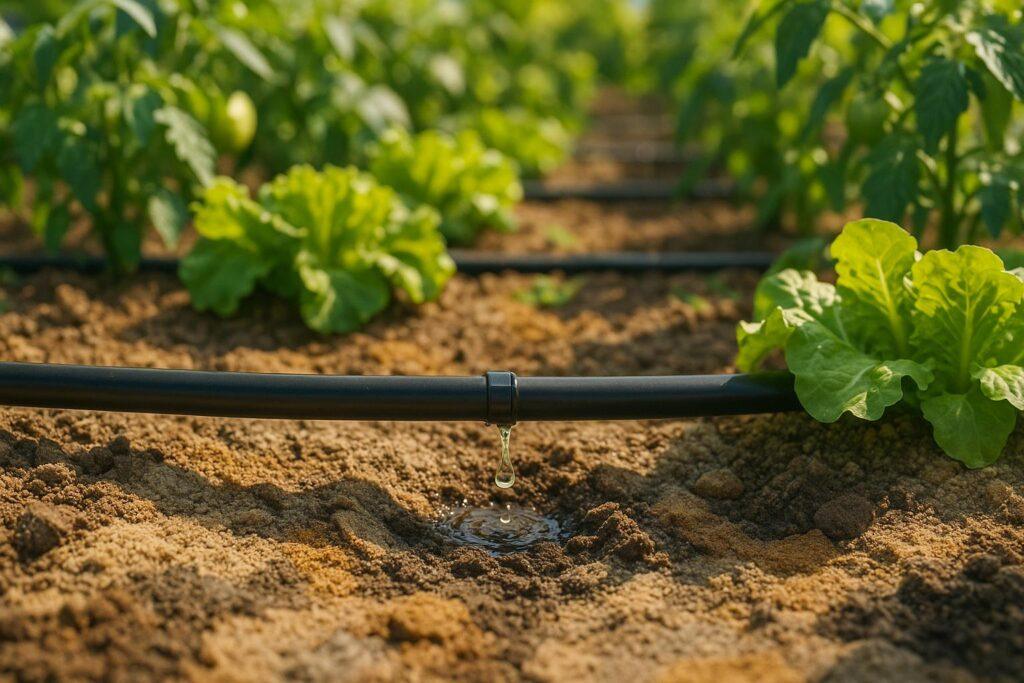
Designing a drip irrigation system for mixed soil types can be tricky but offers a way to efficiently water plants while conserving resources. Mixed soils – combinations of sand, clay, and loam – have drastically different water absorption rates, making uniform watering ineffective. Drip irrigation solves this issue by delivering water directly to plant roots, tailored to each soil type. Here’s what you need to know:
- Sandy soils drain water quickly and need high-flow emitters spaced closer together.
- Clay soils retain water longer but absorb it slowly, requiring low-flow emitters spaced farther apart.
- Loam soils balance water retention and drainage, working best with mid-flow emitters.
To get started:
- Test and map your soil to understand its composition.
- Choose emitters based on soil type and place them strategically.
- Divide your landscape into zones to fine-tune irrigation schedules.
- Install and maintain the system regularly to address seasonal changes and prevent clogging.
With proper design and maintenance, drip irrigation ensures even moisture distribution, healthier plants, and reduced water waste – especially for landscapes with mixed soils.
Mixed Soil Types and Their Water Properties
Grasping the makeup of your soil is a game-changer when it comes to designing an effective drip irrigation system. Most residential landscapes aren’t blessed with uniform soil; instead, they’re a patchwork of different soil types, each with its own quirks when it comes to water absorption and retention. This mix can make irrigation a real puzzle, requiring thoughtful adjustments to get it right.
The three main soil types – sand, clay, and loam – each handle water differently, which directly impacts how you should approach irrigation. Let’s take a closer look at how these soil types influence water movement and retention.
How Clay, Sand, and Loam Affect Irrigation
Sandy soils are made up of large particles that let water flow through quickly – up to 10 inches per hour. While this rapid drainage prevents waterlogging and promotes root aeration, it also means sandy soils can’t hold much water. They only retain 0.25 to 0.75 inches of water per foot of soil depth, so plants in sandy areas can dry out fast, especially in hot weather. This means sandy soils need frequent watering to keep plants hydrated.
Clay soils, on the other hand, are the polar opposite. Their tiny particles hold water so tightly that infiltration slows to a crawl – less than 0.05 inches per hour. This sluggish absorption can lead to surface runoff and waterlogging. While clay can store between 1.2 to 1.5 inches of water per foot, much of that water is bound to the soil particles and isn’t accessible to plants. Once clay becomes saturated, it stays wet for a long time, which can suffocate roots and encourage root rot.
Loamy soils strike a balance between sand and clay. With a mix of sand, silt, and clay, loam offers 1.95 inches of available water per foot of soil depth and a moderate infiltration rate. It retains enough moisture to sustain plants between watering cycles without causing drainage issues.
Silt loam takes water retention a step further, holding 2.0 to 2.5 inches of water per foot of soil depth. Organic matter plays a huge role here – just a 1% increase in soil organic matter allows the soil to hold an extra 20,000 gallons of water per acre. A silt loam soil with 4% organic matter can hold more than twice the water of one with only 1%.
| Soil Type | Available Water (inches per foot) | Infiltration Rate | Key Characteristics |
|---|---|---|---|
| Sandy | 0.25-0.75" | Up to 10"/hour | Drains quickly, low retention, frequent watering |
| Clay | 1.2-1.5" | Less than 0.05"/hour | Retains water tightly, prone to waterlogging |
| Loam | 1.95" | Moderate | Balanced water retention and drainage |
| Silt Loam | 2.0-2.5" | Moderate | Excellent water storage, ideal for plant growth |
These stark differences in water behavior demand a tailored approach to irrigation. A one-size-fits-all method simply won’t cut it.
Problems with Irrigating Mixed Soils
When dealing with mixed soils, traditional irrigation systems often fall short. Around 25% to 33% of fields in the U.S. Midwest experience inconsistent yields due to moisture variations, leading to potential economic losses of over $500 million annually. While this statistic highlights agricultural challenges, the same principles apply to residential landscapes.
The main issue is uneven water delivery. If you set your sprinkler system to suit clay soils, sandy areas will dry out too quickly. Conversely, settings that work for sandy soils will flood clay sections, leaving plants waterlogged. This mismatch creates a frustrating cycle: some plants wilt from drought stress, while others drown from overwatering – all within the same irrigation zone.
Runoff and waste are also major concerns. Clay soils, with their slow infiltration rate, can’t absorb water fast enough, leading to runoff that washes away nutrients and causes erosion. Meanwhile, sandy soils demand frequent watering, which can lead to water waste if not carefully managed.
Another challenge is root zone management. Plants growing in sandy soils develop shallow root systems due to the frequent but shallow watering they require. In contrast, plants in clay soils adapt to slower infiltration with deeper roots. This variation makes it tough to create a consistent watering schedule that promotes healthy root growth across the entire landscape.
To address these challenges, irrigation systems need to deliver water in a way that aligns with each soil type’s unique needs. A targeted approach ensures that every part of the landscape gets the right amount of water, avoiding the pitfalls of overwatering or underwatering. Mixed soils may complicate things, but smart irrigation strategies can make all the difference.
Design Principles for Mixed Soil Drip Systems
Designing an efficient drip irrigation system for mixed soils requires a thoughtful approach that includes detailed soil analysis, careful emitter selection, and effective zoning. These steps ensure the system caters to the unique water behaviors of each soil type, resulting in better water efficiency and healthier plants.
Testing and Mapping Your Soil
Before diving into system design, you need a clear understanding of the soil you’re working with. This starts with thorough soil testing and mapping. A soil pit survey is a good first step – digging test holes allows you to examine soil layers, texture, and drainage. Pay attention to variations in color, texture, and compaction, as these clues reveal how water will behave across different zones.
For larger properties or more precise data, consider using electromagnetic induction (EM) surveys. This technology detects differences in salinity, water content, and clay distribution without requiring extensive digging. Additionally, lab testing can provide detailed insights into nutrient levels, pH, electrical conductivity, and organic carbon content. These metrics not only help you understand water movement but also guide how nutrients can be distributed through the irrigation system.
Advanced sensors can further refine mapping for precise irrigation management. If you’re working with plastic mulch, sample the soil midway between the planned dripper placement and the outer edge of the mulch. This ensures you account for the wetting zone beneath the mulch. All this information helps you choose the right emitters and layout for your system.
Choosing and Placing Emitters
Emitter selection is where you can make or break the system’s effectiveness in mixed soils. Different soil types handle water differently, so choosing the wrong emitter can lead to dry patches in sandy areas or over-saturation in clay zones.
Here’s how to match emitters to soil types:
- Sandy soils: Use high-flow emitters and place them 12 inches apart to counteract water’s fast vertical movement.
- Loamy soils: Opt for mid-range flow rates and space emitters 18 inches apart for even distribution.
- Clay soils: Choose low-flow emitters and space them 24 inches apart to accommodate water’s slow horizontal spread.
Pressure-compensating emitters are a smart choice for mixed soils. They maintain consistent flow rates despite pressure differences, ensuring reliable water delivery. While these emitters may cost more, their performance often justifies the investment.
| Soil Type | Emitter Spacing | Flow Rate | Water Movement Pattern |
|---|---|---|---|
| Sandy | 12 inches | Higher | Fast, primarily vertical |
| Loamy | 18 inches | Mid-range | Moderate, balanced spread |
| Clay | 24 inches | Lower | Slow, excellent horizontal spread |
Filtration also plays a critical role in maintaining system efficiency. Mixed soils can introduce varying levels of particulate matter into the water supply, so your filtration system should remove particles larger than one-tenth the diameter of your emitter passages to prevent clogging.
To ensure effective irrigation, emitters should deliver water to at least one-third of the root zone. Adjusting layouts to match the wetting patterns of each soil type can optimize water distribution.
Creating Separate Zones by Soil Type
After selecting the right emitters, divide your landscape into zones based on soil characteristics. Grouping areas with similar drainage rates, water-holding capacities, and soil textures allows you to fine-tune watering schedules and emitter setups for each zone.
For instance, sandy zones often need shorter, more frequent watering cycles, while clay zones benefit from longer, less frequent irrigation. Don’t forget to factor in other variables like plant water needs, sun exposure, and slope when creating zones. Proper pressure management is also key, as different emitters and spacing can create varying pressure demands.
Though zoning might seem like an added expense, it’s an investment that pays off quickly. Drip irrigation systems typically cost between $500 and $1,200 per acre, and the water savings – potentially cutting usage by 50% to 75% compared to overhead systems – can offset the cost within the first growing season. Placing moisture sensors in representative areas of each zone can further refine irrigation schedules, ensuring plants get just the right amount of water.
Installation and System Adjustments
Installing and fine-tuning your drip irrigation system is the final step in bringing your design to life. For mixed soil environments, careful attention during installation and ongoing tweaks are key to keeping your system running efficiently as seasons and conditions shift.
Installation Best Practices
To protect your system and keep it discreet, lay the mainline above weed fabric but beneath mulch. This shields it from UV damage while maintaining a clean look. Ensure the mainline follows your soil map, aligning with each irrigation zone for maximum coverage.
When setting up the head assembly, follow this sequence: backflow preventer, filter, pressure regulator, and control valve. This arrangement ensures consistent pressure between 20–50 psi, which is crucial for system performance.
Filters are especially important in mixed soil conditions. Opt for a filter with a mesh size of 150 to 200 to trap debris that could clog emitters. If you’re using water from a well or pond, plan for more frequent filter cleanings than you would with municipal water.
Before attaching emitters, flush the mainline thoroughly to clear out any debris from installation. Run water through each zone until it flows clean, then seal the lines and install the emitters.
Emitter placement should match your soil’s characteristics:
- Sandy soil: Space high-flow emitters 12 inches apart.
- Loamy soil: Use mid-range emitters spaced 18 inches apart.
- Clay soil: Place low-flow emitters 24 inches apart.
Consistency within each zone is more important than uniform spacing across the entire area. After installation, cover all drip tubing with 2–3 inches of mulch. This protects the system from sunlight, reduces evaporation, and enhances the landscape’s appearance. Mulch also helps regulate soil temperature, which can affect water absorption depending on soil type.
Once installed, the system will need regular adjustments to stay effective as seasons and soil conditions evolve.
Making Adjustments for Changing Conditions
A drip irrigation system isn’t a “set it and forget it” solution. Routine maintenance is essential for long-term efficiency, especially when dealing with mixed soils.
At the start of spring, flush the mainline, clean the filter, and inspect all connections to ensure everything is in working order before restarting the system.
Throughout the growing season, check soil moisture levels in each zone weekly. Adjust watering schedules based on the soil type:
- Sandy zones: These may need shorter but more frequent watering cycles to encourage deeper root growth.
- Clay zones: Longer intervals between waterings might be necessary as organic matter builds up and changes drainage patterns.
As plants grow and their water needs increase, you may need to adjust emitter flow rates or add extra emitters to meet the demand. Keep an eye out for dry patches or overly wet areas. Dry spots in sandy zones could mean emitters are spaced too far apart or flow rates are too low. On the other hand, soggy patches in clay zones might indicate overwatering or poor drainage. Address these issues quickly to avoid stressing your plants.
Emitter maintenance is another critical task. Check emitters monthly to ensure they’re functioning properly. If you find blockages, soak the emitters in clean water and use compressed air to clear out debris. Different blockages, like organic matter or mineral buildup, may require specific cleaning methods.
Flushing frequency depends on your water source. With municipal water, flushing three times per season is usually enough. If you’re using well or pond water, flush the system after every fourth irrigation cycle. Pay attention to the water during flushing – if it doesn’t clear up quickly, you may need to flush more often.
Seasonal changes also call for adjustments. In the fall, reduce both watering frequency and duration as temperatures drop. When preparing for winter, detach the head assembly and store it indoors. Drain the mainline by uncapping it at the lowest point to prevent freeze damage, especially if no emitter is located there. This simple step can save you from costly repairs when spring rolls around.
sbb-itb-5aa6250
Professional Installation and Maintenance Services
Designing a drip irrigation system for mixed soils might seem straightforward at first glance. However, the reality is that varied soil types require specialized knowledge to strike the right balance between cost-efficiency and plant health. A well-designed system not only nurtures your landscape but also helps lower water bills.
Expert Assessment and Custom Solutions
Irrigation professionals bring a level of expertise that goes well beyond simply installing a system. They understand how different soil types – sand, silt, and clay – affect water movement, retention, and nutrient availability. These factors can be tricky for property owners to evaluate without professional help. Experts begin by conducting thorough soil and water tests to determine the soil composition and guide emitter placement. They ensure system pressure stays within the ideal range of 20–50 psi, which is critical for even water distribution. Water quality testing is also part of the process to prevent clogging issues down the line.
In addition to the technical setup, professionals often design automated systems that adjust watering schedules based on weather patterns. For those with existing sprinkler systems, they can retrofit them to improve water efficiency, making the transition to drip irrigation seamless.
The financial upside is hard to ignore. With installation costs typically between $2,000 and $4,000 per acre, drip irrigation can slash water usage by 30–50% compared to traditional sprinklers. Many property owners see a full return on their investment within 2–5 years as water rates continue to rise. This data-driven, expert approach ensures both cost savings and a healthier landscape.
Dependable Lawn Care Services in Oakville and Mississauga

For property owners in the Greater Toronto Area dealing with mixed soil challenges, Dependable Lawn Care offers tailored solutions. Specializing in drip irrigation installation and maintenance, they address the unique needs of local landscapes with precision.
Their team customizes emitter spacing and flow rates to suit sandy, clay, and loamy soils, ensuring water is delivered efficiently. They also create separate irrigation zones for areas with distinct soil characteristics, allowing each zone to receive the right amount of water.
To keep systems running at peak efficiency, their maintenance programs include regular filter cleaning, emitter checks, and seasonal adjustments. These efforts help achieve over 90% water use efficiency, ensuring long-term performance and reliability.
Dependable Lawn Care also offers tiered service plans – Bronze, Silver, and Gold – that combine irrigation system maintenance with traditional lawn care. This comprehensive approach supports plant health while maximizing water efficiency, giving property owners peace of mind and a thriving landscape.
Conclusion
Designing a drip irrigation system that works effectively across mixed soil types starts with understanding how each soil interacts with water. As discussed, clay soils benefit from lower GPH emitters (0.5 or 1 GPH) spaced farther apart, while sandy soils thrive with higher GPH emitters (2 or 4 GPH) placed closer together. Loam soils, sitting between these extremes, perform best with 1 or 2 GPH emitters.
The wide variation in soil water absorption rates makes a one-size-fits-all approach ineffective. Properties with mixed soil types require a customized strategy, including tailored emitter flow rates and spacing to match each soil’s characteristics.
Accurate soil mapping plays a critical role in designing efficient irrigation zones. Testing and mapping your soil, as highlighted in the installation guidelines, is the first step to success. Dividing the system into distinct zones for each soil type ensures every area gets the right amount of water at the correct rate. Drippers should be placed at least 6 inches away from plant bases, with two emitters per plant positioned on opposite sides to encourage even root growth and provide backup in case one emitter fails.
Incorporating smart irrigation controllers can further enhance efficiency, potentially cutting water usage by 20–50%. These systems often translate into significant cost savings and a quick return on investment.
For properties with complex mixed soils, professional installation and maintenance bring added benefits. Experts can ensure precise emitter placement and provide regular upkeep, which extends the system’s life and minimizes repair costs. These professional adjustments complement the strategies outlined in this guide, creating a seamless and effective irrigation setup.
FAQs
How do I figure out my soil type to design a drip irrigation system for mixed soils?
To figure out your soil type and design a drip irrigation system that works well, start by testing your soil. You can opt for professional lab testing to check factors like texture, pH levels, nutrient content, and drainage capacity. If you’d prefer a quick DIY method, try the squeeze test: grab a moist soil sample, press it in your hand, and feel its texture. Sandy soil will feel gritty, clay soil will feel sticky, and loam will feel smooth and crumbly.
Knowing your soil’s makeup is key to adjusting water distribution for different soil types. By combining lab analysis with simple at-home methods, you’ll gain a solid understanding of your soil’s requirements, helping you create a drip irrigation system that meets your property’s needs.
Why should you use pressure-compensating emitters in a drip irrigation system for mixed soil types?
Pressure-compensating emitters play a crucial role in drip irrigation systems, ensuring steady water flow even when dealing with uneven terrain or varying soil types. These emitters are designed to automatically adjust to pressure changes, providing consistent water distribution regardless of elevation or soil differences.
By delivering uniform water output, these emitters help avoid overwatering in clay-rich areas and insufficient watering in sandy soils. This not only supports healthier plant growth but also minimizes water waste, keeping your irrigation system running efficiently under challenging conditions.
How often should I adjust my drip irrigation system to match seasonal soil and plant needs?
To keep your drip irrigation system working efficiently, make it a habit to adjust it at least once a month during the growing season. During hot, dry months, increase the watering frequency to prevent your plants from drying out. On the other hand, scale it back during cooler or rainy periods to avoid overwatering.
For example, in the summer, you might need to run the system two to three times a week. In the winter, watering just once every one or two weeks is usually enough. These regular tweaks not only keep your plants healthy but also help conserve water.