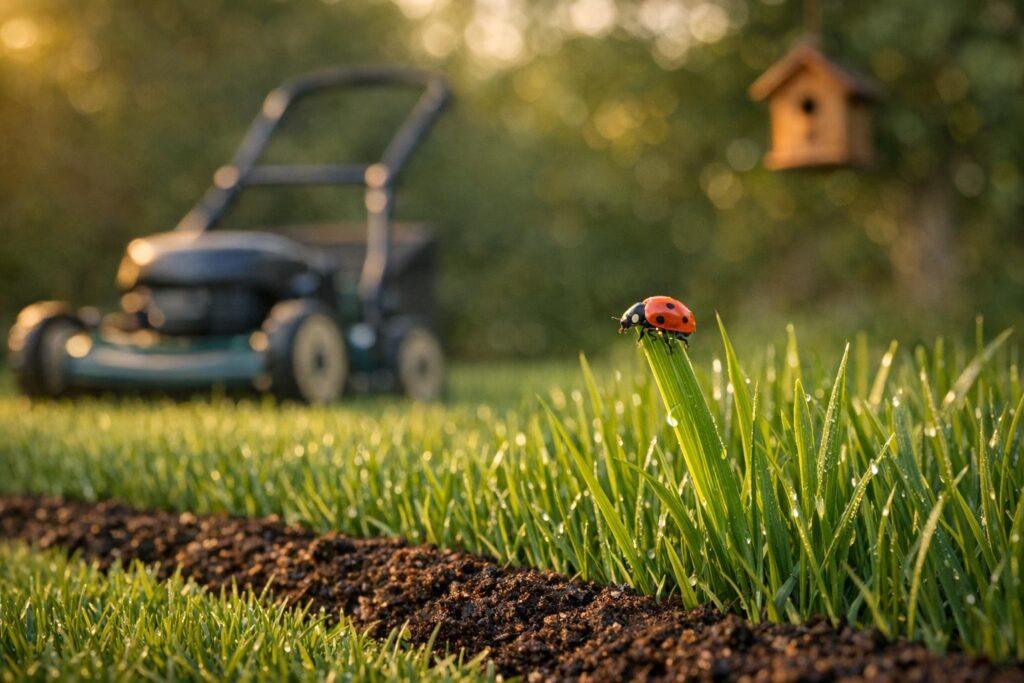
When pests invade your lawn, chemical sprays might seem like a quick fix, but they often harm soil, water, and helpful insects. Natural pest control focuses on building a healthy, pest-resistant lawn by improving soil, mowing correctly, and using biological solutions. Here’s what you need to know:

  • Identify the pests: Common culprits include grubs, chinch bugs, and sod webworms. Proper diagnosis saves time and effort.
  • Prevention tips:
    • Mow at the right height (2.5–4 inches depending on grass type).
    • Water deeply but infrequently (1 inch per week).
    • Reduce thatch and soil compaction through aeration and composting.
  • Biological controls: Use beneficial nematodes or attract natural predators like ladybugs and birds.
  • Natural treatments:
    • Neem oil disrupts pest growth and deters feeding.
    • Diatomaceous earth kills crawling insects physically.
  • Mechanical methods: Hand removal, soap drench tests, and overseeding with pest-resistant grass varieties strengthen your lawn.

Small infestations are manageable with these methods, but severe damage might require professional lawn care services. A healthy lawn thrives with consistent care, reducing pest problems over time.

Common Lawn Pests You Should Know

Before diving into natural remedies, it’s crucial to figure out which pests are causing trouble in your lawn. Not every brown patch means pests – getting the diagnosis right can save you time and effort. The top offenders in lawn care in Mississauga and other urban areas are grubs, chinch bugs, and sod webworms. Each one damages grass in its own way, so identifying the culprit is key before taking action.

Grubs

Grubs are the C-shaped larvae of scarab beetles, like Japanese beetles and European chafers. They live underground, munching on grass roots. When the roots are eaten, the turf feels spongy and pulls up easily. If you notice animals digging in your yard, it could be a sign of grubs. To check, lift a 1-square-foot section of turf and inspect the top 2 inches of soil. Healthy grass can usually handle 5 to 10 grubs per square foot, but European chafers are especially harmful, with damage starting at just 5 to 8 grubs per square foot.

Chinch Bugs

Chinch bugs are tiny – about 1/16 of an inch – but they pack a punch. These insects pierce grass blades and release a substance that prevents the grass from absorbing water. This causes patches to turn purple, then yellow, and finally brown. Damage often shows up in sunny, dry spots and can look like drought stress. To find chinch bugs, press an open-ended coffee can into the soil near a yellowed patch, fill it with water, and wait about 10 minutes. If you see 10 or more bugs, the infestation is big enough to cause serious lawn damage.

Sod Webworms

Sod webworms are the larvae of lawn moths. These small caterpillars, about 3/4 to 1 inch long, hide in silk-lined tunnels in the thatch layer during the day and feed on grass blades and stems at night. Their damage appears as small, irregular brown patches that can spread quickly. To check for sod webworms, look for early signs of these patches at dusk. For confirmation, mix 1 to 2 tablespoons of liquid dish soap with a gallon of water and pour it over a square yard of turf. If sod webworms are present, they’ll surface within 10 minutes. If you find more than 15 larvae per square yard, it’s time to consider treatment.

Pest Where It Feeds Key Warning Sign Detection Method
Grubs Below ground (roots) Soft turf that pulls up; wildlife digging Lift a 1 sq. ft. soil section
Chinch Bugs Above ground (sap) Yellow/brown patches in sunny, dry spots Coffee can flotation test
Sod Webworms Above ground (blades) Irregular brown patches; silk-lined tunnels Soapy water drench test

How to Prevent Pest Problems Naturally

Once you’ve identified the pests in your lawn, the next step is to focus on prevention. A healthy lawn maintained with smart practices is less appealing to pests and better equipped to handle their presence without significant damage.

Mow at the Right Height

Mowing your lawn to the proper height can make a big difference. Taller grass helps shade the soil, keeping it cooler and retaining moisture – conditions that strengthen grass roots and make it harder for pests to thrive. For cool-season grasses like Kentucky bluegrass and perennial ryegrass, aim for a height of 2.5 to 3 inches. If you have tall fescue, you can let it grow up to 4 inches. When grass is mowed at the correct height, it can handle 5 to 10 grubs per square foot without showing visible harm. However, cutting it too short stresses the grass, lowering its tolerance to pests.

Stick to the one-third rule: never cut more than one-third of the blade length at a time. Keep mower blades sharp (sharpen them every 10 hours of use), and leave grass clippings on the lawn – they break down quickly and can provide up to 30% of the seasonal nitrogen your grass needs.

Watering and Soil Health

Watering your lawn the right way is just as important as mowing. Deep, infrequent watering – about 1 inch per week, including rainfall – encourages deep root growth, which helps grass resist pests.

"Inappropriate irrigation is the most common cause of lawn damage." – University of California Statewide IPM Program

Water early in the morning so the grass has time to dry during the day. Watering in the evening can leave the grass wet overnight, creating conditions that encourage fungal diseases. Healthy soil is also critical. Adding compost improves soil structure, increases water retention, and supports beneficial microorganisms that naturally fight soilborne problems. Keep your soil’s pH between 6.5 and 7.5 to ensure nutrients are available to your grass, helping it grow dense and resilient against pests.

Reduce Thatch and Compaction

Thatch – a layer of dead roots and stems between the soil and grass – becomes an issue when it exceeds ½ inch. Thick thatch can trap pests and block essential water, air, and nutrients.

"A thatch layer greater than 1/2-inch thick may inhibit infiltration of water, air, and fertilizer, harbor insects, and create an environment that invites disease." – Ohio State University Extension

To manage thatch, consider core aeration in the spring or fall. This process creates small holes in the soil, improving airflow and water absorption. After aerating, apply a ¼-inch layer of compost to feed the beneficial microbes that break down thatch. Also, watch for compacted soil, which can weaken grass roots. Weeds like goosegrass or prostrate knotweed often indicate your soil is too dense, signaling it’s time to address compaction for a healthier lawn.

Biological Controls and Beneficial Organisms

Taking care of your lawn involves more than just lawn mowing and watering. Biological controls provide another layer of protection by using living organisms to manage pests without disrupting your lawn’s ecosystem. These methods are precise, targeting harmful pests while leaving beneficial organisms unharmed.

Beneficial Nematodes

Beneficial nematodes are microscopic roundworms that live in soil and attack pest insects. They’re safe for humans, pets, plants, and helpful insects. Thanks to their excellent safety record, the EPA doesn’t require registration for these nematodes.

Here’s how they work: a nematode enters a pest, releases bacteria that kill it within 24 to 48 hours, and then reproduces inside the dead insect. The new juveniles spread out, ready to find more pests.

The species you choose makes a difference:

  • Heterorhabditis bacteriophora: Hunts deep in the soil (up to 7 inches) and is effective against white grubs.
  • Steinernema carpocapsae: Stays near the surface and works well for sod webworms, cutworms, and armyworms.
    Together, these species can target over 200 pest types across 100 families.
Target Pest Recommended Species
White Grubs Heterorhabditis bacteriophora
Sod Webworms Steinernema carpocapsae
Armyworms / Cutworms Steinernema carpocapsae
Leatherjackets Steinernema feltiae, H. bacteriophora

For best results, apply nematodes in the early morning or late evening, as they’re sensitive to UV light and heat. The soil should be between 60°F and 85°F, and watering before and after application helps them move into the soil. Keep them refrigerated until use. Products like NemAttack, NemaSeek, and BioSafe are widely available, with prices starting around $14.99 for 5 million nematodes, enough to treat about 1,600 sq. ft..

"Beneficial nematodes offer a safe form of organic pest control for use in the garden. So safe, in fact, that the Environmental Protection Agency (EPA) even waived the need for them to be registered for pest management." – Gardeners Path

While nematodes work on a microscopic scale, you can also boost your lawn’s defenses by encouraging natural predators.

Attracting Natural Predators

Natural predators like ladybugs and bluebirds are key players in pest control. Ladybugs, green lacewings, ground beetles, and insect-eating birds such as swallows and bluebirds feed on common lawn pests.

To attract these helpful creatures, focus on plant diversity. Native flowering plants that bloom throughout the year provide essential pollen and nectar for beneficial insects. Setting up a clean birdbath supplies birds with water and encourages them to stick around, feeding on pests like beetles and caterpillars.

It’s also important to avoid synthetic pesticides, as they can harm both pests and their natural predators. Dame Alison Stewart explains:

"Biopesticides are often highly specific, targeting only the pests or pathogens intended and thus leaving beneficial insects, animals and surrounding plants unharmed."

Interestingly, having a small number of pests is actually helpful – it keeps natural predators fed and active. The goal isn’t to eliminate pests entirely but to create a balanced lawn where nature’s checks and balances keep everything in harmony.

Low-Toxicity Natural Treatments for Lawn Pests

When biological methods alone don’t cut it, low-toxicity treatments can step in to provide extra protection. These options are designed to target pests without harming the beneficial insects that help maintain a healthy lawn. By combining them with other pest management strategies, you can keep your lawn care in Oakville thriving without resorting to harsh chemicals.

Neem Oil

Neem oil, derived from the seeds of the neem tree, is a powerful tool against pests. It contains a compound called azadirachtin, which acts as an insect growth regulator (IGR). This means it disrupts the development of immature insects, preventing them from reaching adulthood. On top of that, it works as a feeding deterrent, so pests stop damaging your lawn even before they die. Neem oil is particularly effective against chinch bugs, aphids, armyworms, and lawn moth larvae.

Research shows that azadirachtin can reduce aphid populations by up to 90% within 5 to 10 days, and its effects can last on your lawn for up to two weeks. To make a neem oil spray, mix 2 tablespoons of cold-pressed neem oil with 1 teaspoon of dish soap in a gallon of water. Apply it in the evening to avoid harming bees and to prevent UV light from breaking it down. Be cautious about applying it during high temperatures (above 85°F), as this can reduce its effectiveness and potentially damage your grass.

"The instinct to reach for a chemical spray is understandable, but broad-spectrum insecticides kill beneficial insects… that are doing most of the pest control work in your garden already." – GrowersGuide.ca

For added protection, pair neem oil treatments with a physical barrier like diatomaceous earth.

Diatomaceous Earth

Diatomaceous earth (DE) is a natural product made from the fossilized remains of tiny aquatic organisms called diatoms. Its sharp, microscopic edges pierce the exoskeletons of insects, causing them to dehydrate and die within 12–24 hours. Since this method is purely physical, pests can’t develop resistance to it over time.

DE is most effective against crawling insects like ants, beetles, sod webworms, ticks, and fleas. For small areas, you can apply it with a duster. For larger spaces, mix 4 tablespoons of food-grade DE per gallon of water and spray it over your lawn. Once the water evaporates – usually within 1–2 hours – the DE becomes active. Be sure to use food-grade DE only, as pool-grade DE contains harmful chemicals. Keep in mind that DE loses its effectiveness when wet, so you’ll need to reapply it after rain or heavy dew. When applying dry DE, wear protective gear like a dust mask, gloves, and goggles to avoid irritation.

Treatment Best For Key Limitation
Neem Oil Chinch bugs, aphids, armyworms, lawn moths Breaks down in UV light; reapply every 1–2 weeks
Diatomaceous Earth Ants, beetles, sod webworms, ticks, fleas Ineffective when wet; must reapply after rain

Before using any treatment, confirm that pests are actually present in harmful numbers. A simple drench test – mixing 2 to 4 tablespoons of dish soap in 2 gallons of water and pouring it over a 1-square-yard section of turf – can help. If you see more than 5 armyworms or cutworms, or 15 lawn moth larvae, per square yard, it’s time to take action.

Mechanical and Cultural Pest Control Methods

Mechanical and cultural strategies are excellent complements to biological and low-toxicity treatments, focusing on preventing pest issues through smarter lawn care. Sometimes, the best pest control isn’t found in a product – it’s in how you care for your lawn every day. Weekly lawn care routines including proper watering and mowing often make a bigger difference than you might think. In fact, research shows that most lawn damage in residential areas comes from poor maintenance practices, not pests.

Hand Removal and Traps

When dealing with small, localized pest problems, manual removal can be the quickest and simplest solution. Pull pests and weeds out completely to stop them from spreading. For pests like grubs that live in the soil, you can inspect their presence by cutting three sides of a 1-square-foot section of sod about 3 inches deep and peeling it back. If you find 5 or fewer grubs per square foot, there’s usually no need for treatment.

Physical traps can help capture adult pests like Japanese beetles, but they don’t address larval stages:

"Traps… have not been demonstrated to be effective for reducing subsequent larval infestations." – NC State Extension

Before applying any treatment, confirm the pest levels using tests like the soap drench method (covered earlier). Applying insecticides without confirming a damaging pest level is never recommended:

"Never apply an insecticide unless a damaging level of a known insect is confirmed." – UC IPM

While hand removal is great for immediate infestations, building long-term turf resilience through overseeding is an equally important step.

Overseeding and Turf Repair

A dense, healthy lawn naturally resists pests and weeds better than a patchy one. Thin or bare spots are like open invitations for pests to move in, so filling them through overseeding is one of the most effective cultural strategies. The best times to overseed are spring and fall, when soil temperatures encourage strong seed germination.

To ensure success, use a slice-seeder to get the seeds in direct contact with the soil. When selecting grass seed, look for endophyte-enhanced varieties like tall fescue, perennial ryegrass, or fine fescue. These grasses contain fungi that naturally produce compounds harmful to surface-feeding insects such as chinch bugs, billbugs, and sod webworms. Using endophyte-enhanced ryegrass with a slice-seeder can quickly establish a pest-resistant lawn.

Method Target Pests Key Benefit
Hand Removal Grubs, billbug larvae Directly clears pests from soil and roots
Soap Drench Test Armyworms, cutworms, webworms Brings pests to the surface for easy counting
Overseeding Weeds, opportunistic insects Builds dense turf to naturally block pests

A Seasonal Pest Control Routine

Natural Lawn Pest Control: Seasonal Action Plan

Natural Lawn Pest Control: Seasonal Action Plan

Keeping pests at bay requires more than just quick fixes – it’s about consistency. A seasonal approach ensures your lawn stays strong year-round by addressing pest challenges as they arise. By tailoring your efforts to the changing seasons, you can build a healthier, more resilient lawn.

Spring Preparation

Spring is all about setting the stage for a thriving lawn. Start with a soil test to ensure the pH is between 6.5 and 7.5. If needed, core aerate and add a thin layer of compost to boost organic matter.

Begin scouting for pests early. Billbugs, for example, emerge as early as March or April, and spotting them before they lay eggs can save you a lot of trouble. Make it a habit to inspect your lawn weekly, focusing on edges where thinning turf often signals pest activity.

Summer Maintenance

Summer is when you focus on maintaining the progress you made in spring. Keep your grass at a height of 3 to 4 inches – this shades the soil, conserves moisture, and makes it harder for pests and weeds to take hold. Water deeply once a week, aiming for about 1 inch total, and always water in the early morning to prevent extended leaf wetness, which can lead to fungal diseases like brown patch.

Stay vigilant for signs of trouble. Watch for morning dew patterns that suggest brown patch or small tan moths, which could indicate sod webworm activity. If you notice grub issues, June and July are the ideal months to apply beneficial nematodes (Steinernema scapterisci) while the larvae are still small and easier to manage. Avoid using high-nitrogen fertilizers during hot, humid weather, as they can encourage disease rather than growth.

Fall Cleanup and Recovery

Fall is the time to repair and strengthen your lawn after the challenges of summer. Overseed any thin or bare spots in late summer or early fall with endophyte-enhanced fescue or ryegrass, which naturally resist surface-feeding insects. Apply organic fertilizer in September and November to help the root system grow stronger as winter approaches.

"A schedule of late summer/fall (September) and late fall (November) fertilization is best for home lawns. This is when turfgrass plants are enlarging their root systems." – Ohio State University Extension

Clean up fallen leaves and debris to remove potential pest habitats. Instead of bagging dry leaves, mulch them into the lawn to recycle their nutrients. For your final mow of the year, lower the cutting height by 20–30% about a week before the first frost to reduce the risk of snow mold during winter.

Season Key Tasks Timing
Spring Soil test, core aeration, compost topdressing, early scouting March–May
Summer High mowing (3–4"), morning watering (1"/week), nematode application, pest monitoring June–August
Fall Overseeding, organic fertilization, debris removal, final lower mow Mid-August–November

When to Call a Professional

Sometimes, even with the best natural methods and regular care, your lawn may face issues that require professional lawn maintenance. Recognizing these moments can save time and prevent further damage.

One of the most obvious signs is when a section of turf can be lifted and rolls back easily. This typically points to root-feeding pests like grubs or billbugs that have already weakened the lawn’s foundation, making DIY treatments ineffective. If pest counts surpass the harmful thresholds mentioned earlier, it’s time to bring in the pros. Another red flag is increased activity from predators like skunks, raccoons, or birds digging up your lawn – this often indicates a serious grub infestation below the surface. And if brown patches persist without a clear cause, misdiagnosing the problem could lead to wasted efforts and more damage.

Excessive thatch is another issue to watch for. When it builds up beyond ½ inch, it can block treatments from working properly. In such cases, professional dethatching may be necessary before any other remedies can be effective.

If you’ve tried natural treatments and home care without success, it’s time to consider professional help. For those in the Oakville or Mississauga area, Dependable Lawn Care provides services like rehabilitation, dethatching, and customized treatment plans to get your lawn back on track.

Knowing these signs can help you decide when it’s best to call in the experts and give your lawn the care it truly needs.

Conclusion: Keeping Your Lawn Healthy and Pest-Free Naturally

A thriving lawn starts with a solid foundation: healthy soil, proper mowing, deep watering, and regular aeration. These practices do more to prevent pest problems than any spray ever could. As the University of California IPM Program wisely states:

"The best way to prevent damage from lawn pests is to keep grass healthy. Healthy lawns require few, if any, pesticide applications."

Don’t rush to treat at the first sign of pests – most lawns can handle small infestations without issue. Treatment should only be considered when pest levels exceed thresholds, such as more than 6–10 grubs per square foot or over 5 armyworms per square yard. A simple soap drench test can help confirm if action is necessary. This balanced, thoughtful approach ties back to the resilient lawn care strategies discussed earlier.

When intervention is required, biological controls like beneficial nematodes, Bacillus thuringiensis (Bt), or neem oil can effectively address pests without disrupting the ecosystem of your lawn.

It’s important to remember that a completely pest-free lawn isn’t just unrealistic – it’s unnecessary. A few insects are a natural part of any healthy outdoor environment. The real goal is to cultivate a lawn resilient enough to manage minor pest pressures on its own. With the natural methods outlined here, that goal is well within reach.

For times when natural methods need a helping hand, professional advice can fill in the gaps. By embracing these practices, you’ll be on your way to a lawn that’s not only pest-tolerant but also vibrant and strong. And if you’re in Oakville or Mississauga, Dependable Lawn Care is ready to provide expert support.

FAQs

How do I tell if brown patches are pests or drought?

Brown patches in your lawn can often be attributed to pests like grubs or drought stress. Here’s how to tell the difference:

  • Pest-related patches: These are usually irregular in shape, feel spongy underfoot, and the grass may peel back easily. You might also notice increased digging by animals searching for the pests.
  • Drought stress: This causes more uniform discoloration. The grass feels crispy, and even after watering, it doesn’t bounce back.

Want a quick way to check? Try the tug test: Gently pull on the grass. If it lifts easily, pests are likely the issue. If it feels dry and resists pulling, drought is probably to blame.

How fast do beneficial nematodes start working?

Beneficial nematodes can start targeting pests within 24 to 48 hours if conditions are just right. However, in practical situations, they need to find a host first before they can do their job. Their effectiveness largely hinges on factors like soil temperature, moisture, and the presence of pests.

Can neem oil or diatomaceous earth harm pets or kids?

Neem oil and food-grade diatomaceous earth are considered safe for pets and children when used properly. Be cautious to avoid inhaling diatomaceous earth, and make sure to apply it according to the instructions. Do not use pool-grade diatomaceous earth – it is toxic. Always stick to safety guidelines to reduce any potential risks.

Related Blog Posts