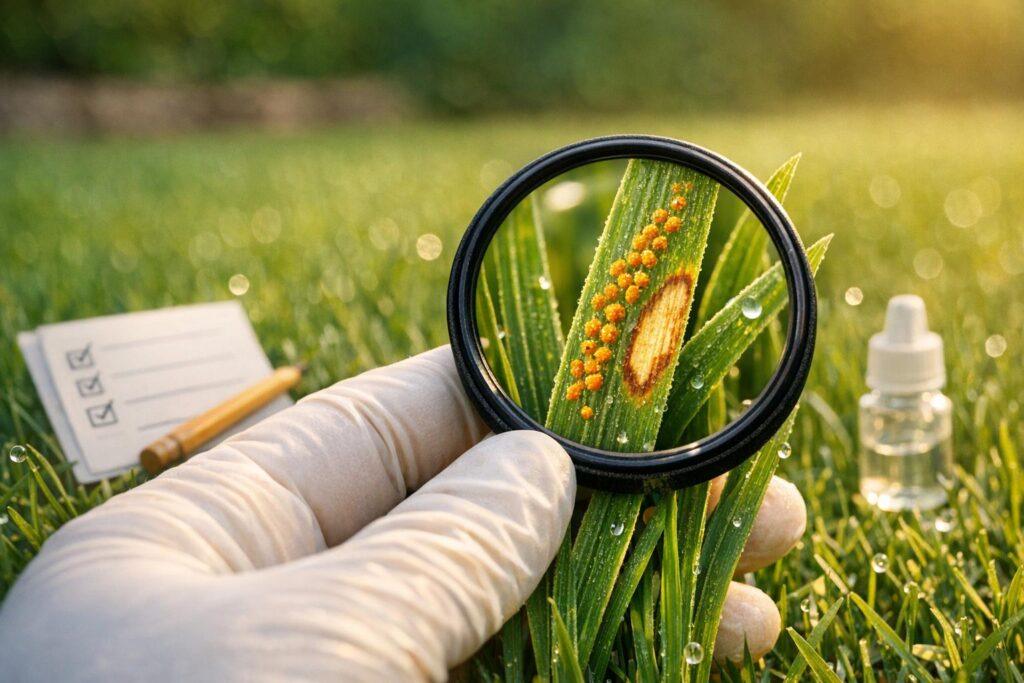
• Symptoms like discoloration or patches may not always mean disease – drought, insects, or mower issues can mimic disease signs.
  • Turfgrass diseases arise when fungi, bacteria, or molds infect grass, often due to specific conditions like high humidity or poor drainage.
  • The "Disease Triangle" explains that a disease needs three factors: a susceptible grass type, a pathogen, and favorable conditions (e.g., warm temperatures and moisture).
  • Common culprits include Brown Patch, Dollar Spot, and Pythium Blight – each with unique symptoms like lesions, slimy textures, or circular patches.
  • Early diagnosis is key: inspect grass blades, note patterns, and consider weather and site conditions. Use DIY tests like the "Plastic Bag Test" to confirm fungal presence.
  • If over 25% of your lawn is damaged or the issue recurs frequently, professional lawn maintenance may be needed for precise treatment.

Pro Tip: Start with proper mowing, watering, and fertilizing practices to prevent most diseases. Fungicides work best as preventive measures, not cures.

How to Identify Turfgrass Diseases Step by Step

Know Your Grass Type and Site Conditions

Start by figuring out what type of grass you have. Many turfgrass diseases are specific to certain grass types, so this step can immediately narrow down the possibilities. For instance, Summer Patch mainly affects Kentucky bluegrass and fine fescues, while Gray Leaf Spot is a major issue for perennial ryegrass and St. Augustinegrass. If you’re unsure, check your lawn care records, reach out to your local extension office, or consult an online guide.

Once you’ve identified your grass, take a closer look at the site conditions. Areas with poor drainage, heavy shade, or restricted airflow tend to stay damp longer, creating the perfect environment for fungal diseases. Watch for low-lying spots that collect water after rain or sections of your lawn near fences or buildings where airflow is limited. These are common places where diseases can take hold. Connect these environmental factors to any visible symptoms you notice on your lawn.

What to Look for in Your Lawn

Pay attention to patterns in your lawn. The size and shape of damaged areas can offer important clues before you even examine individual grass blades. Small, circular patches often indicate Dollar Spot, while large circular areas, sometimes spanning 3 to 25 feet, suggest Large Patch. If the damage seems to follow the flow of surface water, Pythium Blight could be the culprit.

Once you’ve noted the patterns, examine individual grass blades for specific symptoms. Look for lesions, discoloration, or unusual textures. Dollar Spot typically creates hourglass-shaped lesions with bleached centers and reddish-brown edges. Brown Patch produces tan lesions bordered by darker brown margins. Grass infected with Pythium feels greasy or slimy, which sets it apart from other diseases.

The early morning is the ideal time to spot visible signs of pathogens. For example, Dollar Spot often shows a white, cobweb-like mycelium, and Brown Patch may have a thin "smoke ring" around the damaged areas – both of which are easiest to see when dew is present. Suspect Rust? Rub a yellowing blade with a white cloth; if orange powder transfers onto the fabric, that confirms it.

Use a Diagnostic Checklist

Organize your observations with a step-by-step checklist to pinpoint the issue:

  • Grass species: Identify which grass type is affected to focus on diseases specific to that host.
  • Damage patterns: Note if the damage appears as small circular patches, large rings, irregular streaks, or general thinning.
  • Blade inspection: Look for lesion shapes, discoloration, textures, and visible signs like mycelium or fungal threads.
  • Weather conditions: Check if recent weather (e.g., extended periods of leaf wetness) aligns with the timing of the damage.
  • Fertilization history: Low nitrogen levels can lead to Dollar Spot or Red Thread, while too much nitrogen can encourage Brown Patch or Pythium Blight.
  • Rule out non-disease causes: Shredded, tan leaf tips might mean your mower blade is dull. Bluish-gray tips could signal drought stress. Small dead patches bordered by dark green often point to dog urine damage.

"Accurate diagnosis of a disease is the most important step in managing it." – NC State Extension

Photo Guide to Common Turfgrass Diseases

Common Turfgrass Diseases: Visual ID Guide & Comparison

Common Turfgrass Diseases: Visual ID Guide & Comparison

Use this guide to match visible symptoms with common turfgrass diseases. Once you know what to look for, identifying a specific lawn issue becomes much simpler. Below are three of the most widespread turf diseases across U.S. lawns, each with distinct visual markers. Pair these photo references with environmental clues for a comprehensive diagnostic approach.

Brown Patch

Brown patch shows up as circular areas of thinned, light brown or tan grass. A key identifier is the "smoke ring" – a dark, grayish-purple border that forms around the outer edge of the patch during humid mornings. This ring vanishes once the dew dries, so early inspection is crucial. On individual grass blades, look for irregular tan lesions with dark brown edges. For warm-season grasses like St. Augustine or Zoysia, the disease typically rots the leaf sheaths near the soil surface instead of creating distinct leaf spots.

"The smoke ring is evidence of active disease development and is only present when the turfgrass leaves are wet, or the humidity is near 100%." – NC State Extension

Brown patch thrives when nighttime temperatures exceed 60°F, and daytime temperatures range from 75°F to 90°F. Overuse of nitrogen can make the problem worse, but established turf generally recovers as cooler weather sets in. Use these visual signs alongside your checklist for a precise diagnosis.

Dollar Spot

Dollar spot creates small, straw-colored or bleached-white circular patches. On lawns mowed to 2–3 inches, these spots are typically 2 to 6 inches in diameter. If untreated, they can merge into larger, irregular patches of dead turf.

A hallmark symptom on individual blades is a tan lesion that narrows in the middle, forming an hourglass shape with reddish-brown edges. In the early morning, you might also spot a fine, cobweb-like mycelial network on the affected blades.

"Lesions with an ‘hourglass’ shape are a classic dollar spot symptom." – Peter Landschoot, Ph.D., Former Professor of Turfgrass Science, Pennsylvania State University

This disease thrives in warm, humid conditions (70°F–85°F) with cool nights that encourage heavy dew. Lawns with low nitrogen levels are especially susceptible and tend to recover more slowly. These visual cues, combined with your checklist, can help pinpoint the issue.

Pythium Blight

Pythium blight is known for its rapid destruction, sometimes wiping out large turf areas in as little as 24 hours. It starts as 2- to 6-inch circular patches that look water-soaked and greasy, often referred to as "grease spots." Affected blades feel slimy to the touch.

As the disease advances, patches turn dark brown or black when wet and fade to reddish-brown or bronze as they dry. In high humidity or early morning, a fluffy, white-to-gray cottony mycelium may cover the blades. Damage often spreads in streaks that follow water drainage paths or mower tracks, creating a distinct pattern.

"Diseased areas may ‘run’ with the pattern of water drainage or mowing." – UC Statewide IPM Program

Pythium blight thrives in high temperatures (86°F–95°F), with sustained humidity above 90% and saturated soil. Perennial ryegrass and creeping bentgrass are particularly vulnerable, though all grass types can be affected. Common triggers include overwatering, poor drainage, and excessive nitrogen use during hot weather. Compare these symptoms with your checklist for a more accurate assessment.

Tips for Accurate Disease Diagnosis

Fine-tuning your diagnostic process can make identifying lawn diseases much easier. Here, we’ll explore how environmental factors and simple at-home tests can help you zero in on the problem.

Use Weather, Season, and Region as Clues

Weather plays a huge role in disease development – certain pathogens thrive under specific temperature and moisture conditions. Understanding how seasons and regional climates affect disease patterns can quickly narrow down potential culprits.

"It is the environment that triggers disease development. Weather conditions, management practices, and microclimate are the environmental variables that have the greatest impact on disease development." – The Lawn Institute

Take a look at this table to see when and where common lawn diseases are most likely to appear:

Disease Typical Season Favorable Conditions
Brown Patch Summer 70°F–90°F days, nights above 68°F, humidity ≥95%
Dollar Spot Late Spring to Fall 60°F–90°F days, cool nights, heavy dew
Pythium Blight Summer Hot, wet, humid periods; poorly drained soil
Red Thread Spring and Fall 65°F–75°F, prolonged cool, rainy periods
Gray Snow Mold Winter/Early Spring 32°F–55°F, persistent moisture, melting snow
Large Patch Spring and Autumn 68°F–77°F days, high humidity, rainy periods

Humidity and wet grass are also major factors. Leaf diseases can develop incredibly fast – sometimes within 12 to 24 hours – if grass stays damp during mild weather. If your lawn remains wet past mid-morning due to heavy dew or humid nights, keep an eye out for potential outbreaks.

Simple At-Home Diagnostic Methods

When you’re unsure about what’s affecting your lawn, a few quick tests can help confirm if a fungal disease is to blame.

  • Plastic Bag Test: Take a small clump of affected grass, seal it in a plastic bag with a damp paper towel, and leave it for 24 hours. The trapped moisture often encourages fungal growth, making it easier to spot spores or mycelium.
  • Rust Check: Rub a white cloth on yellowing grass blades. If an orange powder transfers to the cloth, you’re likely dealing with rust.
  • Drought Stress Test: Walk across your lawn and see if your footprints linger for several minutes. Bluish-gray grass and visible footprints often signal moisture issues rather than disease.
  • Root and Crown Inspection: Pull up a small plug of turf and examine the roots and crowns. Black, rotted roots may point to take-all root rot, while dark brown crowns could indicate anthracnose. Turf that lifts easily, like a loose carpet, usually signals grub damage – not a disease.

These straightforward methods make it easier to distinguish fungal infections from other common lawn problems.

Telling Diseases Apart from Look-Alikes

As Nancy Gregory, Plant Diagnostician at the University of Delaware, explains:

"Signs are the visible evidence of the pathogen – white cottony growth of a fungus or water mold, fruiting bodies of a fungus (mushrooms or rust pustules), or the resting bodies of a fungus (sclerotia)."

Diseases caused by fungi leave behind telltale signs like mycelium, rust pustules, or lesions with dark borders. In contrast, abiotic issues – like drought or fertilizer burn – don’t produce these indicators. If you don’t see fungal structures or specific spotting, it’s worth considering non-disease factors first.

Here’s a quick comparison of common lawn issues and their distinguishing features:

Issue Key Visual Clue What Sets It Apart
Fungal Disease Leaf lesions with dark or tan borders Mycelium or spores may be visible in the morning
Drought Stress Bluish-gray, wilted blades Footprints linger; no lesions on blades
Dog Urine Small dead patch (1 ft. or less) Surrounded by a ring of dark green grass
Grub Damage Patches of dead turf Turf lifts like a carpet; roots are severed
Fertilizer Burn Scorched streaks or bands Damage follows spreader path in straight lines
Mower Damage Dull, whitish cast on tips Leaf tips appear shredded, not spotted
Iron Deficiency Mottled yellowing Blades turn yellow, but veins stay dark green

When to Call a Professional

Signs You Need Professional Help

Some lawn problems are just too tricky to figure out on your own. According to Kansas State University researchers:

"Some lawn problems are relatively simple to diagnose, while others are more complex and may require a specialist, or a laboratory analysis." – Ned Tisserat, Steve Keeley, and Rodney St. John, Kansas State University

The University of Maryland Extension also highlights the difficulty of diagnosing lawn issues, noting that "symptoms from multiple factors (environmental stress, pests, diseases, or physical damage) can overlap." If your usual troubleshooting efforts aren’t solving the problem, it’s time to bring in the experts.

There are specific situations where professional help is a must. For instance, if you notice disease symptoms spreading quickly, don’t wait. Pythium blight, for example, can devastate a lawn in less than 24 hours. Diseases like Take-all Root Rot and Summer Patch are also serious, as they attack the roots first. By the time you see yellowing grass blades, significant damage may already be done. And if the same issue keeps popping up in the same spot every year, a professional can implement a preventive fungicide program to stop the cycle before it starts.

Timing is critical. Nancy Gregory, a Plant Diagnostician at the University of Delaware, explains:

"If a disease is present at a noticeable level, it is usually too late for a fungicide to be effective." – Nancy Gregory, Plant Diagnostician, University of Delaware

This underscores the importance of acting early. Fungicides mostly work as a preventive measure, not as a cure. Once the damage spreads, the opportunity for effective chemical treatment may have passed. A professional can determine whether your lawn can recover through better care practices or if targeted treatment is still feasible. Their analysis not only confirms the problem but ensures that any solutions are applied at the right time.

How Dependable Lawn Care Can Help

Dependable Lawn Care

When DIY efforts aren’t enough, turning to professionals makes all the difference. Homeowners in Oakville and Mississauga can rely on Dependable Lawn Care for early detection services that help prevent permanent damage. By using weather data, seasonal insights, and local expertise, they can differentiate between diseases that may look alike, such as Red Thread, Dollar Spot, and Leaf Spot.

If the diagnosis isn’t straightforward, they collaborate with local diagnostic labs to pinpoint the exact issue before starting treatment. This step is crucial because applying the wrong fungicide wastes money and can even lead to fungicide resistance, making future problems harder to manage. Licensed professionals also have access to advanced fungicides and specialized equipment for precise application, ensuring even coverage and effective results. When more than 25% of your lawn is affected, professional-grade aeration, topdressing, and overseeding may be necessary to restore its health.

Conclusion

Getting the diagnosis right is crucial. As NC State Extension puts it:

"Accurate diagnosis of a disease is the most important step in managing it."

Jumping to fungicide use too soon can backfire. Take Dollar Spot, for instance – using nitrogen to control it can unintentionally worsen issues like Brown Patch or Pythium Blight. This not only adds to the damage but also drains your wallet.

Here’s the game plan: start by identifying your grass type, evaluate the disease triangle, look for signs of pathogens, and rule out non-disease factors before turning to chemicals. Most turfgrass diseases respond better to good cultural practices – like mowing, watering, and fertilizing correctly – than to fungicides. If those methods don’t work, it might be time to call in the pros.

When in doubt, or if more than 25% of your lawn is damaged, professional help is your best bet. Use this guide as a starting point, but don’t hesitate to get expert advice when the problem grows beyond your control.

FAQs

How can I tell a turf disease from drought or mower damage?

To tell turf disease apart from drought stress or mower damage, check for signs of pathogens like cottony fungal growth, visible spores, or lesions forming distinct patterns, such as rings. Diseases typically appear in smaller patches, unlike the broader or straight-line damage caused by irrigation problems or mowing errors. If you’re looking for expert assistance to bring your lawn back to life, Dependable Lawn Care provides professional rehabilitation and maintenance services in Oakville and Mississauga.

Which turf disease spreads fastest and needs urgent action?

Pythium blight is known for its incredibly fast spread, capable of wreaking havoc on a lawn in under 24 hours, especially during hot and humid weather. This disease progresses so quickly that immediate action is essential to prevent widespread damage. Unlike many other turf diseases, Pythium blight can discolor and infect grass in just a matter of hours. Keeping a close eye on your lawn during these conditions is crucial to catching and addressing it early.

When should I use a fungicide versus changing mowing and watering?

Adjust how you mow and water your lawn as a starting point – these simple changes can often control most lawn diseases without needing chemicals. Fungicides should only come into play if diseases show up every year, significantly affect important areas, or if severe outbreaks are frequent. If fungicides are necessary, they should be applied before symptoms appear, and this job is best handled by a licensed professional since fungicides are typically ineffective once the disease has taken hold.

Related Blog Posts