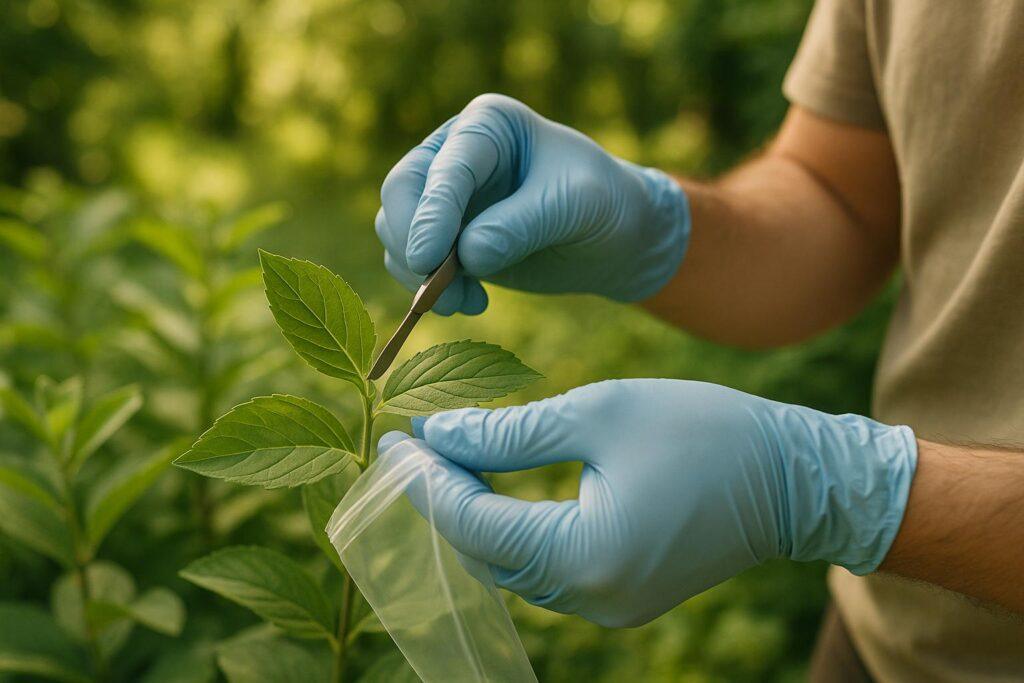
Collecting plant samples correctly is the first step to diagnosing and treating plant diseases effectively. Here’s what you need to know:
- Timing is key: Collect samples during the early or middle stages of disease symptoms. Avoid dead or decayed plants.
- Choose the right parts: Include affected and healthy tissue for comparison. For roots, keep soil intact; for leaves, layer them with paper towels.
- Avoid contamination: Disinfect tools, use fresh gloves, and keep samples separate.
- Document everything: Record symptoms, treatments, and environmental conditions. Label samples clearly.
- Ship promptly: Send samples the same day, early in the week, and keep them cool.
Proper collection ensures accurate diagnosis and saves time, money, and resources. Follow these steps to protect your plants effectively.
Basic Guidelines for Collecting Plant Samples
Collecting plant samples effectively requires a careful, methodical approach to ensure accurate lab diagnoses and appropriate treatment recommendations. By following these steps, you can help labs better understand the plant’s health and identify potential issues.
Best Practices for Sample Collection
Whenever possible, collect entire plants, including their roots, to provide a complete picture of the disease. Use a trowel or shovel to gently dig up the plant – pulling it out by hand can damage roots and compromise valuable diagnostic clues. If collecting the whole plant isn’t feasible, gather the largest sample possible, making sure to include roots, stems, leaves, and flowers.
For trees and shrubs, submit root segments along with branch samples. Carefully dig out root sections with soil still attached, ensuring you’re sampling from the affected plant and not nearby undergrowth.
To avoid cross-contamination, disinfect your tools with rubbing alcohol and use fresh gloves or bags for each sample.
When collecting samples, aim to represent all stages of the disease. A single sample showing only one stage may not provide enough information for accurate analysis. Include both diseased and healthy tissue near the affected area – this comparison helps labs distinguish between disease symptoms and normal plant changes.
For turfgrass, take 5″×5″ sod samples from the border where healthy and symptomatic areas meet. Dig these up rather than pulling them, and leave the soil intact.
Avoid sampling plants recently treated with chemicals, as these can interfere with lab results. Always document any treatments applied, as they can mask symptoms and affect pathogen detection.
When to Collect Samples and Environmental Factors
Timing is crucial. Collect samples during the early stages of disease when the plant is still actively affected. Severely decayed or completely dead plants often host secondary organisms that can obscure the primary issue.
Dispatch samples to the lab on the same day for the best results. If immediate delivery isn’t possible, keep samples cool and avoid exposing them to heat or extreme temperatures. For extended collection periods, store samples in a cooler with ice packs.
Moisture management is also key. While wet samples can develop mold during transit, completely dried-out samples are equally problematic. For soil samples, keep them cool and shaded but not overly dry. For nematode analysis, collect about a pint of soil from a depth of 6–8 inches, mixing six sub-samples from the affected area into a composite sample. Include plant roots when possible, and keep the soil moist (not waterlogged) during transport.
Recording Sample Information
Detailed documentation is just as important as the sample itself. Take photos of affected plants and areas, label each sample clearly, and note its location, treatment history, and environmental conditions.
Survey the site to identify damage patterns across plants and specific plant parts. This broader perspective helps in selecting representative samples and provides labs with valuable context.
Label each sample using a waterproof marker, specifying where it was collected (e.g., upper leaves, lower stems, or roots). For root samples, keep soil and aboveground parts separate. Place roots in a sealed plastic bag, and avoid adding moisture. If transporting roots with soil, ensure the soil remains moist but not dry.
Document any fertilizers, herbicides, fungicides, or insecticides applied, including product names, application rates, and dates. This information is essential for understanding potential chemical influences on the disease.
Record environmental conditions like unusual weather patterns (heatwaves, cold snaps, heavy rain, or drought) and water sources (municipal, well, stream, or pond). Note any recent changes in maintenance routines and describe how quickly the disease appeared and spread.
For leaf samples, ensure compound leaves remain attached to their petioles, and include twig segments for added context. Layer leaves between dry paper towels or heavy paper in a multi-layer format (paper towel, leaf, paper towel, etc.) before loosely placing them in a plastic bag.
How to Collect Samples for Different Plant Diseases
When diagnosing plant diseases, the way you collect samples can make all the difference. Each type of disease requires specific techniques to ensure diagnosticians get the clearest picture of what’s happening. This guide breaks down the best practices for collecting samples based on the type of plant disease.
Leaf Spots and Foliar Diseases
For leaf spot diseases, it’s important to collect leaves that show all stages of infection – from the earliest signs to the most advanced. This helps diagnosticians understand how the disease progresses.
- If the plant has compound leaves, keep the leaflets attached to their petioles and include small twig segments for added context.
- Before packaging, dry any moist leaves and layer them between paper towels in a resealable bag. Alternate layers of paper towel and leaves to prevent mold.
- Avoid sending only heavily diseased leaves, as these often contain secondary organisms that can mask the primary pathogen.
Wilts and Root Diseases
For wilt diseases, the best approach is to send the entire plant if possible. Collect multiple plants showing varying stages of the disease for a more complete assessment. Always dig up plants instead of pulling them out to preserve the roots.
- If sending whole plants isn’t an option, include the root system along with the lower 6–8 inches of the stem. Separate the soil from the plant parts by placing the roots in a plastic bag sealed with a rubber band.
- Don’t add water to the root sample, as excess moisture can encourage secondary organisms.
If nematodes are suspected, collect about 1 pint of soil from a depth of 6–8 inches. Mix soil from at least six spots in the affected area to get a representative sample. For trees, take soil samples from within the dripline of the canopy. Include plant roots when possible and keep the samples at the recommended temperature. The best time to collect for nematode analysis is during the active growing season. For foliar nematodes, submit the entire plant instead of just the leaves.
Stem Lesions, Cankers, and Galls
When dealing with stem lesions or galls, select branches with active lesions or young galls. Dead branches won’t provide useful diagnostic information.
- Cut branch sections that are ½ to 1 inch in diameter and about 6 inches long. Make sure the sample includes both the affected area and a few inches of healthy tissue on either side. This transition zone is critical for identifying the pathogen.
- Place the branch sections in a plastic bag to retain moisture during transport.
- Also, include leaves from the affected branch. Press them between cardboard or heavy paper to keep them intact during transit.
- For leaf galls, collect several leaves showing various stages of gall development.
Fruit and Fleshy Organ Diseases
When collecting fruit samples, choose fruits in the early to intermediate stages of disease. Advanced rot often contains secondary organisms that make it harder to identify the primary pathogen.
- Wipe off any excess moisture from the fruit and wrap each piece individually in dry paper towels.
- Avoid plastic bags, as they trap moisture and speed up decay. Instead, place the wrapped fruits in a sturdy container with packing material to prevent damage during transport.
- Ship perishable samples using next- or two-day delivery to keep them viable.
Turfgrass Diseases
Turfgrass diseases require a different approach. Collect samples from the edge of the affected area, where diseased and healthy grass meet. This boundary often shows the most active disease progression.
- Cut several 5-by-5-inch squares of sod, ensuring you include the entire root system. Dig the samples instead of pulling them to keep the roots and soil intact.
- Leave the soil attached, as it provides critical information about soil-borne pathogens.
- Place the sod samples in resealable plastic bags for transport. The combination of affected and healthy turf, roots, and soil gives diagnosticians everything they need to identify the disease accurately.
Packaging and Shipping Plant Samples
After collecting your plant samples, it’s crucial to pack and ship them correctly to preserve their diagnostic integrity. Poor packaging can lead to contamination, decay, or degradation, making accurate analysis impossible. By following these packaging and shipping guidelines, you can protect your samples from damage and maintain their quality.
Choosing the Right Packaging Materials
The type of packaging you use depends on the sample you’re sending. While resealable plastic bags work for most cases, how you prepare the contents inside the bag is just as important.
- Leaf Samples: Layer the leaves between dry paper towels or newspaper. Alternate layers – paper towel, leaf, paper towel, leaf – to minimize moisture buildup, which can encourage fungal growth and obscure the original issue.
- Fruit and Vegetable Samples: Since these are highly perishable, handle them with care. Pat them dry, wrap each piece in dry paper towels, and place them in a sturdy, padded container. Avoid using plastic bags alone, as they trap moisture.
- Branch Samples: Place branches in a plastic bag to retain moisture, but press any leaves between pieces of cardboard to prevent damage.
- Root Samples: Place roots in a plastic bag along with about 0.5 lb of moist soil collected from around the affected plant. Use a rubber band to seal the bag and keep the soil separate from above-ground plant parts.
- Nematode Soil Samples: Collect about 1 pint of soil from six different spots and place it in a quart-size resealable bag. Ensure the soil is moist but not waterlogged, and don’t add extra water to the sample.
Labeling and Documentation
Proper labeling and documentation are essential for accurate diagnostics. Use a waterproof marker to clearly label each sample with details like the plant type, collection location, and observed symptoms.
Complete a detailed sample submission form, including any recent chemical treatments. For example, if fungicides were applied, mention it prominently, as this could affect the lab’s findings. Additional context, such as weather conditions, water sources (municipal, well, or surface water), changes in maintenance routines, and how the disease is spreading, can significantly aid in diagnosis. If submitting nematode samples, use the specific Nematode Sample Submission Form provided by your lab.
Photographs can also be incredibly helpful. Take clear pictures of both healthy and diseased plants, focusing on symptoms. These images provide diagnosticians with a better understanding of disease progression and environmental influences.
Timing and Temperature Considerations for Shipping
Timing is everything when shipping plant samples. Ship them on the same day you collect them whenever possible. Delays can lead to deterioration or the growth of secondary organisms, complicating the diagnostic process.
To avoid weekend delays, ship samples early in the week – Monday through Thursday. For perishable items like fruits, consider next-day or two-day delivery. While expedited shipping may cost more, it ensures your samples arrive in the best condition.
Temperature control is equally important. Keep samples cool and out of direct sunlight during storage and transit. Use a cooler if necessary. For root and soil samples, maintain moisture without adding excess water, as too much moisture can promote unwanted microbial growth.
Finally, pack everything in a sturdy, padded box to protect against damage during transit. If you’re sending multiple samples, place each one in its own labeled bag to prevent cross-contamination and ensure traceability to its collection site.
sbb-itb-5aa6250
Common Mistakes in Plant Sample Collection and How to Avoid Them
Even small missteps in plant sample collection can make specimens unusable, leading to wasted effort, money, and inconclusive results. Let’s break down some common errors and how to avoid them for better outcomes.
Using Poorly Preserved or Decayed Samples
One of the biggest mistakes is sending decayed or completely dead plant material. When plant tissue dies, it’s quickly overtaken by secondary organisms, which can obscure the original pathogen responsible for the issue. To ensure accurate diagnosis, focus on collecting samples during early or intermediate stages of symptoms – this is when the active pathogen is most detectable.
For example, if you’re dealing with fruit diseases, choose fruits with early signs of infection rather than those in advanced stages of decay. Similarly, for leaf spots, collect leaves showing a range of symptoms, from mild to moderate, instead of those that are entirely brown and dry.
Pay special attention to the transition zone between healthy and diseased tissue. This area often holds the active infection and is the most useful for isolating pathogens. When collecting branch samples for stem lesions or cankers, include sections that extend several inches beyond the lesion into both healthy and affected tissue. Dead branches alone won’t provide useful information, and perfectly healthy ones won’t help either.
Mixing Samples or Contaminating Tools
Maintaining the purity of your samples is just as important as selecting the right ones. Cross-contamination – whether between samples or via unclean tools – can lead to misdiagnosis and even spread disease to unaffected plants.
To avoid this, use new gloves for each sample to prevent transferring pathogens between collection sites. Disinfect your tools with alcohol after each use, allowing at least three minutes of contact time to ensure thorough sterilization. This step is especially critical when dealing with specific pathogens like Phytophthora, where contamination can easily compromise results.
Keep samples from different plants or locations separate. Place each one in its own labeled bag, using a waterproof marker to note details like plant type, location, and observed symptoms. Never combine material from multiple plants in one bag, even if the symptoms appear identical. What looks the same to you might be caused by entirely different pathogens, requiring distinct treatments.
Improper Handling and Storage
How samples are handled and stored after collection can make or break the diagnostic process. Samples that are too wet or too dry can lose their diagnostic value.
For root samples, include a small amount of moist (not soaking) soil to preserve essential diagnostic information about soil-borne pathogens and environmental conditions. Keep soil separate from aboveground plant parts by placing roots in a plastic bag. Avoid washing soil off roots – this step removes critical data. Instead, carefully dig plants out to keep the root system intact with soil still attached.
Timely shipping is crucial. Send samples on the day they’re collected, aiming for delivery early in the week. Avoid shipping on Fridays, as weekend delays can lead to decomposition, allowing secondary organisms to take over and making the primary pathogen harder to detect. For perishable samples, next-day or two-day shipping is worth the extra cost to preserve their integrity.
Temperature control is another critical factor. Keep samples cool during transport but avoid freezing them. Never leave them in vehicles, where temperature swings can occur. If there’s a delay in shipping, refrigerate the samples to slow decomposition while maintaining pathogen viability. However, get them to the lab as soon as possible.
Lastly, protect your samples from physical damage during transport. Use crushproof containers and add packing material to prevent movement or crushing. Proper handling from collection to shipment is essential to ensure accurate diagnostic results.
Conclusion
Key Points Recap
Collecting plant samples for diagnosis doesn’t have to be complicated if you stick to a few essential steps. The difference between a successful diagnosis and wasted effort often lies in the details.
Timing matters most. Aim to collect samples showing early to intermediate symptoms rather than waiting until the plant is completely dead or decayed. The area where healthy and diseased tissue meet – known as the transition zone – holds the most valuable clues for diagnosis.
Proper handling preserves sample quality. Keep samples cool and ship them as quickly as possible, ideally early in the week to avoid delays. For root samples, include moist soil and keep it separate from aboveground parts. Resist the urge to wash roots before submission, as the soil attached to them is critical for accurate analysis.
Thorough documentation is critical. Provide full details about recent treatments, weather patterns, and how symptoms have developed over time. Include clear photos of both healthy and affected plants. Label samples clearly with waterproof markers, noting plant type, location, and observed symptoms.
Adapt your approach based on the disease symptoms. Different diseases require different sample collection methods because pathogens affect plants in unique ways.
Prevent cross-contamination. Use fresh gloves at each sampling site, disinfect tools between uses, and never mix samples from different plants in the same bag – even if the symptoms appear identical.
By following these steps, you can ensure accurate and timely diagnoses.
Next Steps for Property Owners
Put these practices into action to safeguard your landscape. When you spot unusual symptoms on your plants, document them with photos and collect samples using the guidelines outlined here. Reach out to your local university extension service or plant diagnostic clinic for submission instructions and required forms.
For those managing larger properties in areas like Oakville and Mississauga, professional services such as Dependable Lawn Care (https://dependablelawn.ca) provide proactive solutions. Their lawn care plans – Bronze, Silver, and Gold – offer ongoing monitoring, early disease detection, and proper sample collection. These services are designed to catch problems early, making treatment easier and more effective.
Whether you choose to collect samples yourself or rely on professionals, following these best practices ensures your plants receive the care they need. Protecting your landscape investment starts with accurate diagnosis and timely action. Your plants deserve nothing less.
FAQs
Why should I include both healthy and diseased parts of a plant when collecting samples for disease diagnosis?
When collecting plant samples for disease diagnosis, it’s crucial to include both healthy and diseased tissue. The healthy tissue serves as a baseline, allowing experts to differentiate normal plant conditions from disease symptoms. Meanwhile, the diseased tissue provides the visible signs and potential pathogens needed for a detailed analysis.
By including both, you enable a more comprehensive evaluation, which can result in more accurate treatment or prevention strategies. Be sure to handle your samples with care to prevent contamination and maintain their condition during transport.
How can I collect plant samples for disease diagnosis without contamination?
To ensure plant samples remain uncontaminated during collection for disease diagnosis, start by using sterilized tools like scissors or pruners. This step helps prevent the introduction of any foreign pathogens. Additionally, make sure to handle the plant material with clean hands or gloves to further reduce contamination risks.
Once collected, place the samples in a clean, breathable container, such as a paper bag. This prevents moisture buildup, which could compromise the sample’s condition. Be sure to label the container with key details, including the plant type, observed symptoms, and the collection date. These notes are crucial for an accurate diagnosis.
Transport the samples as quickly as possible, and if you can, keep them cool during transit to protect their quality and integrity.
What details should I include when sending plant samples for disease diagnosis?
When you’re submitting plant samples for disease diagnosis, providing detailed information is key to getting accurate results. Be sure to include the plant’s species and variety along with a short description of the symptoms – things like discoloration, wilting, or unusual spots. Mention when you first noticed these symptoms, too. It’s also helpful to note any recent environmental changes, such as shifts in weather, irrigation routines, or fertilizer applications.
If you can, include details about the plant’s location – whether it’s growing in a garden, lawn, or landscaped area. The more specific and clear your information, the easier it will be for specialists to pinpoint the issue and suggest the most effective solution.