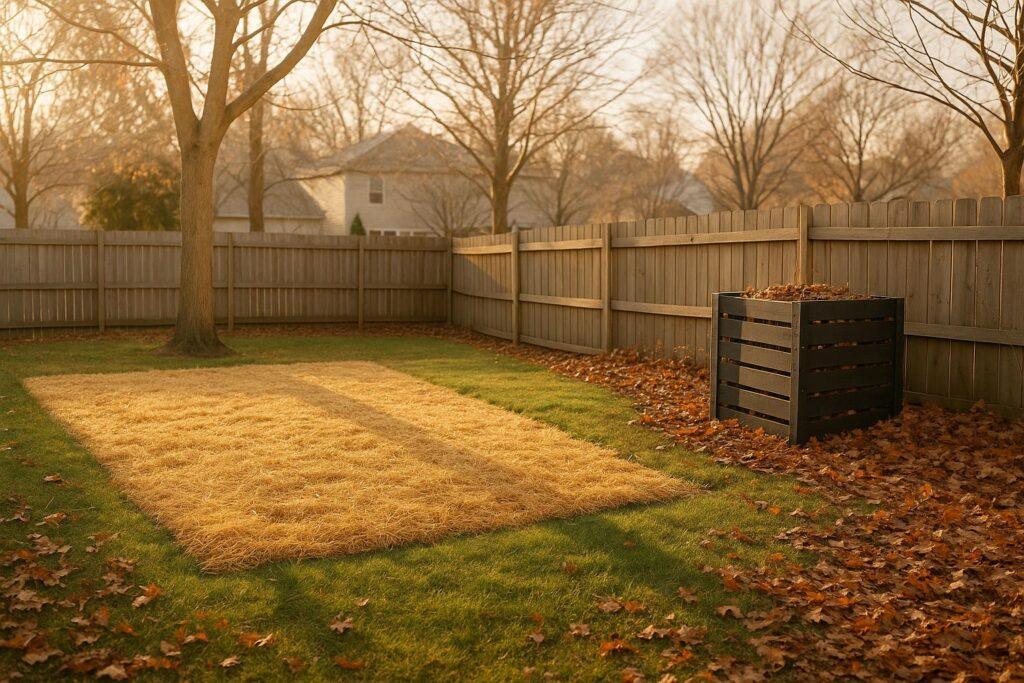
Want your lawn to thrive next spring? Prepping it for winter is key. Freezing temps, snow, and ice can stress grass roots, leading to bare spots and slow recovery. Here’s how mulching and composting can help:

  • Mulching acts as a protective blanket, insulating the soil, locking in moisture, and reducing weeds.
  • Composting enriches the soil with nutrients, improves drainage, and promotes healthy grass growth.

Steps to Prep Your Lawn for Winter:

  1. Final Mow: Keep grass 2.5–3 inches tall.
  2. Clear Debris: Remove leaves and debris to prevent fungal issues.
  3. Aerate & Overseed: Improve soil airflow and plant new grass.
  4. Fertilize: Use a low-nitrogen fertilizer 6–8 weeks before frost.
  5. Mulch: Apply after the first frost for insulation.
  6. Compost: Spread a thin layer in fall to nourish the soil.

Pro tip: Combine both methods – mulch for surface protection, compost for deeper soil health. For tailored advice, consider local climate factors or professional lawn care services. A little effort now ensures a lush, healthy lawn come spring.

Winter Lawn Prep Checklist

Getting your lawn ready for winter doesn’t have to feel like a daunting task. By breaking it into smaller, straightforward steps, you can ensure your yard stays healthy through the colder months. This checklist highlights the key maintenance tasks to help your lawn thrive when spring rolls around.

Basic Lawn Maintenance Tasks

  • Final Mow: Trim your grass to a height of 2.5–3 inches for the last cut of the season. This height prevents matting under snow while keeping enough blade surface for photosynthesis on milder winter days. Aim to mow in late October or early November, just as grass growth slows but before the first hard frost.
  • Clear Leaves and Debris: Rake up leaves and remove debris to prevent moisture buildup, which can lead to fungal problems. If possible, shred the leaves to use as mulch or add them to your compost pile.
  • Check Soil pH: Use a soil test kit to measure pH levels, aiming for a range of 6.0–7.0. If your soil is too acidic, apply lime; if it’s too alkaline, use sulfur to balance it.

Aeration and Overseeding

  • Aerate Your Lawn: Aerate in early fall, around 4–6 weeks before the first frost, when the soil is slightly moist. Focus on compacted or high-traffic areas to improve airflow and nutrient absorption.
  • Overseed: After aerating, overseed the lawn with a suitable grass seed (about 2–4 lbs per 1,000 sq. ft.). Lightly water the area daily for two weeks to keep the seeds consistently moist and promote germination.

Fall Fertilization

  • Apply Fertilizer: About 6–8 weeks before the first frost, use a low-nitrogen, high-potassium fertilizer like 10-10-10 or 12-12-12. A broadcast spreader works best for even application. Water the lawn afterward if rain isn’t expected within 24 hours. Avoid fertilizing frozen ground or during heavy rain to prevent runoff. Opt for a slow-release formula to provide consistent nutrients without risking burn.

Mulching for Winter Lawn Protection

Mulching is an excellent addition to your winter lawn care routine, offering specific advantages like protecting roots and retaining moisture. By insulating your lawn and garden beds, mulch shields grass roots from freezing temperatures and the stress caused by freeze-thaw cycles. This extra layer of care helps prepare your lawn for a strong comeback in the spring.

Benefits of Mulching

Temperature control and moisture preservation
Mulch acts as a buffer, keeping soil temperatures stable and locking in moisture. This protects grass roots from sudden temperature changes and dehydration during dormancy. The result? A lawn that’s ready to bounce back quickly when warmer weather returns.

Weed prevention
A proper mulch layer blocks sunlight from reaching weed seeds, reducing their chances of sprouting. This means fewer weeds competing with your lawn as it wakes up in spring.

Choosing the Right Mulch

For the best results, organic mulches are a go-to option. Their loose structure creates insulating air pockets, and as they break down, they enrich the soil naturally. Here are some great choices:

  • Straw or hay
    Straw or hay provides excellent insulation and helps prevent frost heaving. Its loose texture creates air pockets, and it’s less likely to attract rodents compared to denser mulches.
  • Shredded leaves
    Shredded leaves are a budget-friendly option that insulates well and suppresses weeds. Just make sure the leaves are finely shredded – whole leaves can mat together, trapping too much moisture.
  • Pine straw
    Lightweight and resistant to compaction, pine straw is a great insulator. It’s especially useful for areas with acid-loving plants like azaleas or rhododendrons.
  • Coarse wood chips
    Perfect for trees and shrubs, coarse wood chips allow air to circulate while slowly enriching the soil as they decompose. Keep in mind that some wood chips may temporarily reduce soil nitrogen during the breakdown process.
  • Well-rotted compost
    This all-purpose mulch not only insulates but also boosts soil fertility and encourages beneficial microbes. It’s an excellent choice for garden beds near your lawn.

However, avoid mulching around plants prone to root rot or those that thrive in well-drained soil, such as lavender, rosemary, sedum, and ornamental grasses. Selecting the right mulch type and applying it properly will ensure your lawn gets the most benefit.

How to Apply Mulch

When to apply
The best time to mulch is after the first hard frost, when the ground has cooled but before it freezes solid. This timing helps lock in the soil’s natural warmth.

How much mulch to use
Spread a moderate layer of mulch – enough to insulate, but not so much that it restricts air circulation. Overdoing it can delay soil warming in the spring and might even attract rodents.

Application tips
Start by clearing leaves and debris to create an even surface. Spread the mulch evenly across the area, but be careful not to pile it against tree trunks or plant stems. This prevents excess moisture from causing rot.

While mulch acts as a protective blanket for your lawn, compost works behind the scenes, nourishing the soil and setting the stage for a resilient winter.

Composting for Lawn Health

Composting transforms yard waste into a nutrient-packed soil amendment that improves structure, retains moisture, and promotes long-term lawn vitality. Unlike synthetic fertilizers, compost releases nutrients gradually, offering steady support for your grass.

Composting Basics

What to include in your compost
A great compost pile relies on a mix of "green" nitrogen-rich materials and "brown" carbon-rich materials. Greens include items like grass clippings, vegetable scraps, and coffee grounds. Browns encompass dried leaves, shredded newspaper, cardboard, sawdust, and dead plant debris.

Fall cleanup offers plenty of composting opportunities. Those fallen leaves? Pair them with grass clippings from your final mow to create an ideal blend.

What to leave out
Skip meat, dairy, oils, diseased plants, pet waste, seeded weeds, and chemically treated clippings. These can attract pests or introduce harmful pathogens.

Balancing carbon and nitrogen
Aim for a ratio of about 30 parts browns to 1 part greens by volume. This balance keeps your pile decomposing efficiently – too much green can make it wet and smelly, while too much brown slows the process.

Creating and Maintaining a Compost Pile

Setting up your pile
Pick a spot with partial sun and good drainage. Start with a base layer of coarse browns, like small twigs, to allow airflow. Then alternate layers of greens and browns, each about 4–6 inches thick. A pile size of at least 3 feet by 3 feet works best.

Turning the pile
Every 2-3 weeks, use a pitchfork or shovel to turn the pile, mixing materials from the edges into the center and vice versa. This adds oxygen, speeding up decomposition and avoiding foul smells caused by anaerobic conditions.

Managing moisture
Your compost should feel like a damp sponge – moist but not dripping. During dry weather, add water gradually while turning the pile. If it gets too wet, mix in extra browns and aerate more often.

Temperature checks
A healthy compost pile heats up to 130-160°F at its core within a few days. This heat helps kill weed seeds and pathogens. When the pile cools, it’s time to turn it again to restart the process.

Using Finished Compost

Finished compost not only enhances your lawn now but also prepares it for a strong recovery in the spring.

How to tell it’s ready
Compost is ready to use when it’s dark, crumbly, and smells earthy. You shouldn’t be able to recognize the original materials. With regular turning, this process takes about 3-6 months, or up to a year if left to decompose naturally.

Best time to apply
Spread compost in early fall, about 6-8 weeks before the first frost, so grass roots can absorb nutrients before going dormant. Alternatively, apply it in early spring, 2-3 weeks before your lawn starts growing again.

How to apply
Use a rake or spreader to distribute a thin layer of compost – no more than ¼ inch thick – across your lawn. Gently work it into the grass with a rake, making sure it reaches the soil without covering the grass blades. Lightly water afterward to help nutrients seep into the ground.

How much compost you’ll need
A cubic yard of compost covers about 1,000 square feet at the recommended ¼-inch depth. For most home lawns, this translates to roughly 2-3 wheelbarrow loads per 1,000 square feet.

Benefits for your soil
Compost improves clay soils by boosting drainage and aeration, while helping sandy soils retain moisture and nutrients. It also feeds microorganisms in the soil, creating a healthy environment for roots. The result? Grass that’s better equipped to handle drought, pests, and diseases.

Mulching vs. Composting: A Comparison

To refine your winter lawn care strategy, it’s essential to understand the distinct roles of mulching and composting. Composting works to enrich soil fertility, while mulching acts as a protective layer to insulate and suppress weeds. Here’s a breakdown to help you decide when and where to use each method for a healthier, more resilient lawn this winter.

Pros and Cons of Each Method

Composting transforms organic waste into a nutrient-packed material that boosts soil health. When mixed into the top few inches of soil, compost can increase water retention by 20% compared to untreated soil and significantly enhance microbial activity. This underground ecosystem supports stronger grass roots, setting the stage for robust spring growth.

However, composting requires effort. Regular turning and moisture monitoring are necessary, and the decomposition process can take anywhere from weeks to years. Initial setup costs range from $20–$50 for a basic bin.

Mulching, on the other hand, creates a protective barrier on the soil’s surface. A 3–4 inch layer of organic mulch can block 85–90% of annual weeds from sprouting and reduce water loss by up to 70% during harsh winter conditions. It also insulates the soil, helping to shield plant roots from frost damage.

While mulch offers excellent protection, it comes with ongoing costs – $30–$80 per 1,000 sq ft initially and $50–$120 annually. Unlike compost, mulch releases nutrients slowly over time as it decomposes.

Here’s a quick comparison:

Feature Compost Mulch
Primary Function Enriches soil fertility and structure Protects soil surface, conserves moisture, and suppresses weeds
Placement Mixed into the soil Spread on top of the soil
Nutrient Content High; provides essential NPK and micronutrients Low; nutrients release gradually
Winter Benefits Prepares soil for spring growth Insulates roots and prevents erosion
Setup Cost $20–$50 for a bin $30–$80 per 1,000 sq ft
Annual Cost Minimal (recycles organic waste) $50–$120 per 1,000 sq ft

When to Apply: Timing is key. Add compost in the fall before the ground freezes, and apply mulch once the soil has cooled but isn’t frozen.

Application Tips: Avoid spreading mulch directly on grass, as it can suffocate the blades. Instead, apply a thin layer of compost (about ¼ inch) over existing turf for a nutrient boost. Use thicker mulch layers around trees, shrubs, and garden beds for extra protection against the cold.

For the best results, combine both methods. Use compost to enrich the soil and mulch to shield it from winter’s harsh conditions.

Environmental Impact should also be part of your decision. Composting helps divert organic waste from landfills and reduces carbon emissions, making it a more sustainable choice.

Local Climate Factors and Professional Help

Adapting to Your Local Climate

Your local climate heavily influences when and how you should approach winter mulching and composting. Knowing your hardiness zone and understanding regional weather patterns can guide you in protecting your lawn during harsh winters.

In areas with severe winters, it’s best to apply mulch after the first hard frost. The thickness of your mulch should vary depending on your climate: 2–3 inches is sufficient for milder regions, while 3–4 inches (or even more for annual crops) works better in colder areas. If you’re dealing with annual crops that require extended protection, apply mulch before the ground freezes to help retain soil warmth.

The type of mulch you use should also align with local conditions. Straw is an excellent choice for annual crops and strawberry patches in snowy regions, while wood chips are ideal for insulating woody plants. Shredded leaves provide an affordable and effective option for vegetable gardens or unused beds, especially in areas with plenty of deciduous trees.

In windy areas, secure your mulch to prevent it from blowing away, and adjust the thickness to account for frequent freeze-thaw cycles. These small, climate-specific tweaks can make a big difference. If you’re unsure about the best approach for your region, consulting a professional can help you fine-tune your mulching and composting strategies.

Dependable Lawn Care Services

Dependable Lawn Care

Tailoring your lawn care to your local climate can be tricky, but that’s where professionals can step in to make the process easier. Dependable Lawn Care offers seasonal cleanup, precise mulching, and professional composting services designed to meet the unique needs of your property and climate.

Their composting services take the guesswork out of enriching your soil. Instead of managing your own compost pile during the colder months, their team handles everything – from collecting organic materials to applying the finished compost. This is especially helpful in freezing climates where maintaining a compost pile can be challenging.

Dependable Lawn Care offers tiered service plans to suit various winter preparation needs:

  • Bronze Plan: Covers basic fall cleanup and mulching for standard residential properties.
  • Silver Plan: Adds garden bed preparation and enhanced mulching around trees and shrubs.
  • Gold Plan: Provides full winter protection, including customized soil amendments, high-quality mulching materials, and treatments tailored to your property’s microclimate.

Additional services like core aeration and power dethatching, performed in late fall, help prepare your lawn for winter. These treatments improve soil structure, ensuring that compost and mulch layers work effectively without causing drainage issues.

For larger areas, their commercial property maintenance services offer climate-adapted techniques using professional equipment. This can be particularly beneficial in regions with unpredictable winter conditions, such as transitional climate zones.

To round out their winter services, Dependable Lawn Care also offers snow removal. This prevents excessive snow buildup that could damage mulched areas or lead to ice dams that disrupt drainage.

Professional expertise can be especially valuable when dealing with microclimates on your property. Areas near buildings, slopes with varying sunlight, or spots with unique drainage challenges all require tailored care. A professional assessment ensures that each zone gets the right treatment, maximizing the effectiveness of your winter lawn care efforts.

Conclusion

To wrap up, preparing your lawn for winter involves a few essential techniques that set the stage for healthy spring growth. Mulching and composting play a crucial role in protecting your lawn during the colder months. Mulch acts like a cozy blanket, insulating the soil and keeping weeds at bay.

Pair this with late-fall aeration and overseeding, followed by a layer of organic mulch or well-aged compost. This approach not only improves nutrient absorption but also enhances soil structure, drainage, and moisture retention – helping your lawn weather the winter months with ease.

FAQs

How do I select the right type and amount of mulch for my lawn and climate?

Choosing the right mulch comes down to understanding your lawn’s needs and the climate you live in. Organic mulches – like wood chips or shredded bark – are fantastic for hot, dry regions because they lock in moisture and help keep the soil temperature steady. On the other hand, inorganic mulches – such as gravel or rubber – work better in cooler or wetter areas since they help manage excess moisture.

For optimal results, spread mulch in a layer about 1–3 inches thick, adjusting based on your soil type and the plants you’re working with. Make sure to clear out any weeds before applying mulch to ensure it does its job effectively. When deciding on the right mulch, think about factors like your soil’s pH, the specific needs of your lawn, and even the aesthetic you’re aiming for.

How can I tell if my compost pile isn’t breaking down properly, and what can I do to fix it?

If your compost pile isn’t breaking down as expected, there are a few telltale signs to watch for: it might not heat up, give off a bad smell, feel slimy, or be overly wet. These problems usually come down to poor airflow, an imbalance in materials, or excess moisture.

Here’s how to get things back on track: turn the pile regularly to boost airflow. If it’s too wet, mix in dry materials like leaves or straw. Aim for the right balance between carbon-rich "browns" and nitrogen-rich "greens." On the other hand, if the pile feels too dry and isn’t warming up, sprinkle it with water and consider adding insulation to help it retain heat. With a little attention, your compost will decompose efficiently and stay odor-free.

What are the benefits of using both mulching and composting to prepare my lawn for winter?

Using mulching and composting together can give your lawn a serious edge as it gears up for winter. Mulching works by keeping the soil moist, cutting down on weeds, and feeding the ground with organic matter as grass clippings break down. Composting, meanwhile, enriches the soil with nutrients and improves its structure, setting the stage for stronger roots and healthier grass.

When you pair these two methods, the results are even better. They improve soil fertility, ramp up microbial activity, and create a nutrient-packed foundation that helps your lawn stay resilient through the colder months. It’s a balanced, effective way to ensure your lawn is ready to thrive.

Related Blog Posts