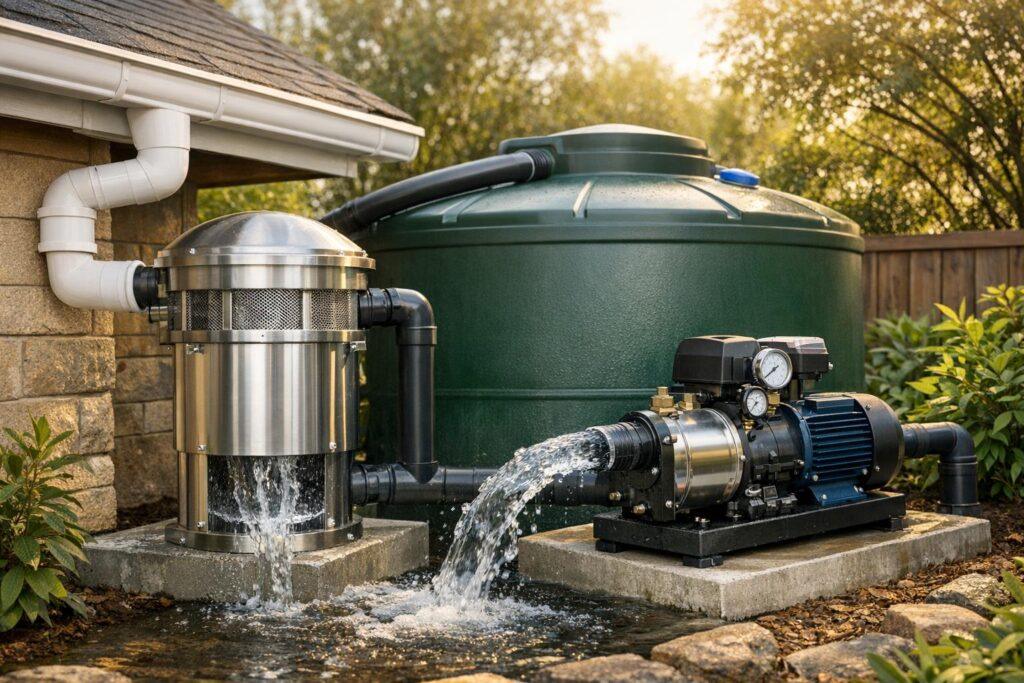
Rainwater filtration systems are a great way to reduce reliance on municipal water while providing a backup water source. However, proper maintenance is key to ensuring their efficiency and longevity. Neglecting upkeep can lead to clogged filters, debris buildup, and even structural damage. Here’s a quick breakdown of what you need to know:

  • Main Components: Gutters, filters, storage tanks, and pumps all require regular attention. For instance, gutters should be cleaned 2–4 times a year, and filters need monthly checks.
  • Seasonal Care: Winterize your system to prevent freezing damage, and prepare for spring by cleaning and inspecting all parts.
  • Common Issues: Low water pressure often points to clogged filters, while cloudy or smelly water may indicate algae, debris, or sludge buildup.
  • Lifespan: With regular care, tanks can last 15–30 years, while pumps typically last 2–10 years.

Routine tasks like cleaning gutters, replacing filters, and inspecting pumps can prevent costly repairs. For more complex issues, consult a professional. This is especially important if your filtration system integrates with a sprinkler system. Proper maintenance ensures your system runs smoothly year-round.

Rainwater Filtration System Maintenance Schedule and Checklist

Rainwater Filtration System Maintenance Schedule and Checklist

Main Parts of a Rainwater Filtration System

To keep your rainwater system running smoothly, it’s important to know how each part works. These systems collect water from your roof, filter out contaminants, and store it for later use. By understanding the role of each component, you can handle maintenance more effectively and avoid potential issues.

Catchment and Gutters

Your roof is the starting point for collecting rainwater, but it also brings in unwanted debris like leaves, bird droppings, moss, and dust. Gutters then guide the water to downspouts, where snap-in leaf guards help block larger debris, such as branches or even animal nests. These guards tend to work better than micromesh screens, which can cause water to bypass the system during heavy rain. Fun fact: just one inch of rain on a 1,000-square-foot roof can produce about 623 gallons of water.

Filters and Diverters

First-flush diverters play a crucial role in keeping your system clean. They redirect the first batch of rainwater – often the dirtiest – away from your tank. This water typically contains pollen, roofing chemicals, and fine dust. Barry Chenkin, founder of AquaBarrel, puts it best:

"Your first-flush diverter is the unsung hero of your system. It catches the dirtiest runoff, everything from pollen to roofing chemicals, and prevents it from entering your tank."

Once the initial flush is diverted, the cleaner water passes through a leaf basket or tank screen, which blocks any remaining debris and keeps mosquitoes out.

Storage Tanks and Post-Filtration

Storage tanks should be made from food-grade materials, with dark colors like green to prevent algae growth. If the water is meant for drinking, additional filtration and disinfection steps are essential. These include:

  • A sediment filter (5-micron rating) to trap sand, silt, and rust.
  • A carbon filter (10-micron rating) to improve taste and remove odors.
  • A UV lamp to kill bacteria and viruses without using chemicals.

Although UV bulbs are rated for 10,000 hours, their effectiveness decreases over time, so it’s best to replace them annually.

Pumps and Pressure Systems

Once the water is filtered and stored, pumps and pressure systems ensure it’s delivered where you need it, whether that’s inside your home or to your garden. These systems monitor water levels and maintain consistent flow. If you ever notice a sudden drop in water pressure, it’s often due to a clogged sediment filter that needs replacing.

Knowing how these parts work together makes routine and seasonal maintenance much easier. Each component plays a critical role in ensuring your rainwater system functions efficiently.

Regular Maintenance Steps and Schedules

Keeping your rainwater system running smoothly requires consistent attention to routine tasks. Each part of the system has its own maintenance needs, and sticking to these schedules helps you avoid costly issues later. As Chris Maxwell-Gaines, a Professional Civil Engineer at Innovative Water Solutions LLC, puts it:

"Regular maintenance not only maximizes the system’s performance but also safeguards your investment."

Here’s a breakdown of the key maintenance tasks to keep your system in great shape:

Cleaning Gutters and Catchment Areas

Gutters are the first line of defense, so it’s important to clear them regularly. Leaves, needles, bird droppings, and pollen can build up quickly. Plan to inspect and clean gutters 2–4 times a year, especially during heavy leaf fall in autumn or after storms. If your home is surrounded by trees, you may need to do this more often. Trimming back overhanging branches can also help reduce debris. Don’t forget to check downspouts and leaf guards after major weather events to keep everything flowing properly.

Maintaining Filters and Diverters

First-flush diverters and screens need monthly attention to stay effective. Rinsing screens with a hose and emptying the diverter chamber is usually enough. During spring or high-pollen seasons, inspect these components after every rain to prevent clogs or damage.

Storage Tank Care

The area where water enters your storage tank, like the leaf basket or strainer, should be cleaned 2–4 times a year. Remove any trapped debris and rinse it thoroughly. Check sediment levels monthly using the inspection port or a dipstick. If sediment reaches 50% of the tank’s capacity, it’s time to remove it. With good pre-filtration, a full interior cleanout of the tank might only be necessary every 15–20 years.

Filter Cartridge Replacements

Filter cartridges wear out faster than you might think. For sediment filters, small housings (2.5" x 10") usually need replacement every month, while larger housings (4.5" x 20") last about three months. Carbon filters, which improve water taste and reduce odors, should be swapped out quarterly for small-to-medium filters and twice a year for larger ones. If you notice lower water pressure, the sediment filter might be clogged and should be checked first.

UV Systems and Pump Inspections

UV systems are essential for disinfecting your water, but their bulbs lose effectiveness over time. As Harvest Rain explains:

"Although the [UV] bulb may continue to shine, the intensity of the light output will gradually decrease, as will its ability to disinfect your water."

Check the pump every three months for unusual noises, vibrations, or sediment buildup. Catching these early signs can save you from expensive repairs down the line.

Seasonal Maintenance Adjustments

Keeping your rainwater system in top shape year-round means tailoring your maintenance routine to the changing seasons. Different weather conditions can impact your system, so adjusting how you care for it helps prevent damage and ensures everything works smoothly.

Winter Preparation

Freezing temperatures can be tough on rainwater systems. When water freezes, it expands by about 9%, which can crack tanks, pipes, and other components. Start preparing when temperatures drop to 32°F–40°F, and fully winterize if they stay below 32°F.

Drain your system completely. Empty tanks and disconnect barrels. Insulate pipes, valves, and smaller filters with foam or thermal tape, and store removable parts indoors. If barrels must stay outside, flip them upside down to keep snow and water from collecting. Barry Chenkin warns that leaving systems full during freezing weather can lead to costly damage.

Protect exposed parts. Flush larger filters and make sure vents are clear of ice. Use heat tape or small heaters to safeguard pumps and UV systems in uninsulated spaces. Plug UV lights into surge protectors to handle power fluctuations during winter.

Leave valves open. Keep spigots and drain valves on first-flush diverters open to prevent pressure buildup. Harvest Rain advises:

"Keep the drain valve OPEN until the threat of freeze has passed and everything has completely thawed out."

Underground cisterns are naturally insulated and often stay functional in winter, but above-ground tanks need extra care. Once winter is over, shift your focus to getting ready for spring rains.

Spring Startup

Before spring rains arrive, inspect your entire system – from roof to tank – and clear out any debris to avoid contamination. Close any drain valves left open for winter, and reconnect parts that were stored indoors.

Replace filters and UV bulbs right away. This ensures proper flow and sanitation. If you notice reduced water pressure after startup, check the sediment filter first. Barry Chenkin from AquaBarrel stresses how important these steps are:

"Skipping these early steps is like skipping oil changes on a car; eventually, you’ll pay for it. Let’s start the season with a clean slate."

Test the system thoroughly. Run the pump and listen for any strange noises, like rattling or humming. Make sure first-flush diverter valves are working properly and draining after the first storm. If you notice a rotten egg smell when opening the tank, anaerobic bacteria may have built up in the sludge – use a wet/dry vacuum to clean out the tank base.

High Debris or Dry Seasons

After winter and spring, it’s important to adjust your routine for high debris or dry periods to keep your system performing well. Fall and heavy pollen seasons often require more frequent maintenance. If you have nearby trees, clean gutters and downspouts monthly instead of quarterly. First-flush diverters and filter baskets should be checked after every rain during these times. Sediment filters may need replacing monthly instead of the usual quarterly schedule.

Trim any overhanging branches to minimize leaves, organic debris, and animal waste on your roof. During heavy debris periods, you might bypass gutter screens to improve water collection.

Fall is also the perfect time to flush out any leftover sludge from your tank before winter dormancy. If your water turns light green during pollen-heavy seasons, consider adding a recirculation system to prevent buildup. Watch for signs of increased animal activity – nests or rodent droppings can contaminate your water supply.

Troubleshooting Common Problems

Even with regular maintenance, rainwater filtration systems can occasionally run into issues. Identifying and addressing these problems quickly can keep your system in top shape and prevent small issues from turning into expensive repairs.

Low Water Flow or Pressure

If you’re experiencing weak water pressure, the first thing to check is your sediment filter. A clogged filter is often the main cause of restricted water flow. Depending on your system’s size and usage, you may need to replace the filter every month or quarter. Barry Chenkin from AquaBarrel puts it plainly:

"Low flow might mean your filters are clogged, or worse, that your pump’s on its last legs."

Next, inspect your pump and its electrical connections. After storms, plugs or switches may have been tripped, so ensure everything is securely in place. Listen for unusual sounds coming from the pump – rattling or humming can signal mechanical issues. Don’t forget to check the mesh screens on rain heads and tank inlets for debris, and clean the flow restrictor in your first-flush device every 3–6 months. As Sydney Water explains:

"A first flush device diverts the first flow of dirty rainwater to a separate chamber… This chamber will slowly empty the dirty water through a small restrictor that can block easily."

If the pump seems fine but no water is flowing, the problem could be low water levels. Tap the side of the tank or look inside to check. During dry spells, water levels naturally drop, which can affect pressure in both gravity-fed and pump-assisted systems. These simple checks can help you resolve pressure issues before tackling water quality concerns.

Cloudy or Odorous Water

Changes in the color, clarity, or smell of your water can point to specific issues. A green tint often means algae growth caused by sunlight or pollen. Brown or yellow water typically comes from tannins leaching out of leaves or branches, while cloudiness might be due to fine dust or silt bypassing the first-flush diverter. Older galvanized steel tanks may release rust flakes, and concrete tanks can sometimes leave white residue from limestone.

Odors are often caused by decaying leaves in the gutters or sludge buildup at the bottom of the tank. A 5-micron sediment filter can remove particles that cause cloudiness, while a 10-micron carbon filter is effective at eliminating bad tastes and smells. To minimize organic debris entering your system, trim overhanging branches and clean your gutters regularly. Inspect your tank every 2–3 years to remove accumulated sludge, which can significantly improve water quality.

Algae, Insects, or Animal Contamination

Opaque tanks that block sunlight are your best defense against algae growth. Ensure all tank openings are fitted with fine mesh screens and check them after heavy rain to keep insects out. High-quality leaf guards and gutter screens are also helpful in preventing birds, rodents, and other animals from contaminating your system.

If algae is already present, adding NSF-approved chlorine tablets to your cistern every three months can help control it. For insect problems, make sure overflow pipes direct water away from the tank base to prevent standing water that attracts mosquitoes. If you find animal remains or droppings in your tank, drain it immediately. Clean the interior by pressure washing with a mixture of one quart of unscented bleach per 50 gallons of water. Use a wet/dry vacuum to remove any leftover sludge before refilling the tank.

Conclusion and Maintenance Planning

Taking care of your filtration system is a bit like running your own water utility at home. As Harvest Rain explains:

"When you live on rainwater, you are essentially maintaining your own utility, and you’ll want to ensure it provides the highest quality of water for you and your family."

To stay on top of things, keep a detailed maintenance log. This should include notes on filter changes, UV bulb replacements, gutter cleanings, and system performance checks like water pressure, pump noises, and filter lifespan. Pay extra attention during the first rains of the season – this is when you can learn a lot about how water flows through your system and how debris behaves. Over time, this historical data can be invaluable for troubleshooting or planning system upgrades. For anything beyond routine upkeep, bring in the pros.

Professional Support

Sometimes, regular maintenance just isn’t enough, and that’s when professional help becomes essential. For example, cleaning tanks in tight spaces requires proper ventilation equipment and respirators – definitely not a DIY job. Electrical issues, like troubleshooting pumps or repairing mains switching devices, should always be handled by licensed technicians, especially after a storm. Structural repairs, such as fixing leaks in a concrete cistern, also call for expert skills.

There are companies that specialize in these services. Rain Brothers LLC in Yellow Springs, Ohio, and Harvest Rain in Dripping Springs, Texas, are two examples. They offer services like cistern cleaning, filter replacements, and full system inspections. Many of these professionals also provide service agreements, so you can have peace of mind knowing your system is maintained year-round.

FAQs

What’s the best way to stop algae from growing in my rainwater storage tank?

To keep algae from taking over your rainwater storage tank, start by maintaining a clean roof and gutter system. This helps minimize the dirt and debris that can flow into the tank. At least once a year, completely drain and scrub the tank to clear out any buildup. Installing a first-flush diverter is another smart move – it filters out the first batch of rainwater, which often carries dust and organic material. Ensure that all tank openings are tightly sealed to block sunlight, as algae thrive in light. Additionally, sanitize the tank occasionally with a diluted bleach solution, carefully following safety guidelines, to keep it clean and free of algae.

How can I fix low water pressure in my rainwater filtration system?

Low water pressure in your rainwater filtration system usually points to blockages or mechanical problems. Begin by cleaning or swapping out clogged filters, as these are often the main issue. Then, take a close look at the pump and check the floating filter for any debris or blockages. Don’t forget to clear your gutters and downspouts to make sure water can move through the system without any interruptions. Staying on top of routine maintenance can go a long way in keeping everything working smoothly.

How often do I need to replace the UV bulb in my rainwater filtration system?

You should swap out the UV bulb in your rainwater filtration system every year to keep it running at its best. Even if the bulb still lights up, its ability to neutralize harmful microorganisms weakens over time. Regular replacement ensures your water stays safe and properly treated.

To make this easier, try setting a reminder or including it in your yearly home maintenance schedule.

Related Blog Posts