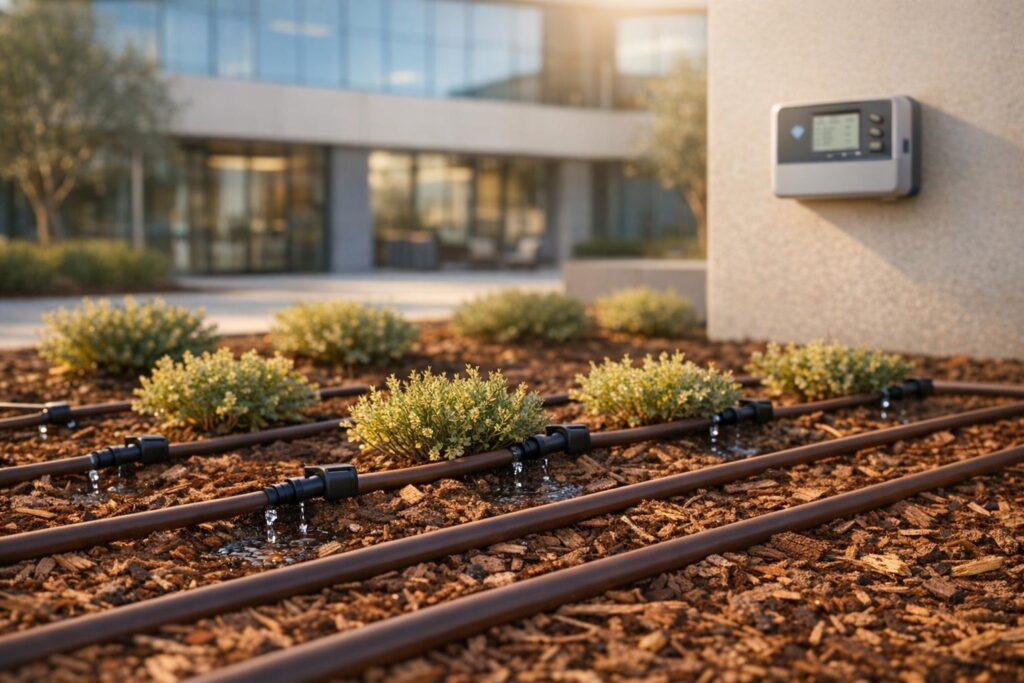
Efficient irrigation can save businesses money, protect property, and reduce water waste. With water costs rising – like the 333% increase seen in Cobb County, Georgia between 2005 and 2012 – adopting smarter systems is no longer optional. Overwatering damages infrastructure, increases bills, and wastes resources, while efficient systems cut costs, conserve water, and comply with legal requirements.
Here’s what you need to know:
- Save Money: Smarter irrigation systems reduce outdoor water waste by up to 50%. Drip systems alone use 20-50% less water than traditional sprinklers.
- Boost Property Value: Well-maintained landscapes can increase commercial property value by 5-15%.
- Prevent Damage: Overwatering harms foundations, streets, and curbs, leading to expensive repairs.
- Stay Compliant: Features like rain sensors and backflow preventers are often required by law.
- Conserve Resources: Efficient systems reduce stormwater runoff, keeping harmful chemicals out of waterways.
Businesses can choose from systems like drip irrigation, smart controllers, and low-precipitation spray heads. Pair these with proper maintenance, soil care, and native plants to maximize savings and create thriving landscapes.
Efficient irrigation isn’t just about saving water – it’s a smart investment that pays off in lower bills, healthier plants, and long-term property protection.

Water-Efficient Irrigation Statistics: Cost Savings and Benefits for Businesses
Benefits of Water-Efficient Irrigation
Lower Water Bills and Operating Costs
Efficient irrigation isn’t just good for the environment – it makes financial sense. Experts estimate that up to 50% of outdoor water use is wasted due to overwatering and outdated systems. That’s half of your irrigation budget literally going down the drain through evaporation, runoff, or oversaturation.
Upgrading to smarter systems can lead to real savings. For instance, swapping out a standard timer for a WaterSense-labeled irrigation controller could save an average property nearly 7,600 gallons of water annually. Drip irrigation systems are even more efficient, using 20% to 50% less water than traditional sprinklers, potentially saving up to 30,000 gallons per year. On a larger scale, if every business with an automatic sprinkler system adopted a WaterSense controller, the collective savings could reach a staggering $2.4 billion in water costs each year.
But the benefits go beyond just water savings. Installing a dedicated irrigation meter, also known as a "deduct meter", can help businesses track outdoor water use and potentially receive sewer charge credits, as this water doesn’t flow into the wastewater system. Pressure-regulating spray heads minimize water loss from misting, while "cycle and soak" schedules prevent pooling and runoff on challenging soils.
Efficient irrigation systems also help reduce maintenance costs. Overwatering can damage building foundations, streets, and paved areas, leading to costly repairs that far outweigh the expense of upgrading irrigation systems. By preventing these issues, businesses can save on unexpected repair bills while keeping their properties in top shape.
When you combine these financial perks with the environmental benefits, it’s clear that efficient irrigation is a smart move for any business looking to cut costs and protect natural resources.
Environmental Impact and Water Conservation
Beyond saving money, water-efficient irrigation systems play a key role in conserving local water supplies and reducing energy use. By cutting outdoor water waste, businesses ease the demand for potable water and reduce the strain on municipal treatment facilities. This is important because treating and pumping water consumes a lot of energy – a connection often referred to as the "water-energy nexus." Using less water means using less energy across the entire system.
Efficient irrigation also helps prevent stormwater runoff, which can carry harmful chemicals like fertilizers and pesticides into nearby rivers and lakes. By reducing runoff, businesses can help protect local ecosystems and water quality.
These systems also create healthier landscapes. Overwatering often leads to plant diseases, fungal growth, and weeds. By delivering water directly to the root zones and avoiding standing water on leaves, efficient irrigation keeps plants healthier while using less water. Deep and infrequent watering encourages stronger root systems, which makes plants more resilient and less dependent on additional watering over time.
Improved Property Appearance and Value
A well-maintained landscape isn’t just pleasing to the eye – it’s an investment. Realtors estimate that a healthy lawn and efficient sprinkler system can increase property value by 5% to 15%, with high-quality landscaping adding as much as 14% to overall property value. Automatic irrigation systems alone can boost property value by up to 12%, while mature, well-irrigated trees can add 7% to 19%.
"Professional commercial landscaping can significantly enhance the value of a commercial property." – GroundsCare Landscape
Efficient irrigation systems ensure even water distribution, eliminating unsightly dry patches, wilting plants, and bald spots that can hurt curb appeal. By preventing overwatering, these systems also reduce soil erosion and protect infrastructure like sidewalks, parking lots, and building foundations from water damage. Modern irrigation components, such as pop-up spray heads, stay hidden when not in use, preserving a clean and polished look.
Healthier landscapes are another bonus. Proper hydration minimizes plant stress caused by heat and drought, reducing the need for costly replacements. For areas beyond saving, sod installation and lawn repair can restore the property’s aesthetic. A vibrant, well-maintained property not only looks inviting but also signals professionalism to clients, tenants, and visitors. Plus, smart irrigation controllers can save 20% to 50% more water compared to older systems, ensuring your landscape thrives without wasting resources.
sbb-itb-5aa6250
Types of Water-Efficient Irrigation Systems
Selecting the right irrigation system can be the difference between wasting water and running an efficient, cost-effective setup. Three standout options – drip irrigation, smart sprinkler controllers, and low-precipitation spray heads – shine in different scenarios. Knowing their advantages can help you choose the best fit for your specific landscape.
Drip Irrigation Systems
Drip irrigation delivers water slowly and directly to the root zone of plants, cutting down on evaporation and runoff that traditional sprinklers often cause. By targeting water precisely where it’s needed, these systems use 20%-50% less water and can save up to 30,000 gallons annually.
This method keeps plant leaves dry, reducing the risk of fungal diseases and insect problems, while also depriving weeds in non-targeted areas. Drip systems are particularly useful on uneven terrain, as they limit erosion. Depending on your needs, you can install drip lines above ground or below (subsurface). Subsurface setups are especially helpful in high-traffic areas, as they protect the tubing from damage.
However, maintenance can be a challenge. Emitters may clog due to sand, bacteria, or chemicals, so a good filtration system and regular line flushing are essential. Grouping plants with similar water needs into hydrozones helps ensure each type gets the correct amount of water. Drip irrigation is best suited for shrub beds, tree rings, and row plantings – not for lawns, where spray systems are generally more effective.
Smart Sprinkler Systems with Controllers
Smart sprinkler controllers take irrigation to the next level by adjusting watering schedules based on real-time conditions. Weather-based irrigation controllers (WBICs) rely on local data like temperature, humidity, and solar radiation, combined with factors such as soil type and plant species, to create tailored watering plans. Soil moisture-based controllers (SMSs) go even further, using sensors buried in the root zone to measure moisture levels and halt watering when the soil is already saturated.
Upgrading to a WaterSense labeled controller can save up to 15,000 gallons of water annually on an average property. These systems often include rain, wind, and freeze sensors that pause irrigation during bad weather. Advanced models even feature flow monitoring, which detects leaks or broken nozzles and shuts down affected zones. For businesses with multiple locations, central control systems allow you to manage everything from one platform.
To get the most out of these systems, look for the WaterSense label, which ensures they meet EPA standards for efficiency and water conservation. Use features like cycle and soak scheduling to prevent runoff on steep or clay-heavy soils. Also, set watering times for early mornings when temperatures are cooler and wind is minimal to reduce evaporation.
Low-Precipitation Spray Heads
Low-precipitation spray heads are a great complement to drip and smart systems, especially in windy or sloped areas. These spray heads, particularly high-efficiency rotary nozzles, release water slowly enough for the soil to absorb it, avoiding the pooling and runoff common with traditional high-volume sprayers. Their larger droplets or multi-stream patterns resist wind drift and misting, making them ideal for challenging conditions like slopes or clay-heavy soils.
Many systems can be retrofitted with these spray heads, allowing you to upgrade performance without overhauling the entire setup. For even better results, use WaterSense labeled spray sprinkler bodies with built-in pressure regulation to minimize misting and waste caused by high pressure. On steep or clay-heavy landscapes, cycle and soak programming helps water absorb into the soil more effectively.
To ensure even water distribution, try the "tuna can test" – place cans around your lawn to measure how uniformly water is applied. This prevents overwatering most areas just to reach drier spots. Low-precipitation spray heads are best for turf and lawns, while drip irrigation remains the go-to for shrubs and trees.
Choosing the right system based on your landscape’s needs sets the stage for sprinkler system install and service, which will be covered in the next section.
Designing and Installing a Water-Efficient Irrigation System
Assessing Landscaping Needs and Soil Type
Start by evaluating your soil texture, terrain slope, and the water needs of your plants. Soil texture plays a key role in determining how much water your landscape can retain and how often irrigation is needed. For example, sandy soils hold around 0.75 inches of water per foot of depth, meaning they dry out quickly and require frequent, low-rate watering. On the other hand, soils like peats and mucks can hold up to 2.5 inches per foot, allowing for less frequent but deeper watering sessions.
Terrain slope and area measurements are equally important. Slopes can lead to uneven water distribution and increase the risk of runoff, while the total area helps determine the required pump flow and overall water usage. Tools like the USDA Web Soil Survey can provide a starting point for soil data, but field verification is essential before finalizing your design. Keep in mind that plants have different water requirements depending on their type and growth stage – annuals, for instance, generally need less water than perennials. Grouping plants with similar water needs can make irrigation much more efficient. These factors also tie into meeting water efficiency standards.
Once you’ve gathered this information, you can choose an irrigation system tailored to your landscape’s specific conditions.
Choosing the Right System for Your Property
The right irrigation system depends on your landscape’s unique characteristics and your budget. For areas with slopes, shrub beds, or exposure to wind, drip irrigation is often the best choice. It delivers water directly to the root zones, minimizing waste. For lawns and turf areas, sprinkler systems are more suitable, though they are more prone to water loss from evaporation and wind drift.
Soil type is another critical factor. Sandy soils require frequent watering at lower rates, while clay-heavy soils benefit from cycle-and-soak programming – a method that breaks irrigation into shorter intervals with pauses in between to prevent water pooling and promote absorption. Although installation costs might seem high initially, in areas where water is expensive, the savings can often offset these costs within a year. Choosing an efficient irrigation system not only conserves water but also lowers long-term operating costs.
"A system that uses water wisely is almost always the best buy, even if up-front costs are higher." – Gary Hawkins, Associate Professor of Water Resource Management at the University of Georgia
Professional Installation and Setup
Once you’ve selected the right system, professional installation ensures everything works as it should. Certified contractors will assess your site, taking into account elevation, soil conditions, and plant needs before designing the system. They’ll divide the landscape into hydrozones – grouping areas like lawns and flowerbeds separately – to ensure even water distribution and avoid dry spots.
For installation, professionals often use a vibratory plow to lay polyethylene pipes about 10 inches underground. This method is faster and cleaner than traditional trenching. They’ll also integrate smart controllers, rain shutoff devices, and flow monitoring tools to detect leaks automatically. Before installing sprinkler heads, the contractors will flush the lines to clear out debris and confirm the system’s pressure matches the manufacturer’s specifications. Always hire certified professionals and call 811 to locate utilities before digging. After installation, you’ll receive detailed as-built drawings of the system layout and a demonstration on programming your watering schedule.
Maintaining and Upgrading Irrigation Systems
After installation, consistent maintenance and timely upgrades are key to keeping your irrigation system efficient and cost-effective.
Regular System Audits and Inspections
Without routine upkeep, irrigation systems lose efficiency over time. Conducting monthly visual inspections during the growing season can help you spot issues early, preventing unnecessary water waste. Manually run each zone and look for common problems like misaligned sprinkler heads, broken components, or clogged emitters. If you notice a fine mist coming from spray heads, it’s a sign of excessive water pressure, which causes water to drift away rather than reaching your plants.
At the start of each spring, flush the system to remove dirt and debris that may have built up over the winter. Inspect the controller cabinet for loose wiring, replace batteries, and ensure the date and time settings are accurate. For drip systems, check that emitters are securely in place and filters are clean. Every three years, consider hiring a certified professional to perform a comprehensive audit. This ensures even water distribution across your property, avoiding overwatering in some areas just to compensate for dry spots.
| Inspection Type | Frequency | Key Tasks |
|---|---|---|
| Basic Inspection | Monthly | Look for leaks, broken heads, clogs, and overspray onto sidewalks or driveways |
| Controller Tune-up | Seasonally | Adjust schedules for weather, replace batteries, and test sensors |
| Full System Audit | Every 3 Years | Professional review of water distribution and pressure levels |
| Winterization | Annually | Shut off water, drain pipes, or use pressurized air to prevent freeze damage |
These inspections create a solid foundation for making seasonal adjustments as needed.
Seasonal Adjustments and Repairs
Adjust your watering schedule throughout the year to match your plants’ changing needs. For example, plants require less water in spring and fall compared to the peak heat of summer. Update your controller settings accordingly and consider using cycle-and-soak programming for areas with slopes or clay-heavy soil. This method prevents runoff and encourages deeper absorption.
In regions with cold winters, take steps to protect your system before freezing temperatures set in. Shut off the main water supply, release pressure in each zone, and use compressed air to clear the lines, preventing freeze-related damage. During the growing season, trim any vegetation blocking sprinkler heads and use riser extensions to elevate sunken heads for better coverage.
Upgrading to Smart Technologies
Upgrading to WaterSense-labeled controllers can save nearly 7,600 gallons of water annually. These smart controllers automatically adjust watering schedules based on real-time weather, soil moisture, and plant-specific needs – so you won’t waste water during a rainstorm or when the soil is already saturated.
Smart systems also allow remote management via mobile apps, giving you the ability to monitor and adjust irrigation from anywhere. Add-ons like rain, soil moisture, wind, and freeze sensors can further optimize performance by pausing irrigation cycles during unfavorable conditions. While smart systems require a higher initial investment compared to traditional timers, the water savings often pay off quickly, especially in areas with high water costs. If you’re noticing higher water bills, inconsistent coverage, or unusual hissing noises, it’s probably time to consider an upgrade.
"Smart irrigation integrates wireless soil moisture sensors, wireless weather stations, wireless controllers, and wireless solenoid valves to improve water management." – Watermatic Systems
Combining Water-Efficient Irrigation with Eco-Friendly Landscaping
A cutting-edge irrigation system alone won’t solve the problem if your landscaping choices aren’t up to par. The real magic happens when you pair water-efficient technology with thoughtful plant selection and smart soil care. Together, they create a landscape that not only looks polished but also naturally requires less water. Here’s how strategic plant choices and soil management can make a big difference.
Selecting Native and Drought-Tolerant Plants
Hydrozoning – grouping plants with similar water needs into specific zones – lets your irrigation system deliver just the right amount of water to each area. By programming zones based on water requirements, you can avoid the common problem of overwatering. Native plants, which are already adapted to your local climate, need far less supplemental water after their first growing season. Plus, they’re more resistant to pests and diseases, which means less maintenance for you.
Take Kentucky bluegrass, for example. It thrives in areas with over 40 inches of annual rainfall but is often planted in much drier regions, where it demands heavy irrigation to survive. Replacing non-functional turfgrass – like narrow strips in parking lots – with native ground covers or shrubs is a game-changer. These alternatives are easier to irrigate efficiently, especially when paired with drip or micro-irrigation systems that deliver water directly to the roots. Combine these smart plant choices with healthy soil practices, and you’ve got a recipe for serious water savings.
Improving Soil Health for Better Water Retention
Healthy soil is like a sponge – it holds onto moisture, reducing how often you need to water. Start by testing your soil through your local Cooperative Extension Office to learn about its pH, nutrient levels, and organic matter content. Knowing your soil type allows you to fine-tune your irrigation settings for maximum efficiency and minimal runoff.
Aerating your soil regularly helps break up compaction, making it easier for water to reach plant roots instead of running off the surface. Adding organic amendments, like compost, improves the soil’s ability to retain moisture over the long term. Aim for at least 4 to 6 inches of organic-rich topsoil to effectively capture rainwater and slowly release it to your plants. For areas with slopes or dense clay soil, try "cycle and soak" watering. This involves splitting irrigation into shorter bursts, giving water time to soak in instead of washing away. These practices not only conserve water but also lower maintenance costs.
Using Mulch and Ground Covers
Once you’ve chosen the right plants and improved your soil, mulch and ground covers can take your water-saving efforts to the next level. A 3- to 4-inch layer of organic mulch – like hardwood chips, straw, or pine needles – reduces evaporation and helps regulate soil temperature. This depth strikes the perfect balance, allowing water to reach plant roots while also suppressing weeds. As organic mulches break down, they enrich the soil with nutrients, further boosting plant health.
When applying mulch, leave a few inches of space around the base of trees and shrubs to prevent rot caused by trapped moisture. Make sure to pull any weeds before laying down mulch to maximize its effectiveness. Avoid using rock or stone mulch in sunny areas or around plants that aren’t suited to arid conditions, as these materials can radiate heat and cause water loss through scorching. For steep slopes, consider native ground covers and shrubs. Their deep roots stabilize the soil, prevent erosion, and manage water more effectively than traditional grass.
| Landscape Element | Recommended Practice | Water-Saving Benefit |
|---|---|---|
| Plant Selection | Use native/drought-tolerant species | Reduces or eliminates the need for extra watering |
| Plant Grouping | Hydrozoning (group by water need) | Avoids overwatering plants with low water needs |
| Soil Surface | 3–4 inches of organic mulch | Cuts evaporation and blocks weed growth |
| Turf Areas | Limit turf to essential zones | Lowers demand for high-volume spray irrigation |
| Slopes/Clay Soil | "Cycle and Soak" watering | Prevents runoff and improves water absorption |
Conclusion
Efficient irrigation blends cutting-edge technology with thoughtful design and consistent upkeep. By combining tools like drip irrigation systems and weather-based controllers with practices such as enriching soil health and choosing native plants, you can create a landscape that thrives with less water while maintaining its beauty throughout the year.
For businesses, improving irrigation methods can lead to major cost reductions. Fixing inefficiencies can cut outdoor water waste by as much as 50%, lowering operating expenses, meeting regulatory standards, and showcasing a commitment to sustainability that resonates with customers and partners alike.
"Smart irrigation starts with design: evaluating the existing and proposed site conditions is a critical first step to water conservation on any project." – WSB Engineering
The benefits of a well-designed irrigation system extend far beyond short-term savings. When properly maintained, commercial irrigation systems can last 10–15 years, consistently reducing water use and expenses. Scheduling professional audits every three years ensures your system stays efficient, with uniform water distribution and optimal performance. Whether it’s upgrading to a WaterSense-labeled controller, conducting a professional system evaluation, or adopting a cycle-and-soak watering strategy, the choices you make now will yield lasting rewards for years to come.
FAQs
What’s the best way for businesses to choose the right irrigation system for their landscape?
Choosing the best irrigation system means starting with a clear understanding of your landscape’s specific needs. Factors like the size and shape of the area, slopes, and the types of plants you’re tending all play a role in determining the most efficient layout and water delivery method. By aligning the system with these details, you can ensure water is used wisely, avoiding unnecessary waste.
Two popular options are drip irrigation and spray systems. Drip irrigation is perfect for flower beds and shrubs, as it delivers water directly to the roots and minimizes runoff. On the other hand, spray systems are better suited for covering larger areas like lawns. To improve efficiency further, you can integrate water-saving tools like smart controllers or soil moisture sensors. These devices adjust watering schedules based on weather and soil conditions, helping to conserve water and lower your costs.
Keeping your system in top shape requires regular maintenance. Check components for leaks or clogs, adjust watering schedules as seasons change, and fix any issues promptly to avoid overwatering and unnecessary expenses. With the right system in place and proper care, your business can enjoy a reliable, cost-effective irrigation solution tailored to its unique needs.
What are the main advantages of smart irrigation controllers for businesses?
Smart irrigation controllers are a game-changer for businesses aiming to save water and cut costs. By relying on local weather data or tracking soil moisture levels, these systems adjust watering schedules automatically. This ensures plants get the water they need – no more, no less – helping to prevent overwatering and conserve resources.
Beyond saving water, these controllers make life easier by streamlining maintenance. They also promote healthier plants through consistent and efficient irrigation. For businesses focused on sustainable landscaping and keeping expenses in check, smart irrigation systems are a practical and effective solution.
How do water-efficient irrigation systems help protect the environment?
Water-efficient irrigation systems play a key role in reducing water waste and promoting responsible resource use. By employing methods like microirrigation – where water is delivered directly to the plant roots – these systems minimize both runoff and evaporation. The result? A significant reduction in water usage, often by 20% to 50%, compared to traditional irrigation methods. This not only conserves water but also ensures plants receive the hydration they need to thrive.
Beyond saving water, these systems also cut down on energy consumption. With optimized water distribution, less energy is required for pumping and treatment, which means a smaller environmental footprint. For businesses aiming to conserve resources and adopt eco-conscious practices, water-efficient irrigation systems are a smart and effective solution.